Water symbolism is one of the most universal threads running through human history, woven into sacred texts, ancient myths, and spiritual traditions across every culture on Earth. If you've found yourself curious about the spiritual meaning of water, you're about to discover that water is far more than a physical element.
What's in This Guide
This guide explores the symbolic meaning of water across cultures and disciplines, including its references in mythology, chakras, and philosophy.
Jump to:
- What Does Water Symbolise?
- The Spiritual Meaning of Water
- Water in Mythology and Ancient Cultures
- Water in Literature and Psychology
- Water Element Symbolism: Chakras and Tarot
- Creatures and Spirits Associated with Water
- The Deeper Meaning of Water in Philosophy and Life
- Frequently Asked Questions About Water Symbolism
- Study Greek Mythology for £29
What Does Water Symbolise?
Water is one of the most enduring and universal symbols in human history. Across cultures, religions, and artistic traditions, its meanings remain remarkably consistent: life, transformation, purification, and the depths of the unconscious mind. But water imagery is also wonderfully layered, with its symbolic meaning shifting depending on its state and context.
Still, calm water tends to represent peace and clarity. Turbulent or stormy water often signals chaos, emotional upheaval, or change. Flowing water, such as a river or a stream, typically symbolises the passage of time and the unstoppable nature of moving forward.
At its most fundamental, water is a symbol of:
- Life and nourishment — nothing on Earth survives without it, and it has long been called the source of all living things.
- Purification and cleansing — the act of washing away the old to make room for the new.
- Transformation — water changes form constantly (liquid, ice, vapour), making it a natural symbol of adaptability and renewal.
- The unconscious mind — in both psychology and literature, water frequently represents the hidden depths within us.
- Emotion and intuition — water is fluid, changeable, and deeply connected to the inner world of feeling.
In visual art and iconography, water is often represented by the colour blue, by spirals and waves, by fish, by the crescent moon, and by the element's alchemical symbol — a downward-pointing triangle.
The Spiritual Meaning of Water

Water as a Symbol of Purification and Cleansing
The spiritual meaning of water is, perhaps more than anything else, tied to the idea of cleansing.
In Hinduism, bathing in sacred rivers such as the Ganges is believed to wash away accumulated sin and bring spiritual merit. In Islam, ritual purification with water (known as wudu) is required before prayer.
In Christianity, baptism uses water as the central symbol of spiritual rebirth and the washing away of sin. Even in Japanese Shinto, the practice of misogi involves standing beneath a waterfall to purify the spirit.
This near-universal association suggests that water, spiritually speaking, represents the capacity to begin again. To be immersed in water, whether symbolically or literally, is to release what no longer serves you and emerge renewed.
Water as a Life Force and Symbol of Renewal
Water’s spiritual meaning is also intimately connected to life itself. Water is the source from which all living things emerge, and in many ancient creation myths, the world itself is born from water. This is why water features so prominently in rituals of birth, death, and rebirth across so many traditions. To cross water is to undergo a transformation. To return to it is to return to the source.
Spiritually, water is not just something that sustains life; it is life, in its most elemental form.
Water in Mythology and Ancient Cultures
From the Bible to ancient Greece to the Celtic traditions of Ireland, water has played a central role in the myths and sacred stories that have shaped human understanding for thousands of years.
What Does Water Represent in the Bible?
The biblical symbolism of water is extraordinarily rich. Water appears at the very beginning of the Bible — in Genesis, the Spirit of God moves over the waters before creation begins — and continues to flow through some of the most pivotal moments in scripture. Understanding the biblical meaning of water means tracing these appearances and the themes that emerge from them.
The symbol of water in the Bible carries several layers of meaning:
- Creation and life — water is present before the world begins, positioning it as the primal substance from which all things come.
- Judgement and cleansing — the Great Flood in the story of Noah represents both divine judgement and the cleansing of the earth, with water destroying and renewing in equal measure.
- Salvation and grace — the waters of baptism are a direct continuation of this theme: water washes away sin and marks the beginning of a new spiritual life.
- The Holy Spirit — in John 7:38, Jesus speaks of "rivers of living water" flowing from within believers, a reference widely understood as pointing to the Holy Spirit.
The significance of water in the Bible represents God's sovereignty over creation, His capacity for both judgement and mercy, and the ever-present possibility of renewal and grace.
The Greek Symbol for Water and Ancient Water Imagery
In ancient Greek thought, water was one of the four classical elements, alongside earth, air, and fire. The Greek symbol for water was a downward-pointing triangle, representing descent, fluidity, and the feminine principle.
Greek philosophers were fascinated by water's fundamental role in the natural world. Thales of Miletus, one of the earliest recorded philosophers, even proposed that water was the arche, the primary substance from which everything in existence was derived.
Greek mythology is saturated with water imagery. Poseidon ruled the seas with terrifying power, rivers were governed by their own deities, and springs were considered sacred. The river Styx served as the boundary between the world of the living and the realm of the dead, while the spring at Delphi was believed to grant prophetic vision. In this tradition, water is simultaneously a source of life, a place of mystery, and a threshold between worlds.
Water Spirits, Goddesses, and Mythological Creatures
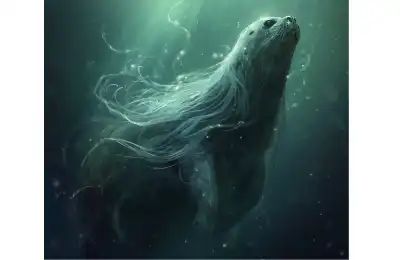
Water spirits appear across virtually every mythological tradition on Earth, speaking to the universal sense that bodies of water are alive with spiritual presence. Some of the most enduring examples include:
- Naiads (Greek mythology) — female water spirits who inhabited rivers, springs, and fountains, and were said to grant wishes or bestow blessings on those they favoured.
- Poseidon and Neptune — the great sea gods of Greek and Roman mythology respectively, embodying both the generative and destructive power of the ocean.
- Brigid (Irish mythology) — the Irish goddess associated with healing springs and sacred wells, her festival (Imbolc) marking the first stirring of spring after winter.
- Undines — elemental water spirits found in European occult and alchemical traditions, believed to inhabit rivers and lakes.
- Selkies (Scottish and Irish folklore) — mythical beings who could shed their seal skin to walk as humans, forever torn between land and sea.
Female water spirits go by many names depending on the tradition: naiad, nixie, undine, rusalka, or melusine, to name just a few. Each tradition has its own stories, but the underlying archetype is strikingly consistent: a feminine being of beauty and power, intimately bound to water.
What Does Water Symbolise in Literature and Psychology?
Water has inspired writers, poets, and thinkers for centuries, and its presence in both literature and the human mind runs far deeper than the surface.
Water as a Metaphor in Literature
Water can be a metaphor for almost anything fluid, powerful, or transformative, which is precisely why writers have always returned to it. In literature, water symbolises time, change, the unconscious, grief, desire, and rebirth. The sea, in particular, has served as a metaphor for the unknown, the vast, and the unknowable.
When describing water poetically, writers tend to draw on its capacity for mood. Water can be:
- Gentle and nurturing, like a mother's presence.
- Wild and overwhelming, like the force of grief or passion.
- Eerily still, like a mind suspended between one thought and the next.
- Relentless and erosive, wearing away stone the way time wears away certainty.
The metaphorical meaning of water in literature is therefore never fixed. It adapts to the story, the character, and the moment, just as water adapts to the shape of whatever vessel contains it.
Water in Psychology
Carl Jung wrote extensively about water as a symbol of the unconscious. In Jungian psychology, the sea or a deep, dark lake represents the vast and largely unexplored depths of the psyche (the parts of ourselves we have yet to understand or integrate). Dreams involving water are often interpreted as communications from the unconscious mind: a flood might suggest emotions that are becoming overwhelming; a calm sea might point to a period of inner peace; murky water might indicate confusion or unresolved feelings.
The psychological meaning of water is also closely connected to emotion. Water is capable of both sustaining and destroying life, qualities that map closely onto the emotional experience of being human. In therapy, water imagery in dreams or artwork can be a rich starting point for exploring what lies beneath the surface.
Water Element Symbolism: Chakras and Tarot
Which Chakra Represents Water?
In Hindu and yogic traditions, the body contains seven energy centres known as chakras. The water element is associated with the Sacral Chakra (Svadhisthana), located in the lower abdomen, just below the navel. This chakra governs creativity, sensuality, emotion, and your capacity for pleasure and connection.
When your sacral chakra is in balance, you feel emotionally fluid, imaginative, and warmly connected to those around you. When it’s blocked or out of balance, you might experience emotional numbness or a sense of being stuck.
Working with water, whether through meditation, bathing, or spending time near rivers and oceans, is often recommended as a way of reconnecting with this energy centre.
What Does Water Symbolise in Tarot?
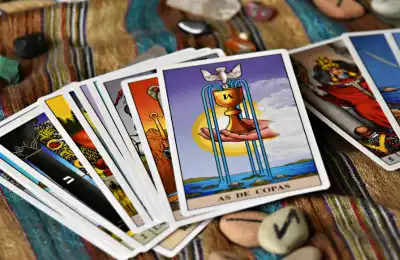
In tarot, water element symbolism is most powerfully expressed through the suit of Cups. The Cups deal with the inner life: love, relationships, intuition, and emotional experience. Cards like The Moon (which depicts a crayfish emerging from the sea beneath the night sky) and The High Priestess (seated before a great body of water) are deeply connected to water's themes of mystery, intuition, and the unconscious.
When water-connected cards appear prominently in a reading, they often invite you to turn inwards and pay close attention to what you’re feeling. Even, especially, the things that are hardest to name.
Creatures and Spirits Associated with Water
Many creatures have come to represent water's qualities across different traditions. In mythology and symbolism, the animals most closely associated with water include:
- The fish — found in virtually every aquatic tradition, representing fertility, abundance, and the hidden depths of the unconscious.
- The frog — a creature of transformation, moving between water and land, and associated with rain, fertility, and new beginnings.
- The swan — often considered the most regal of water birds, symbolising grace, love, and transformation. In many European traditions, the swan is regarded as the queen of water.
- The dolphin — associated with joy, intelligence, and divine guidance in ancient Greek culture; dolphins were said to guide the souls of the dead.
- The otter — in Celtic traditions, otters were associated with playfulness, friendship, and the magic of the water world.
The Deeper Meaning of Water in Philosophy and Life
Philosophers have long returned to water as a source of wisdom. In Taoist philosophy, water holds a special place as the ultimate expression of strength through yielding. The Tao Te Ching describes water as the softest substance in the world — and yet, given enough time, it wears away even the hardest rock. This is the essence of water's philosophical meaning: patience, persistence, and the quiet power of flowing around obstacles rather than fighting them.
Water holds a dual nature that no other symbol quite captures so cleanly. It gives life and it takes it away. It nourishes and it floods. It heals and it drowns. This duality is precisely what makes it such a powerful symbol across so many traditions. Water does not judge; it simply flows, filling whatever space is available, adapting without losing its essential nature.
Rain, grey seas, and the image of tears have long served as symbols of grief and loss in art and literature. But water does not belong to sadness alone; it represents the full spectrum of human emotion, from the joy of a summer swim to the quiet sorrow of watching rain streak a windowpane. The emotions associated with water are as varied and shifting as the element itself.
Frequently Asked Questions About Water Symbolism
What things symbolise water?
Water is commonly represented in art and iconography by the colour blue, flowing wave patterns, spirals, fish, and the crescent moon. In alchemy and classical elemental systems, its symbol is a downward-pointing triangle, reflecting its association with descent, fluidity, and the feminine principle.
Is water a gift of life?
In virtually every cultural and spiritual tradition, water is considered the most fundamental gift of life, since no living thing on Earth can survive without it. Beyond its physical necessity, many traditions go further, describing water as the sacred source from which life itself first emerged.
What are the two meanings of water?
At its most elemental, water holds a dual nature: it gives life and it takes it away. It nourishes and it floods, it heals and it overwhelms, and it’s this tension between creation and destruction that makes water such a powerful and enduring symbol across so many traditions.
Does water represent sadness?
Water can certainly carry associations with sadness; rain, tears, and grey seas have long been used in art and literature to evoke grief, loss, and longing. However, water represents the full emotional spectrum, and can just as readily symbolise joy, peace, renewal, and love depending on its context.
What emotions are associated with water?
Water is most strongly associated with emotions that are fluid, deep, or changeable — love, grief, longing, intuition, and compassion among them. In both psychology and spiritual traditions, water governs the inner emotional world, reflecting our capacity to feel, to connect, and to be moved.
What is a female water spirit called?
The name varies widely depending on the tradition: in Greek mythology she is a naiad or nereid; in Germanic folklore a nixie; in Slavic tradition a rusalka; and in broader European occult traditions an undine. Despite the different names, these figures share a consistent archetype as a mysterious, powerful feminine being intimately bound to water.
Why is water called the sense of life?
Water sustains every living organism on Earth and was often understood by ancient peoples as the animating force behind all existence, making it synonymous with life itself. Philosophically, it also mirrors the nature of life, constantly moving, constantly changing, capable of both nourishing and overwhelming.
What is the spirit associated with water?
In many traditions, water is associated with spirits that embody its qualities of depth, mystery, and transformation. In elemental traditions, the undine or water elemental is the spirit of water; in broader spiritual contexts, water is linked to intuitive, receptive energy and is often associated with the divine feminine.
Recommended for you!
Best Sellers


Study Greek Mythology for £29
If you'd like to learn more about ancient symbolism, we offer a Greek Mythology Diploma Course that takes you on a guided journey through the myths, gods, creatures, and ancient wisdom that continue to shape the way we understand the world today. Whether you’re completely new to the subject or already familiar with the stories, this course is perfect for curious minds at any level.
Access the course for the discounted price of just £29.