Symbols of wealth and prosperity have been part of human culture for thousands of years, appearing in everything from ancient mythology to everyday home décor. Whether you're drawn to the spiritual side of abundance or simply curious about how different cultures have understood good fortune, you've come to the right place.
What's in this Guide?
This guide explores nine of the most enduring wealth symbols from cultures around the globe, along with the history and meaning behind each one. You'll also find practical guidance on what to wear to attract wealth, from gemstones and rings to symbolic jewellery.
Jump to:
What Is a Status Symbol?
A status symbol is any object, image, or marker that signals a person's social standing, power, or success to those around them. The concept of symbolic status is as old as civilisation itself. In ancient Egypt, gold jewellery distinguished royalty from commoners; in medieval Europe, particular crests and colours were reserved for nobility. Today, the status symbol's meaning has broadened, but the underlying idea remains the same: some objects communicate more than their practical function.
It's worth noting, though, that not all wealth symbolism functions as an ultimate status symbol in the showy sense. Many of the symbols on this list are deeply spiritual, used not to impress others but to invite good fortune, honour divine generosity, or express gratitude for abundance. The difference between a luxury symbol displayed for social prestige and a small jade pendant worn close to the skin is a meaningful one, and it varies enormously across cultures.
The definition of a status symbol has shifted with each era, but the desire to mark, attract, and celebrate prosperity remains a universal human impulse.
Wealth Symbolism Through the Ages
Abundance symbolism has roots in virtually every culture that has ever existed. From ancient Mesopotamia, where grain stores symbolised divine favour, to the intricate wealth symbolism woven into Hindu temple carvings, human beings have long sought visual and material ways to represent prosperity.
Medieval symbols of wealth often drew on the natural world: the oak tree, certain animals, and precious metals all carried layers of meaning related to power and abundance. These symbols found their way into heraldry, religious iconography, and everyday objects, and many have survived into the modern day in forms you might not immediately recognise.
Understanding this history adds a real depth to the way you might encounter or use these symbols today.
9 Symbols of Wealth and Prosperity From Around the World
1. The Maneki-Neko: Japan's Beckoning Cat
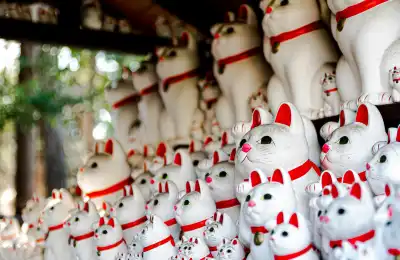
One of the most recognisable Japanese symbols for prosperity is the Maneki-Neko, or "beckoning cat." You'll often spot this small ceramic figure near the entrance of shops, restaurants, and homes, with one paw raised in a welcoming gesture, inviting good fortune inside. In Japanese tradition, the raised paw beckons wealth, customers, and positive energy into the space.
The colour of the Maneki-Neko carries its own significance:
- White represents happiness and purity
- Gold is specifically associated with financial success and wealth
- Black is believed to ward off evil and negative energy
As a social symbol with centuries of history behind it, the Maneki-Neko is a lovely example of how a simple, cheerful image can carry profound cultural meaning.
2. The Cornucopia: Ancient Greece's Horn of Plenty
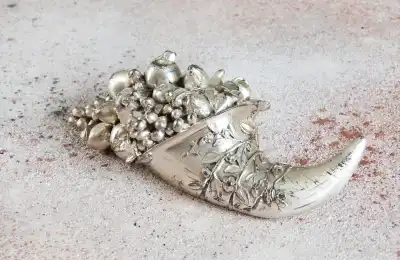
When it comes to Greek symbols for wealth and prosperity, few images are more iconic than the cornucopia, the overflowing horn spilling with fruit, grain, and flowers. In Greek mythology, the cornucopia was associated with Amalthea, the goat who nursed the god Zeus, and the horn itself became a symbol of divine generosity and abundance.
In Roman tradition, it was closely linked to Fortuna, the goddess of fortune and good luck, making it one of the earliest and most enduring symbols for prosperity and wealth in Western culture. Today, it remains a familiar harvest image, though its mythological roots run far deeper than seasonal decoration.
3. The Laughing Buddha: A Beloved Charm for Abundance
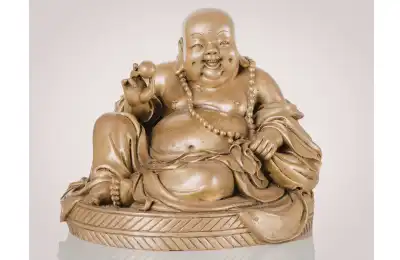
Despite a common misconception, the Laughing Buddha isn't the same figure as Gautama Buddha, the founder of Buddhism. In Chinese folk tradition, he's known as Budai or Hotei, a rotund, joyful monk associated with contentment, generosity, and good fortune. Many people rub his belly for luck, and he's widely considered one of the most popular charms thought to attract money and positive energy.
Placing a Laughing Buddha near the entrance of a home or business is believed to welcome abundance in. As both a symbol of luck and prosperity and a deeply loved cultural figure, Budai bridges the spiritual and the everyday in a way that's made him universally appealing.
4. The Hamsa Hand: Protection and Prosperity

The Hamsa is an open hand symbol used across several cultures and faiths, including Islam, Judaism, and various Middle Eastern and North African traditions. While it's perhaps best known as a protective charm against the evil eye, it's also understood as a symbol for abundance and divine blessing, representing the Hand of God offering favour to those who display it.
Commonly worn as a necklace or bracelet, or hung in the home, the Hamsa is both a rich symbol of spiritual protection and a meaningful representation of the prosperity that comes with divine goodwill.
5. The Horseshoe: A Celtic Charm for Wealth
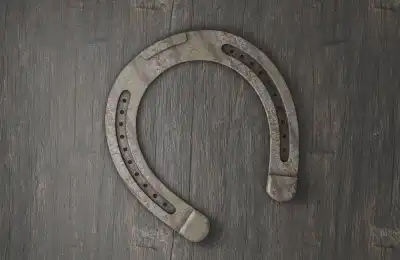
If you're looking for a Celtic symbol for wealth, the horseshoe is one of the most enduring candidates in the Western folk tradition. Iron was considered a protective metal by Celtic and European peoples, and the curved, crescent shape of the horseshoe was thought to catch and hold good fortune.
Traditionally, a horseshoe hung above a door with the ends pointing upward is meant to collect luck "like a cup," preventing it from draining away. Whether worn as a pendant, stitched into fabric, or mounted above a threshold, the horseshoe has remained a beloved symbol for wealth and prosperity across generations.
6. The Elephant: Ganesha and the Spirit of Prosperity
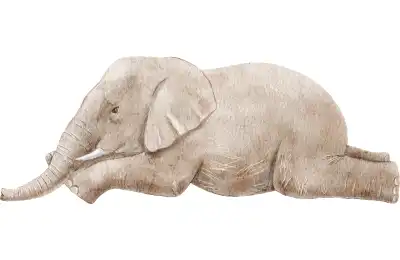
In Hindu tradition, the elephant-headed deity Ganesha is known as the remover of obstacles and one of the most important spiritual figures associated with wealth and success. Before beginning any new venture, many Hindus pray to Ganesha, whose blessings are understood to clear the path for prosperity to flow in.
Beyond Ganesha specifically, elephants are considered auspicious across much of South and Southeast Asia. As rich symbols in their own right, they represent wisdom, strength, and longevity, qualities that have long been tied to both material and spiritual abundance. A figurine with the trunk raised is particularly associated with good fortune, and elephant motifs appear widely in jewellery and home décor connected to wealth symbolism.
7. The Koi Fish: Symbol of Prosperity and Good Fortune

In Chinese and Japanese culture, the koi fish is one of the most beloved symbols of prosperity and good fortune. According to legend, a koi that swims upstream and passes through a waterfall at a place called the "Dragon Gate" will transform into a dragon, making it a powerful emblem of perseverance, ambition, and the rewards of hard work.
As a symbol of prosperity and wealth, the koi appears in paintings, tattoos, garden ponds, and decorative objects throughout East Asia. Ponds filled with koi are thought to invite positive energy and financial well-being into a space.
8. Citrine and Green Jade: Gemstones for Wealth
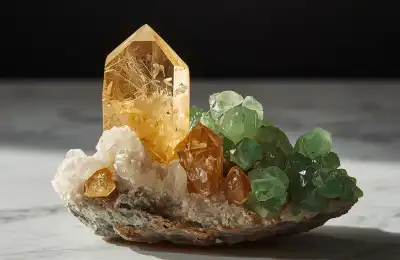
When it comes to stones that represent wealth and prosperity, two stand out above all others in different traditions.
Citrine is often called the "merchant's stone" for its supposed ability to attract financial success and abundance. Its warm golden colour has long been associated with the energy of the sun. Citrine is consistently one of the most popular choices for attracting wealth, and worn as a ring or pendant, it's believed to support positive financial energy.
Green jade holds a place of extraordinary significance in Chinese culture as the gem of prosperity. Prized for thousands of years, jade is believed to attract harmony, luck, and abundance to its wearer. As a symbol for abundance with deep cultural roots, green jade jewellery remains a meaningful gift for anyone beginning a new chapter in life.
Other stones worth mentioning include pyrite, often called "fool's gold," which is used in some traditions as an abundance stone, and green aventurine, associated with opportunity and good fortune.
9. The Acorn and Oak Tree: Medieval Symbols of Wealth

Among medieval symbols, the oak tree and its acorn carry particularly rich associations with abundance and prosperity. The acorn represents potential, the idea that something small and ordinary can, with patience and the right conditions, grow into something mighty. In many European folk traditions, carrying an acorn was believed to attract luck, long life, and financial security.
The oak itself was associated with endurance and strength, and its image featured prominently in heraldry, often used to represent noble families and institutions of power. The phrase "from little acorns, mighty oaks grow" captures this symbolism beautifully and remains part of the cultural vocabulary to this day.
What to Wear to Attract Wealth
Attracting wealth through clothing or talismans is a topic that many spiritual and cultural traditions have addressed across history. Here are some of the most widely recognised approaches:
- Rings: Many traditions suggest wearing gold rings or rings set with prosperity stones such as citrine or jade. Which ring attracts money depends on the tradition you follow, but gold bands and jade rings are consistently popular choices across cultures.
In numerological and astrological traditions, the index finger, associated with Jupiter, the planet of expansion and abundance, is often recommended. Some traditions suggest the ring finger of the non-dominant hand for stones of prosperity.
- Colours: Gold, green, and red are widely associated with wealth and good fortune in multiple cultures. Incorporating these into your clothing or accessories is a simple way to engage with wealth symbolism day to day.
- Symbolic jewellery: Wearing pieces that incorporate the Hamsa, a koi fish motif, or the Maneki-Neko design is a popular and meaningful way to keep abundance symbolism close.
It's worth remembering that these are cultural and spiritual traditions rather than guarantees of financial success. For many people, though, wearing these symbols serves as a daily reminder of their intentions, values, and the kind of life they're working towards, and that in itself has real value.
Recommended for you!
Best Sellers





Study Religious Studies for £29
The symbols of wealth and prosperity explored in this guide are just one thread in the vast and endlessly fascinating tapestry of spiritual traditions and cultural belief systems. If this subject has sparked your curiosity, the Religious Studies Diploma Course is an ideal next step. This online course takes you on an in-depth journey through the world's major religions, their histories, practices, philosophies, and symbols, making it perfect for anyone who's eager to understand the beliefs that have shaped human civilisation across the ages. Right now, you can access the full course for a discounted price of just £29.