Across cultures and centuries, trees symbolism has played an important role in myths, religions, psychology, and everyday life.
This guide explores the meaning of trees, from their spiritual significance and mythology to their emotional symbolism, helping you understand why they continue to inspire people around the world.
Jump to:
The Tree as a Universal Symbol
Tree symbolism usually begins with life itself. A tree as a symbol is often linked to:
- Growth and personal development
- Stability and strength
- Wisdom and knowledge
- Connection between different worlds (earth and sky)
- Renewal and rebirth
Because a tree grows slowly over time, it has become a natural metaphor for your own journey. You begin small, develop roots, face storms, and gradually become stronger. In this sense, the symbolic meaning of trees is about endurance and becoming who you are meant to be.
Many traditions also see trees as bridges. Their roots reach into the soil, their trunks stand firmly on earth, and their branches stretch towards the sky. This is one reason tree spirituality is often associated with spiritual balance and harmony. In simple terms, they represent life unfolding.
Do Trees Symbolise Life?

Trees symbolise life in many different cultures and myths from around the world. You may have heard of the Tree of Life, which represents interconnectedness. Its roots and branches mirror each other, symbolising the link between physical existence and spiritual awareness.
Life is at the heart of what a tree signifies. Trees produce oxygen, provide shelter, and support ecosystems, and because of this, they naturally became symbols of vitality and continuity.
Emotionally, trees often reflect hope, resilience, and renewal. Watching a bare tree bloom again in spring reminds you that difficult seasons are temporary.
The Spiritual Meaning of Trees
For many people, trees are more than plants; they are sacred. The tree's spiritual meaning often includes:
- Grounding energy
- Protection
- Inner wisdom
- Spiritual growth
- A sense of peace
In some belief systems, every tree has its own spirit, referring to the idea that trees hold ancient knowledge. This reflects how deeply humans connect with nature.
Why Are Trees So Symbolic?
Trees have layers – literally and symbolically. Their roots, trunks, branches, leaves, and even their rings all add depth to their meaning.
When you think about the symbolism of a tree, each part tells a story. Roots grow downwards into the earth, often representing grounding, ancestry, and your past. The trunk stands tall and steady, symbolising strength and stability. Branches stretch outwards and upwards, reflecting growth, ambition, and the many directions your life can take. Leaves change with the seasons, reminding you of renewal and transformation.
Some people believe a tree holds a dual meaning: life and death existing side by side. In autumn, leaves fall and trees appear bare, yet beneath the surface, life continues. This natural cycle explains why tree symbolism is so often connected with rebirth and continuity.
Across cultures, trees are seen as reminders of patience and endurance. They grow slowly, sometimes over centuries, encouraging you to think long term. Their presence suggests that steady progress can be more powerful than sudden change.
The Symbolism of Different Types of Trees
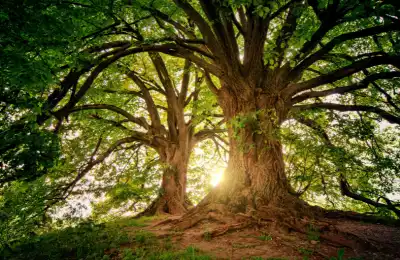
Just as flowers carry meaning through their colours, different trees hold their own spiritual symbolism. Below are some of the most well-known symbolic trees and what they represent.
Oak Tree Symbolism
The significance of oak tree traditions is especially strong across Europe, where the oak has long been associated with strength and authority. The symbolism of oak tree imagery includes courage, endurance, protection, and leadership. Because oaks can live for hundreds of years and withstand fierce storms, the oak tree symbol has become a powerful representation of resilience and stability.
In ancient Celtic traditions, oak tree symbolism was connected with sacred wisdom, and Druids are believed to have gathered beneath its branches for ceremony and guidance. In Greek mythology, the oak was sacred to Zeus, reinforcing its reputation as a tree linked with divine power and protection. The oak tree symbolises steady growth rooted in deep foundations.
Birch Tree Symbolism
Birch tree symbolism is closely tied to renewal and fresh beginnings. As one of the first trees to grow back after fire or disturbance, the birch has become a natural symbol of regeneration and hope. Its pale bark and light appearance reinforce its association with clarity and new chapters.
In folklore, birch trees were connected with purification and gentle protection. They were seen as trees that marked transitions, both seasonal and personal. The meaning of a tree like the birch often reflects resilience through change and the strength needed to begin again.
Rowan Tree Symbolism
Rowan tree symbolism is rooted in European folklore, where it was believed to offer spiritual protection. Often planted near homes, the rowan was thought to guard against negative influences and misfortune. Its bright red berries contributed to its image as a watchful and protective presence.
Within the mythology of trees, the rowan appears as a guardian figure. Its symbolism centres on intuition, spiritual defence, and subtle strength rather than physical size. The rowan reflects the idea that protection can be gentle yet powerful.
Fig Tree Symbolism
Fig tree symbolism has deep connections to religion and philosophy. In Buddhist tradition, the Bodhi tree, a type of fig tree, is where enlightenment was attained, linking the fig tree's meaning with awakening and inner understanding. It represents wisdom gained through reflection and patience.
In biblical texts, the fig tree symbolises fruitfulness and alignment between belief and action. A healthy tree bearing fruit reflects visible and meaningful growth. The symbolic meaning of tree imagery in this context focuses on nourishment, abundance, and spiritual maturity.
Ginkgo Tree Symbolism
Ginkgo tree symbolism centres on endurance and peace. As one of the oldest living tree species, the ginkgo represents longevity and resilience across generations. Its ability to survive extreme conditions has strengthened its association with hope and continuity.
The distinctive fan-shaped leaves have given rise to ginkgo leaf symbolism, often connected with balance and harmony. In Japanese symbolism, the ginkgo became a lasting symbol of recovery and peace after surviving great devastation. It stands as a reminder that life can persist and flourish even after hardship.
Forest Symbolism and Wood Symbolism
If a single tree carries meaning, an entire forest multiplies it. Forest symbolism often represents mystery, transformation, and the unknown. In fairy tales and myths, forests are places where characters face challenges and emerge changed. The symbol of forest spaces is often about stepping into deeper parts of yourself.
Wood symbolism, on the other hand, tends to represent practicality and strength. Wood builds homes, tools, and furniture. It symbolises support and structure in everyday life. Together, trees, forests, and wood show different layers of the meaning of a tree: from spiritual insight to physical stability.
Trees in Mythology and Their Meanings
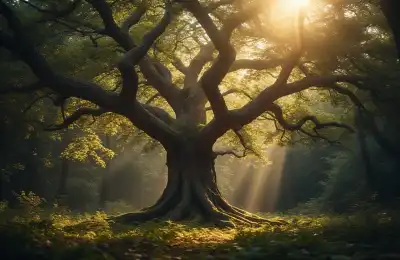
Across cultures, different trees appear in myths and sacred stories, each carrying its own symbolic message.
- Norse Mythology – Yggdrasil: The great world tree that connects the Nine Worlds; symbolises cosmic balance, destiny, and the connection between heaven, earth, and the underworld.
- Biblical Tradition – The Tree of Life: Represents eternal life, divine wisdom, and spiritual wholeness; often seen as the ultimate symbol of life and divine connection.
- Biblical Tradition – The Tree of Knowledge: Symbolises awareness, free will, and moral responsibility; reflects humanity’s journey into understanding and moral choice.
- Greek Mythology – Zeus and the Sacred Oak: The oak was sacred to Zeus and believed to carry divine messages through the rustling of its leaves; represents strength, authority, and protection.
- Celtic Folklore – The Protective Rowan: Associated with guarding against misfortune and negative energy; symbolises spiritual defence and intuitive awareness.
- Buddhist Tradition – The Bodhi Tree: The fig tree beneath which the Buddha attained enlightenment; represents awakening, wisdom, and spiritual insight.
- Ancient Greek and Roman Religion – Sacred Groves: Forest spaces dedicated to gods and goddesses; symbolise mystery, transformation, and closeness to the divine.
- Greek Mythology – Athena and the Olive Tree: A gift from Athena to the city of Athens; represents peace, prosperity, and civilisation, and is often connected with the idea of a tree as a symbol of peace.
- Middle Eastern Traditions – The Cedar of Lebanon: Frequently mentioned in ancient texts as a symbol of endurance and spiritual strength; represents dignity and sacred architecture.
- European Mythic Traditions – The Ash Tree: Often linked with protection and healing, and in some traditions connected with cosmic structure; symbolises continuity and the link between different realms of existence.
Frequently Asked Questions
What Does a Tree Mean in Psychology?
In psychology, trees are often used as reflective tools in therapeutic exercises. Roots can represent your past, the trunk your present self, and the branches your future goals or aspirations. This analogy of tree development mirrors human growth as steady, layered, and shaped by experience.
What Are Trees a Metaphor For?
Trees are metaphors for identity, growth, and connection. Their roots, trunk, and branches reflect the way your life develops from foundations into outward expression. The symbolism of a tree shows how personal growth is influenced by environment and time.
What Kind of Energy Is Stored in Trees?
Spiritually speaking, trees are believed to hold calm and grounding energy. Their long lifespan and deep roots symbolise steadiness and balance. This is why many people report feeling peaceful or centred when spending time in woodlands.
Can Trees Feel You Hug Them?
Many traditions believe trees carry a quiet, living energy that you can tune into. While trees may not “feel” in a human sense, hugging a tree is often seen as a way of connecting with its grounding, steady presence and exchanging calm, natural energy. The comfort you experience can feel like a shared moment of stillness, where your own energy aligns with the strength and stability the tree symbolises.
What Is the Magical Meaning of Trees?
In folklore, trees were often believed to house spirits or serve as gateways to other realms. Sacred groves and ancient trees were treated with deep respect and sometimes fear. Today, these ideas are understood symbolically, reflecting humanity’s long-standing spiritual relationship with nature.
What Is the Superstition About Trees?
In some traditions, cutting down certain trees without permission was believed to bring misfortune. Particular species, such as rowan or oak, were thought to offer protection and should not be harmed lightly. These superstitions highlight the cultural belief that trees deserve care and reverence.
What Does a Tree Symbolise in Love?
In romantic symbolism, a tree often represents long-term commitment and steady devotion. Just as roots grow deeper over time, love strengthens through shared experiences and trust. Family trees also reflect connection and belonging, reinforcing the idea that trees symbol represent enduring bonds.
What Are Spiritual Sayings About Trees?
Phrases such as “Stay rooted while reaching for the sky” capture the balance between grounding and ambition. These expressions reflect the tree spiritual meaning in simple and memorable language.
Is a Tree a Symbol of Peace?
In many traditions, certain trees such as the olive and ginkgo are associated with peace and reconciliation. Their historical and cultural roles have shaped this peaceful symbolism. As a result, the tree as a symbol can reflect harmony, balance, and hope for the future.
Recommended for you!
Best Sellers



Study Spirit Animals and Totems for £29
If you enjoy learning about the meanings behind natural symbols, you may love discovering the spiritual significance of animals, too. You can explore this further through our Spirit Animals and Totems Diploma Course, available for just £29.