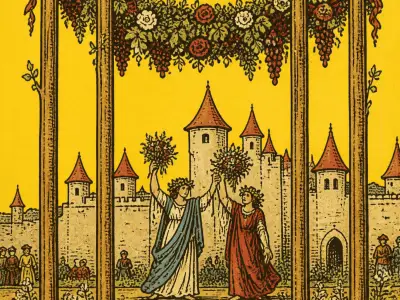
Symbols of success have a remarkable way of connecting us to something deeper than words, carrying centuries of cultural wisdom in a single image. If you've found yourself researching this topic, chances are you're looking for something that resonates, capturing what achievement truly means to you.
What's in this Guide?
This guide explores twelve of the most powerful and enduring symbols of achievement from across the globe. From ancient mythology to modern tattoo culture, each one has a story worth knowing.
Jump to:
Which Symbol is Used for Success?
There's no single, universal symbol used for success, and that's precisely what makes this subject so rich. Different cultures, religions, and traditions have each developed their own ways of representing achievement, prosperity, and ambition. Some symbols are drawn from nature: flowers, animals, trees. Others come from mythology, religion, or centuries of ritual practice.
What they all share is a capacity to communicate meaning far beyond the literal. A laurel wreath isn't simply a crown of leaves; a lotus flower isn't simply a plant. Each carries a story, and understanding that story offers a window into the values and worldview of the people who created it. The symbol of success you're drawn to can say a great deal about what you yourself hold dear.
What Can Represent Success?
Almost anything can represent success, provided it carries the right cultural or personal significance. Across the world, symbols of achievement tend to fall into a few broad categories:
- Natural symbols: flowers, trees, animals, and celestial bodies such as the sun.
- Mythological symbols: creatures like the phoenix or dragon, born from human imagination.
- Religious symbols: objects and icons tied to spiritual tradition and belief.
- Human-made symbols: crowns, trophies, and architectural motifs designed to signal status.
What's interesting is that a society's chosen symbols often reflect its deepest values. A culture that prizes resilience will celebrate the phoenix, while one that values scholarship may favour the owl or the laurel. Looking at success images and pictures across history is, in many ways, a form of cultural literacy.
12 Symbols of Success from Around the World
1. The Laurel Wreath

Few symbols of success are as instantly recognisable as the laurel wreath. In ancient Greece and Rome, laurel crowns were awarded to athletes, generals, and poets as a mark of distinction and honour. The very word "baccalaureate," used to describe academic degrees, derives from the Latin for laurel berry, a reminder that this symbol has been tied to achievement for more than two thousand years.
Today, the laurel wreath still appears on Olympic medals, university crests, and state emblems across Europe. Its longevity alone speaks to its power.
2. The Lotus Flower

The lotus is a well-known flower of success. Revered across Hindu, Buddhist, and ancient Egyptian traditions, the lotus grows in muddy, murky water and yet produces a bloom of extraordinary beauty. This quality has made it a powerful symbol of success in life: the idea that something remarkable can emerge from difficult or unpromising circumstances.
In Buddhism, it represents spiritual awakening and enlightenment. In Hinduism, it's associated with Lakshmi, the goddess of wealth and prosperity, while in ancient Egypt, it symbolised creation and rebirth. Across all three traditions, the consistent message is that growth and achievement are possible regardless of where you begin.
3. The Dragon

In Western folklore, the dragon is often cast as a destructive force to be defeated. In East Asian cultures, however, it's one of the most celebrated symbols of achievement, wisdom, and good fortune. In Chinese tradition, the dragon represents imperial authority and supreme power. It was historically associated with the emperor himself, used to signal the highest possible status.
In Japanese and Korean cultures, dragons are similarly associated with strength, protection, and transformation. To be compared to a dragon is considered a great compliment, suggesting someone who is both capable and commanding.
4. The Koi Fish

The koi fish is a deeply beloved symbol in Japanese and Chinese culture, rich in associations with perseverance and hard work. According to Chinese legend, a koi that swims upstream and leaps over the Dragon Gate waterfall transforms into a dragon: a striking image of ambition rewarded and potential fully realised.
This makes the koi a particularly powerful representation of the symbolism for hard work. It speaks to the idea that persistence, patience, and determination will, in time, lead to transformation. It's a symbol for anyone who knows the path to success involves swimming against the current.
5. The Eagle
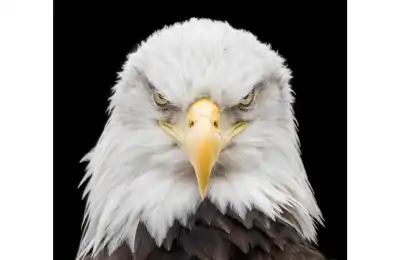
From ancient Rome to Native American traditions and modern national symbolism, the eagle has long been revered as a symbol of power, vision, and achievement. Its ability to soar above the landscape, see clearly from great heights, and move with speed and precision has made it a natural emblem of leadership.
In many Native American traditions, the eagle is considered a sacred messenger between the human and spiritual worlds, associated with courage and clarity of purpose. In Roman culture, it was the standard of the legions, the ultimate symbol of military success and imperial might.
6. The Sun

Almost every culture in human history has revered the sun as a source of life, energy, and abundance. As a symbol of success, it represents the idea of reaching your full potential. It's one of the most universal success images found in ancient art, architecture, and religious tradition worldwide.
In Aztec culture, the sun was the ultimate source of power and the focus of religious life. In ancient Egypt, the sun god Ra was among the most important of all deities, associated with creation and eternal life. Even today, it remains a go-to image for motivation, optimism, and achievement.
7. The Oak Tree

The oak has been celebrated across European cultures for centuries as a symbol of strength, endurance, and steady achievement. Its slow, sure growth over centuries, weathering storms and standing firm through seasons of hardship, has made it a natural representation of long-term success built through patience and resilience.
In Celtic tradition, the oak was sacred, a symbol of wisdom and nobility. In Roman and Greek mythology, it was associated with Jupiter and Zeus respectively, the most powerful figures in their entire divine pantheons. To be as enduring as an oak was, in the ancient world, the highest kind of compliment.
8. The Yellow Rose

Roses carry many meanings depending on their colour, but if you're wondering which rose symbolises success, the yellow rose is the most widely cited. In modern Western culture, yellow roses are associated with friendship, joy, and personal achievement, making them a popular choice for graduation gifts and celebrations of professional milestones.
Some traditions also link red roses with ambition and honour, while white roses can represent fresh beginnings. But it's the yellow rose that has become most closely and consistently tied to the feeling of a goal well and truly met.
9. The Hamsa
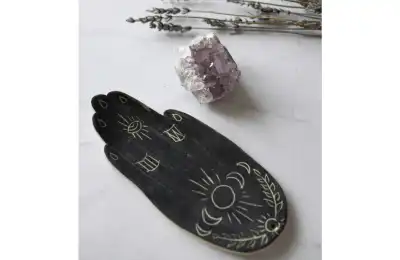
The Hamsa is an open hand bearing an eye in its centre, and it's a powerful symbol found across Jewish, Islamic, and North African traditions. While it's primarily known as a talisman of protection, it's also associated with good fortune and divine favour.
In many cultures, success and prosperity are understood as gifts requiring both human effort and something beyond human effort. The Hamsa captures this duality beautifully. It's a symbol that bridges traditions and continents, appearing in art, jewellery, and architecture from the Middle East to the Mediterranean.
10. The Phoenix
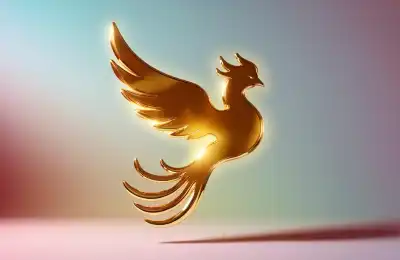
Perhaps no symbol of success is more dramatic than the phoenix: the mythical bird that burns and is reborn from its own ashes. Found in Greek mythology, ancient Egyptian religion, Chinese folklore, and beyond, the phoenix represents the idea that failure and hardship aren't the end of the story. From destruction comes renewal; from loss comes transformation.
As a pic of success, the phoenix resonates especially with those who've faced real setbacks and come back from them. It's a reminder that the path to achievement is rarely smooth, and that resilience isn't a bonus quality — for many people, it's the central one.
11. The Elephant
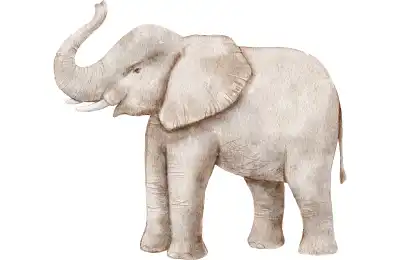
In Hindu tradition, the elephant-headed deity Ganesha is one of the most widely worshipped figures in the entire religion, and his significance is directly tied to success and new beginnings. He's known as the remover of obstacles, the god you'd invoke before starting a new venture, sitting an exam, or embarking on any important endeavour. His image is found in homes, businesses, and temples across India and beyond, placed at thresholds and doorways as a blessing for what lies ahead.
Beyond Hinduism, elephants are celebrated across South and Southeast Asian cultures as symbols of wisdom and good fortune. In Thai culture, the white elephant is considered especially sacred, while in African traditions, the elephant's strength and memory are associated with enduring achievement and ancestral wisdom. Few creatures carry such a breadth of positive meaning across so many different parts of the world.
12. The Bee

The humble bee might not be the first image that comes to mind when you think about symbols of achievement, but its cultural significance is surprisingly far-reaching. In ancient Egypt, the bee was a royal emblem, associated with the Pharaoh and the ordered, productive society over which he ruled. In Greek mythology, bees were considered sacred to the Muses and linked to the rewards of sustained effort.
The bee's association with the symbolism for hard work has carried right through to the modern era. The city of Manchester, for instance, adopted the worker bee as its symbol during the Industrial Revolution, and it remains the city's emblem to this day. As a symbol, the bee reminds us that consistent, purposeful effort is what truly builds something lasting.
Symbols of Achievement in Art and Imagery
When you look at historical paintings, sculptures, and public monuments, symbols of achievement appear again and again. Laurel wreaths crown figures in Roman friezes, while the lotus appears in temple carvings across South and Southeast Asia. Eagles perch atop national monuments on nearly every inhabited continent. These success images and pictures weren't chosen casually; they were selected with intention, designed to communicate meaning across generations and languages.
Today, the same instinct persists. It shows up in company logos, architectural details, and tattoo art. People still reach for symbols when they want to express something that words alone can't quite capture.
What Tattoo Symbolises Success?
For those considering body art as a way to mark a personal milestone, some of the most popular choices include:
- The phoenix: for resilience and transformation after difficulty.
- The lotus: for beauty and achievement rising from challenging beginnings.
- The koi fish: for the rewards of perseverance and sustained effort.
- The lion: for courage, leadership, and personal strength.
- The mountain: for the satisfaction of reaching great heights through hard work.
- The compass: for finding direction and staying true to your own path.
The best choice is ultimately the one that holds personal significance for you. Many people select symbols connected to their own cultural heritage or spiritual background, which adds another layer of meaning to the image. A symbol is most powerful when it tells your story.
Why Symbols of Success Still Matter Today
In an era of rapid digital communication, it might seem as though ancient symbols have lost their relevance. But the opposite appears to be true. People are increasingly drawn to imagery that carries depth and history, to pictures and objects that connect them to something larger than themselves and to traditions that have endured for good reason.
Encountering a symbol of success in life, whether in a work of art, a piece of jewellery, a religious text, or a tattoo, invites a moment of reflection. It asks: what does success really mean? What do I value most? Those are questions worth sitting with, and symbols have a unique ability to bring them to the surface.
Understanding these symbols also builds genuine cultural empathy. When you know why a dragon is celebrated in Chinese tradition, or why the lotus is sacred in Buddhist teaching, you gain a deeper and more nuanced appreciation for the breadth of human experience. And that kind of knowledge, rooted in real curiosity about beliefs and cultures, is precisely what a study of world religions can offer you.
Recommended for you!
Best Sellers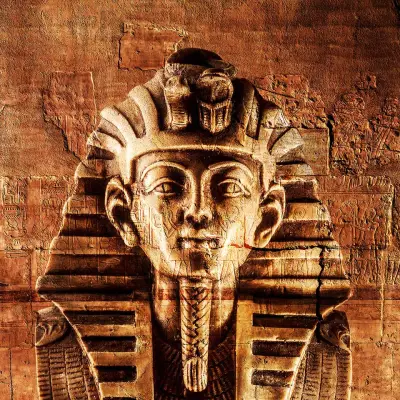





Study Religious Studies for £29
If exploring the meanings behind symbols, sacred traditions, and cultural beliefs has sparked your curiosity, the Religious Studies Diploma Course from Centre of Excellence could be a wonderful next step. Designed for all levels and backgrounds, this online course takes you through the beliefs, practices, and rich symbolic traditions of world religions. Whether you're entirely new to the subject or looking to deepen what you already know, the course meets you where you are. Enrol today for a discounted price of £29!