Honoured as a prince, warrior and divine figure, Rama’s influence stretches across Hindu traditions and beyond. Often called Lord Shri Ram, he represents virtue and the eternal struggle between good and evil.
Let’s take a closer look at who Rama is, the myths connected to him, his powers and symbols, and why his story continues to inspire people around the world.
Jump to:
Recommended for you!
Best Sellers


Who Is Rama in Hindu Mythology?
Rama is believed to be the seventh incarnation (avatar) of the god Vishnu. In Hindu belief, Vishnu comes to earth in different forms whenever the balance of good and evil needs restoring. Rama’s story is one of these divine descents.
As the prince of Ayodhya, Rama is presented as both human and divine. He experiences joy and sorrow, triumph and defeat, just as ordinary humans do. This makes his story deeply relatable while still carrying the weight of divine purpose.
The Myths of Lord Rama
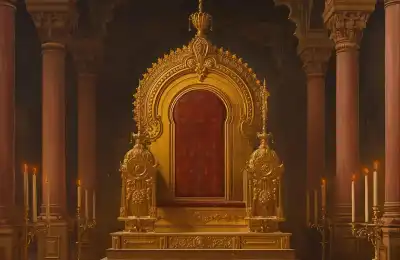
Rama’s myths are woven through the great Hindu epic, the Ramayana. These stories highlight his courage, devotion and humanity.
Exile and Loyalty
When Rama is chosen as heir to the throne of Ayodhya, his stepmother, Kaikeyi, demands that her own son be crowned instead. As part of this demand, Rama is exiled for fourteen years. Rather than resisting or rebelling, Rama calmly accepts his fate, showing extraordinary respect for duty over personal gain. Rama’s wife, goddess Sita Devi and his brother Lakshmana accompany him, highlighting love and loyalty.
The Abduction of Sita
The peace of the forest exile is shattered when Sita is abducted by Ravana, the powerful demon king of Lanka. Ravana, captivated by her beauty and purity, deceives her by taking on the form of a mendicant holy man. Once she steps outside the protective circle drawn by Lakshmana, he reveals his true form and carries her away in his flying chariot. The abduction symbolises the ever-present conflict between righteousness and evil.
The War Against Ravana
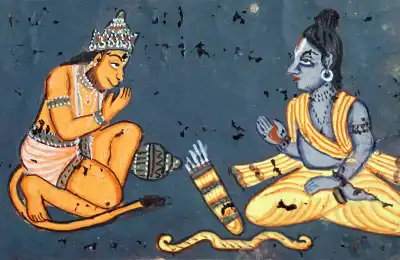
Rama’s search for Sita brings him into alliance with Hanuman and the vanara (monkey) army. The battle between Rama and Ravana is one of the most dramatic episodes in Hindu mythology. With the support of Hanuman and his army, Rama defeats Ravana after a fierce struggle.
The Role of Rama in the Ramayana
The Ramayana is one of the great epics of India, an ancient story that has been told for thousands of years in poems, plays, and spoken tradition. It follows the life of Rama, a prince who is later recognised as a divine figure. The epic offers lessons about how to live with integrity, compassion and devotion.
Rama himself represents dharma, a Sanskrit word that means righteousness, duty, or moral order. Everything he does, whether obeying his father, fighting demons, or ruling as king, demonstrates his commitment to doing what is right, even when it brings personal suffering.
What Powers Did Rama Possess?
Although Rama is often portrayed as a human king, his divine nature is reflected in his powers:
- Strength in battle: Rama’s skill with a bow is unmatched. He can defeat the strongest warriors and demons.
- Divine mission: As an avatar of Vishnu, his ultimate power lies in maintaining balance and protecting the world from evil.
- Compassion and justice: Unlike many warriors, Rama tempers strength with kindness and fairness. His ability to forgive is seen as a true mark of his divinity.
Symbols Associated with Rama
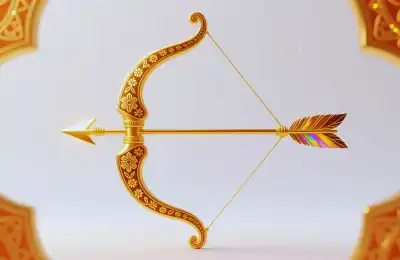
Rama is often depicted in Hindu art and temples with powerful symbols. These symbols make Rama instantly recognisable and remind worshippers of his values.
- Bow and arrows: Signifying his strength, focus, and readiness to defend dharma.
- Blue skin: The colour of Rama’s skin represents his divine connection to Vishnu and the infinite, like the sky and ocean.
- Tilak on his forehead: A sign of purity and devotion.
Rama’s Lineage and Connections
Rama was born into the royal family of Ayodhya, the son of King Dasharatha and Queen Kaushalya. His birth is celebrated during the festival of Ram Navami, which honours his arrival as a divine child destined to protect righteousness.
In wider Hindu mythology, Rama is recognised as an avatar of Vishnu, the preserver of the universe. Throughout his story, he also shows deep reverence for Shiva, another of the great Hindu deities, reflecting the harmony and respect between different divine powers.
Rama’s connection to Sita is equally significant. Sita is considered an earthly form of the goddess Lakshmi, who is Vishnu’s consort. This makes Rama and Sita’s union a representation of divine partnership, embodying love, loyalty, and balance between the human and the divine.
Why Is Rama Special?
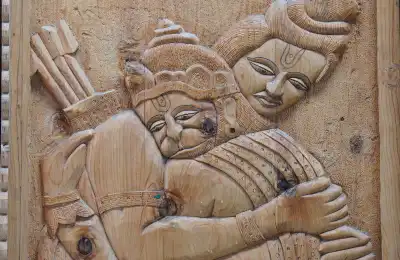
Rama stands out because his story blends the human and the divine. Unlike gods who remain distant, he experiences real human struggles: exile, heartbreak, and painful moral choices. What makes him extraordinary is the way he responds with wisdom and a deep commitment to righteousness.
For many, his reign, remembered as Ram Rajya, represents the vision of a perfect society, one built on fairness, prosperity, compassion, and justice. It symbolises the hope that human life, when guided by truth and moral duty, can create harmony for all.
The power of Rama’s story lies in its timeless message. He shows that a meaningful life is not defined by comfort or personal gain, but by patience and dedication to truth. In this way, Rama remains a moral guide whose example continues to inspire people today.
Worship of Rama in Modern Culture
The devotion to Rama has never faded, and his worship continues to be a vibrant part of Hindu life today. Temples dedicated to Lord Shri Ram can be found across India and in many parts of the world where Hindu communities live. These sacred spaces often depict Rama alongside Sita, Lakshmana, and Hanuman, symbolising family, loyalty and devotion.
Festivals also play a central role in Rama’s worship. Ram Navami, which celebrates his birth, is observed with prayers, storytelling, and processions. Diwali, one of the most widely celebrated Hindu festivals, marks Rama and Sita’s return to Ayodhya after exile, with lamps lit to symbolise the triumph of light over darkness. Plays known as Ramlila are performed each year, bringing the Ramayana to life for new generations.
In modern culture, Rama’s influence reaches far beyond temple walls. His image is found in art, music, television, and cinema, reminding people of his enduring values. For many, chanting the mantra Hare Krishna Hare Rama is a way of seeking spiritual connection and inner peace. The phrase itself is a prayer: “Hare” refers to the divine energy of God, while “Krishna” and “Rama” are names of the divine. Together, the chant is an expression of love, surrender, and longing to be close to the divine presence.
Recommended for you!
Best SellersFrequently Asked Questions About Rama
Why is Rama often shown with Hanuman?
Rama and Hanuman share one of the most famous bonds in Hindu mythology. Hanuman is the devoted servant of Rama, representing humility and service. He plays a vital role in rescuing Sita and defeating Ravana. Because of this devotion, Hanuman is often depicted kneeling at Rama’s feet, symbolising the ideal relationship between the divine and the devotee.
Is Rama worshipped outside of India?
Temples and shrines dedicated to Rama can be found in countries like Nepal, Indonesia, Thailand, Mauritius, and Trinidad. In South East Asia, the Ramayana has been retold through local traditions, dance, and theatre, showing Rama’s influence on cultures far beyond India.
Are there other epics about Rama besides the Ramayana?
While the Ramayana is the central text, Rama also appears in other scriptures such as the Mahabharata and various Puranas. In some regional traditions, poets and saints have retold his story in new ways, such as Tulsidas’s Ramcharitmanas, which is one of the most beloved versions in North India.
What is the difference between Krishna and Rama?
Both Rama and Krishna are avatars of Vishnu, but they’re celebrated in different ways. Rama is often seen as the embodiment of discipline, duty, and morality, while Krishna is more playful and emphasises love and devotion. Together, they represent different aspects of the divine.
Study Our Hindu Mythology Diploma for £29
Interested in learning more about Rama and the wider world of Hindu gods and goddesses? The Hindu Mythology Diploma Course from Centre of Excellence offers a comprehensive and engaging way to explore these timeless stories. For a discounted price of £29, you can deepen your understanding of myths, symbols, and traditions that continue to shape spiritual life today.