Mindful colouring has emerged as one of the most accessible and effective self-care practices for adults. Once seen purely as a childhood pastime, colouring is now widely recognised for its therapeutic potential. From stress relief to ADHD support, this creative practice offers meaningful psychological benefits.
What’s in This Guide?
This guide explores seven key benefits of mindful colouring for adults, including how it can reduce anxiety, improve focus, support mental wellbeing, and provide a soothing daily mindfulness habit. You’ll also find answers to common questions and practical tips for getting started.
Jump to:
- What Is Mindful Colouring?
- Why Colouring Feels So Calming
- Supports Stress Relief and Reduces Anxiety
- Supports Mental Health and Emotional Regulation
- Encourages a Meditative State and Better Sleep
- Improves Focus and Concentration
- Offers Structured Support for ADHD
- Supports Cognitive Health in Older Adults
- Provides a Healthy Emotional Outlet
- Frequently Asked Questions About Mindful Colouring
- Study Mindfulness for £29
What Is Mindful Colouring?
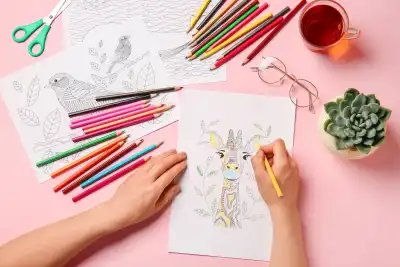
Mindful colouring involves focusing fully on the act of colouring, bringing awareness to each movement, colour choice and sensation. Rather than rushing to complete a picture, the emphasis is on:
- The rhythm of the pencil moving across the page
- The visual experience of colours filling a design
- The gentle concentration required to stay within patterns
- The present-moment awareness created by repetition
Because it anchors attention in the present, mindful colouring aligns closely with many people’s mindfulness practices. It offers many of the benefits of meditation, but in a format that feels creative and approachable
Why Colouring Feels So Calming
Modern life keeps the brain in constant problem-solving mode. Work, responsibilities and digital distractions mean the mind rarely switches off completely. Colouring interrupts this pattern.
By narrowing attention to a single, contained task, colouring reduces mental clutter. This is why colouring books for stress relief have become increasingly popular among adults seeking simple stress-management tools.
The structure of adult colouring books creates a safe mental boundary where worries temporarily quieten.
1. Supports Stress Relief and Reduces Anxiety
One of the most recognised benefits of colouring for adults is its ability to ease stress and anxious thinking.
The focused attention required during colouring helps reduce rumination – repetitive thought cycles that often fuel anxiety. Structured patterns, particularly mandalas, provide containment and predictability, which can feel reassuring during overwhelming periods.
Therapeutic colouring books are especially helpful because they feature calming, repetitive patterns that encourage steady concentration. Over time, regular colouring sessions may help retrain the mind to settle more easily.
Research on mandala colouring and stress has shown especially promising results, as these circular, symmetrical designs promote balance and repetition. Many people find mandalas more soothing than free-form drawing because the defined shapes create a sense of safety, making them particularly effective for stress relief.
2. Supports Mental Health and Emotional Regulation
Colouring for mental health works because it combines creativity with mindfulness. This pairing allows emotional processing to happen gently, without the intensity of verbal analysis. Adult colouring can:
- Encourage emotional balance
- Reduce feelings of overwhelm
- Provide a sense of small accomplishment
- Offer structured relaxation
In colouring therapy settings, structured designs are sometimes used to help people regulate emotions and practise grounding techniques. While colouring is not a substitute for professional support, it can be a valuable complementary practice.
3. Encourages a Meditative State and Better Sleep
The repetitive motion of colouring naturally slows the mind – as the brain settles into a rhythm, the nervous system begins to relax. This makes colouring an effective wind-down activity in the evening, particularly when replacing screen time with a calming, tactile task.
Many adults find that colouring mindfulness practices support deeper relaxation before bed. The combination of gentle focus and repetitive motion helps shift the body away from stimulation and towards rest.
4. Improves Focus and Concentration
Colouring for focus and concentration in adults is an often-overlooked benefit. Staying within lines, choosing colours thoughtfully, and following intricate patterns activates areas of the brain responsible for attention and executive functioning.
Unlike passive relaxation activities, colouring is a form of mental training that keeps the brain lightly engaged. This improves:
- Sustained attention
- Patience
- Cognitive flexibility
- Present-moment awareness
5. Offers Structured Support for ADHD
Because colouring combines movement with structured creativity, it can be particularly helpful for people who struggle with restlessness, particularly those with ADHD.
The contained boundaries of a design provide focus without requiring silence or stillness. This structured engagement can support attention regulation while also offering a calming sensory experience.
For some adults, colouring therapy techniques become part of a broader self-regulation strategy.
6. Supports Cognitive Health in Older Adults
Colouring engages multiple areas of the brain simultaneously, including those responsible for fine motor control, visual processing and memory.
For older adults, colouring can offer both relaxation and gentle cognitive stimulation. It encourages hand-eye coordination, precision and decision-making while remaining low-pressure and enjoyable.
Colouring book therapy approaches are sometimes used in wellbeing programmes for older individuals because they combine creative enjoyment with cognitive engagement.
7. Provides a Healthy Emotional Outlet
Not everyone finds it easy to express emotions verbally. Colouring offers a non-verbal outlet for emotional release, and choices around colour intensity, shading and pressure can reflect internal states, creating a safe way to externalise feelings.
In colouring therapy settings, this creative expression supports emotional processing without feeling overwhelming.
Frequently Asked Questions About Mindful Colouring
What does adult colouring do for the brain?
Mindful colouring activates areas of the brain linked to creativity, focus, reward and motor coordination, providing gentle cognitive stimulation. It can help calm the amygdala, which is involved in stress responses, while engaging the prefrontal cortex, which is responsible for attention and emotional regulation. This combination allows colouring to feel soothing and mentally satisfying.
Is adult colouring good for mental health?
Adult colouring can support mental health by reducing stress, encouraging mindfulness and providing a structured creative outlet. While it is not a replacement for therapy, it can complement other wellbeing practices.
Does adult colouring help with anxiety?
Many adults find colouring helpful for anxiety because it reduces rumination and anchors attention in the present moment. Structured designs such as mandalas are particularly calming.
Does colouring help you switch off?
Colouring provides a single, contained task that helps quiet mental chatter. This makes it easier to step away from daily pressures and reset.
Is colouring good before bed?
Colouring can be an effective evening ritual, particularly when replacing screen time. The repetitive motion and focused attention help prepare the body for rest.
Does colouring help with insomnia?
While not a treatment for insomnia, colouring can support better sleep by reducing anxiety and helping the nervous system transition into a calmer state.
Is there any scientific evidence for adult colouring?
Studies have found that colouring structured patterns can reduce short-term anxiety and improve mindfulness. More research is ongoing, but evidence supports its use as a stress-reduction tool.
Is mindful colouring recommended by the NHS?
The NHS widely promotes mindfulness-based practices for stress and anxiety management. Mindful colouring aligns with these principles, though it may not always be listed specifically.
What’s best to use for adult colouring?
Coloured pencils are popular for control and shading, while gel pens offer vibrant colour. Therapeutic colouring books and printable adult colouring pages are widely available.
What colour calms down anxiety?
Soft blues, greens and muted purples are often associated with calmness. However, the most soothing colour is the one that feels personally comforting.
Are there any downsides to adult colouring?
Colouring is generally positive, but perfectionism or overly intricate designs may cause frustration for some people. It should complement, not replace, professional mental health support when needed.
Does colouring help with PTSD?
Colouring can be particularly beneficial for people with Post-Traumatic Stress Disorder (PTSD). It provides a form of distraction that can help manage intrusive thoughts and flashbacks. The structured nature of colouring allows individuals with PTSD to focus on the present task, which can be calming and reduce the symptoms of anxiety and hyperarousal often associated with PTSD.
Is colouring good for memory loss?
Colouring may provide some benefits for those experiencing memory loss by stimulating areas of the brain related to fine motor skills and cognition. While it is not a cure for memory loss, the activity can help maintain brain function and encourage mindfulness, which in itself can help with cognitive recall.
Does colouring help with overthinking?
Colouring can be effective in reducing overthinking. By focusing on the present activity, individuals can escape from continuous cycles of repetitive thoughts, which is a common characteristic of overthinking. This practice helps bring attention to the moment, reducing the tendency to ruminate on past or future worries.
Is colouring a cognitive activity?
Colouring is a cognitive activity. It involves problem-solving (choosing colours, deciding how to blend or shade), fine motor skills and hand-eye coordination, and memory (recalling specific techniques or preferences), all of which engage different areas of the brain.
Is adult colouring a hobby?
For many people, adult colouring has become a hobby. It provides a creative outlet and a therapeutic way to relax. Like any hobby, it offers a break from routine, stimulates the brain, and gives a sense of accomplishment.
Is colouring a form of meditation?
The repetitive strokes and focusing on simple, repetitive tasks in colouring can parallel the benefits of traditional meditation, helping your mind settle and creating a calming effect.
Can colouring help with depression?
Colouring can serve as a therapeutic activity that may help reduce symptoms of depression by providing a purposeful task that can improve your mood and create a sense of accomplishment.
Recommended for you!
Best Sellers






Study Mindfulness for £29
If mindful colouring has helped you feel calmer, more grounded, or more present, imagine what a full mindfulness practice could do.
Our Mindfulness Diploma Course teaches you simple, evidence-based techniques to manage stress, ease anxiety, and build emotional resilience, even in the middle of a busy life.
For a limited time, you can enrol for just £29.