If you’ve ever explored Hindu mythology, you’ve probably come across the name Brahma, the god of creation in Hinduism. Alongside Vishnu and Shiva, Brahma forms the powerful Hindu trinity known as the Trimurti.
Despite his significant role, Brahma remains something of a mystery. This post explores his origin stories, unique powers, and what his role as the creator truly involves.
Jump to:
- Who Is the Hindu God Brahma?
- Brahma’s Myths
- The Role of Brahma in Hindu Storytelling
- What Powers Did Brahma Possess?
- Symbols Associated with Brahma
- Brahma’s Lineage and Connections
- Why Is Brahma Special?
- Brahma in Modern Culture
- Brahma’s Worship and Legacy
- Frequently Asked Questions About Brahma
- Study Our Hindu Mythology Diploma for £29
Recommended for you!
Best Sellers
Who Is the Hindu God Brahma?
In Hindu mythology, Brahma is known as the god of creation, the divine architect who brings the universe and all living beings into existence. He’s one of the Trimurti, the powerful trio of cosmic gods made up of Brahma, Vishnu, and Shiva. Each god represents a different force in the universe: Brahma creates, Vishnu preserves, and Shiva destroys, so the cycle of life can continue.
Despite his role as the creator god in Hinduism, Brahma is the least worshipped of the three. His temples are rare, and his myths often involve complex relationships and divine curses.
Brahma’s Myths
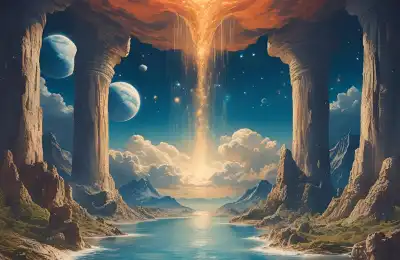
These myths about Brahma reveal how he was created, how he shaped the universe, and why his role is less prominent than other Hindu gods.
The Birth of Brahma
One of the most well-known stories describes Brahma as being born from a lotus that sprouted from the navel of Vishnu, floating on the cosmic ocean. In other versions, he emerges from a golden cosmic egg. Whichever version you follow, he is seen as the first being in the universe, tasked with the job of creation.
The Creation of the World
Brahma creates everything: gods, humans, animals, and demons. Some myths say that he divided himself into male and female to begin the process of creation. He also shaped the heavens, earth, and underworld, and set time, elements, and natural laws into motion, laying the foundation for the cosmic order.
Brahma’s Marriage to His Daughter
Brahma created the goddess Saraswati, born from his own body as the embodiment of knowledge, speech and wisdom. One myth tells us that Brahma was so enamoured with Saraswati that he desired to marry her. To follow her wherever she went, he created multiple heads, usually shown as four, though sometimes five. In some tellings, Saraswati accepted the union. In others, she was angered by his behaviour and cursed him, saying he would not be widely worshipped in the world he had created.
The Curses of Brahma
In addition to the myth surrounding Saraswati’s curse, many other stories explain why Brahma receives less devotion than other Hindu gods. One well-known tale describes how Brahma and Vishnu were tested by Shiva, who appeared as a pillar of light stretching infinitely in both directions.
While Vishnu admitted he could not find the base, Brahma falsely claimed to have found the top. As punishment for his dishonesty, Shiva cursed him, declaring that he would not be worshipped on Earth. Other stories portray Brahma as becoming proud or negligent in his duties, leading Vishnu to curse him as well.
The Role of Brahma in Hindu Storytelling
As the creator god, Brahma is often the one who sets the story in motion. He’s described as the father of gods, sages, and beings, responsible for populating the universe with characters who later play major roles in mythological tales. For example, Brahma is said to have created the seven great sages (the Saptarishis) and the first man, Manu, who becomes a key figure in Hindu cosmology.
Brahma also appears as a witness to divine events. In some stories, he acts as a narrator, or as a source of guidance and wisdom to other gods or mortals. In the Bhagavata Purana, Brahma initially doubts Krishna’s divinity and tests him, only to later acknowledge Krishna’s supreme nature, adding to the story’s deeper spiritual message. Through these appearances, Brahma represents cosmic order, wisdom, and the starting point of existence.
What Powers Did Brahma Possess?
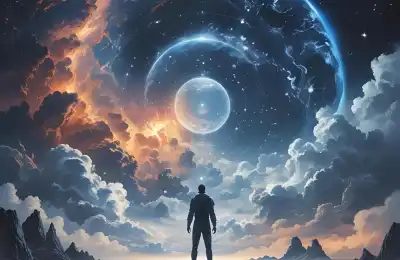
As the creator god, Brahma has the power to generate the entire universe. His abilities include:
- Manifesting time and space
- Creating life from his thoughts
- Bestowing wisdom and knowledge
- Giving boons or blessings to gods, sages, and demons
Despite his immense powers, Brahma does not usually intervene in mortal affairs like Vishnu or Shiva. His role is more cosmic than personal.
Symbols Associated with Brahma
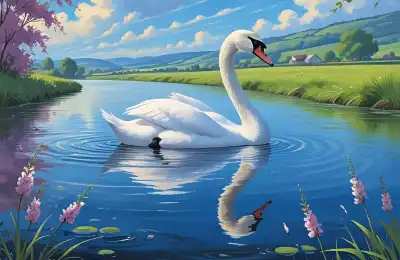
Brahma is rich in symbolic imagery, and each detail of his iconography tells a story:
- Four heads: Represent the four Vedas, the four Yugas (cosmic ages), and the four directions.
- Four arms: Hold objects with deep meaning: A book symbolising knowledge, a rosary representing time and meditation, a water pot (kamandalu) for creation and purity, a lotus, indicating truth and beauty.
- Beard and elderly appearance: Represent timeless wisdom.
- Vahana (vehicle): A white swan or goose, said to be able to separate good from evil.
Brahma’s Lineage and Connections
Brahma created several divine beings known as the Prajapatis, who assisted in populating the universe. Among the most notable are Daksha, a powerful progenitor and creator figure; Manu, the first human and legendary lawgiver; and Marichi, a revered sage considered the ancestor of many rishis.
These figures play important roles in Hindu mythology, often appearing in stories that explore the origins of life and spiritual knowledge. Brahma’s connections extend into many lineages, establishing him as a foundational figure in the ancestry of gods, sages, and humanity itself.
He’s also associated with the goddess Saraswati, who is both his creation and consort. Some myths suggest they had a child together, though other versions offer differing accounts.
Why Is Brahma Special?
Brahma is not good or evil in a traditional sense. Instead, he represents pure creative force. He doesn’t interfere with moral decisions or take sides. That makes him a unique figure among Hinduism's deities.
He also has a celestial lifespan beyond comprehension. A single day of Brahma, known as a Kalpa, lasts over 4 billion human years. After each night, the universe dissolves and is created anew. Brahma’s lifespan is said to be 100 Brahma years, which equates to trillions of human years.
Brahma in Modern Culture
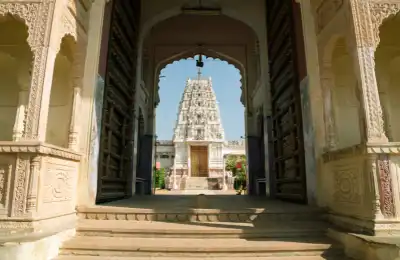
Although Brahma is less visible in popular Hindu devotion, he still appears in temples, festivals, and artworks. One of the most famous temples dedicated to him is the Brahma Temple in Pushkar, Rajasthan, a rare place of worship for this creator god.
In literature and philosophy, Brahma often symbolises intellectual and cosmic beginnings. His myths are studied for their insight into creation, karma, and the cycles of life.
Brahma’s Worship and Legacy
While there are no strict rules against it, Brahma’s worship is uncommon. The stories surrounding his curses and moral failings have led to a decline in rituals and temples dedicated to him. Nevertheless, he remains a key figure in scriptures, and his philosophical importance as the god of creation continues to shape Hindu beliefs.
Recommended for you!
Best SellersFrequently Asked Questions About Brahma
Why does Brahma have multiple heads?
Brahma is most commonly shown with four heads, representing the four Vedas, the four directions, and his ability to see and understand all aspects of creation. Some myths originally described him with five heads, but one was removed by Shiva after a disagreement, leaving him with four.
Why does Brahma hold a rosary?
The rosary (mala) in Brahma’s hand symbolises time, meditation, and the cycles of creation. It reflects the spiritual discipline behind his creative powers and the rhythm of the cosmos.
What does Brahma ride?
Brahma’s vehicle is a swan or goose, known as a hamsa. This bird is said to have the ability to separate milk from water, symbolising the power of discernment, wisdom, and purity.
Did Brahma create time?
In many myths, Brahma is credited with creating abstract concepts such as time, speech, and consciousness. These are seen as essential foundations for life and the universe.
Is Brahma still active today?
In the cyclical view of time in Hinduism, Brahma is considered to still be active during the current Kalpa. However, his role is largely complete after the act of creation, which is why he plays a less visible part in later myths compared to Vishnu and Shiva.
Why did Brahma curse Ganga?
In some stories, Brahma cursed the goddess Ganga for disobedience and arrogance after she descended to Earth. The curse caused her to flow turbulently, which later required Lord Shiva to catch her in his hair to calm her descent.
Can Brahma be worshipped at home?
Brahma can be worshipped at home, although this is uncommon. There are no restrictions against it, but due to the myths surrounding his curses and the rarity of rituals dedicated to him, home worship of Brahma is not widely practised.
Did Brahma create evil?
Some myths suggest that Brahma created both good and evil beings to maintain the balance of the universe. Demons and destructive forces are sometimes said to have emerged from his anger or shadow aspects, representing the dual nature of creation.
What is the difference between Brahma and Brahman?
Brahma is the personal god of creation in Hinduism. Brahman, on the other hand, is the ultimate, formless, infinite reality that underlies everything. Brahma is a deity; Brahman is a philosophical concept of pure consciousness and the source of all existence.
Study Our Hindu Mythology Diploma for £29
If you're fascinated by the stories, symbols, and questions surrounding the Hindu god Brahma and other mythological figures, why not take your knowledge further? The Hindu Mythology Diploma Course from Centre of Excellence offers a deep and engaging exploration of ancient gods, cosmic cycles, and the timeless wisdom of Hindu stories. Enrol today for just £29 and start learning at your own pace, from anywhere in the world.