Brahman is a central concept in Hinduism, often discussed in philosophical texts and spiritual discussions. This blog post explores the meaning of Brahman, its role in Hindu mythology, the myths surrounding it, and its associated symbols. By exploring these aspects, you’ll gain a deeper understanding of how Brahman shapes Hindu beliefs and practices.
Jump to:
- What is Brahman in Hindu Mythology?
- Brahman’s Myths
- The Role of Brahman in Hindu Storytelling
- What Powers Did Brahman Possess?
- Symbols Associated with Brahman
- Brahman’s Lineage and Connections
- Why Is Brahman Special?
- Brahman in Modern Culture
- Brahman’s Worship and Legacy
- Frequently Asked Questions About Brahman
- Study Our Hindu Mythology Diploma for £29
Recommended for you!
Best Sellers

What is Brahman in Hindu Mythology?
In Hinduism, Brahman is the ultimate reality, the source of all creation. Unlike the gods you might know, such as Vishnu or Shiva, Brahman isn’t a personal god but an all-encompassing divine force that exists beyond time and space. Everything in the universe, from the smallest atom to the grandest galaxy, is considered an expression of Brahman.
Brahman is central to understanding Hinduism's worldview. It’s formless, infinite, and beyond human comprehension. Instead of being a specific god, Brahman is the supreme, unchanging reality that transcends all.
Brahman’s Myths
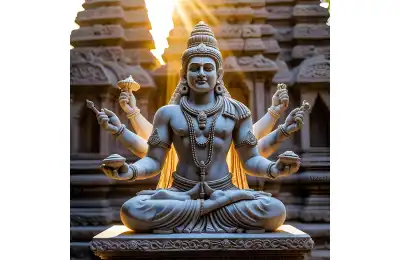
There are many myths surrounding Brahman, especially concerning its manifestations in the forms of other gods. One common myth is that Brahman, though formless, is represented through the three gods of Hinduism: Brahma (the creator), Vishnu (the preserver), and Shiva (the destroyer). These gods embody different aspects of Brahman, but Brahman itself is beyond these roles. Here are two key stories that highlight Brahman’s presence and influence:
The Dispute Between Brahma and Vishnu
One of the most well-known myths revolves around a dispute between Brahma, the god of creation, and Vishnu, the god of preservation. The two gods argued over which of them was the more powerful deity. To settle the dispute, Shiva appeared as an immense column of light, known as Jyotirlinga, that stretched infinitely in both directions. Both Brahma and Vishnu attempted to find the ends of this column. Vishnu admitted he could not, while Brahma claimed to have seen the top. Angered by Brahma’s deceit, Shiva cursed him, which is why Brahma is not widely worshipped in Hinduism today.
The Creation and Dissolution of the Universe
Another myth focuses on the cyclical nature of the universe, a concept central to Brahman’s power. Brahman is believed to create, preserve, and eventually dissolve the universe through its manifestations in the forms of Brahma, Vishnu, and Shiva. This cycle of creation, preservation, and destruction reflects Brahman’s infinite and formless nature. The gods themselves are just different faces of Brahman’s eternal essence, each playing their part in the grand cosmic order.
The Role of Brahman in Hindu Storytelling
Brahman’s role in Hindu mythology is as the source of everything. All beings, gods, and creatures are believed to be manifestations of Brahman. While the individual gods like Vishnu, Shiva, and Brahma play active roles in the stories, it is Brahman that is the underlying force that makes these stories possible.
Many Hindu myths highlight the idea of Maya (illusion); the concept that the world we perceive is an illusion, and only through realising Brahman’s truth can we escape the cycle of birth and death. In storytelling, Brahman serves as the foundation of the universe, guiding the actions of gods and humans alike.
What Powers Did Brahman Possess?
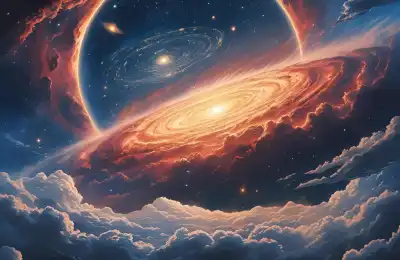
Brahman’s powers are vast and transcend beyond any form or physical limitation, reflecting its status as the ultimate reality:
- Creation, Preservation, and Destruction: Brahman has the power to create, sustain, and dissolve the universe. These acts are not separate, but part of a continuous cycle. While gods like Brahma, Vishnu, and Shiva are often seen as the deities responsible for these tasks, they are ultimately expressions of Brahman’s infinite energy.
- Transcendence of Dualities: One of Brahman’s greatest powers is its ability to transcend dualities, such as good and evil, creation and destruction. Brahman itself is neither good nor evil, but exists beyond these categories. It is the essence of all that exists, transcending all distinctions and contradictions.
- Essence of Cosmic Energy: As the source of all energy and consciousness, Brahman is the driving force behind everything in the universe. Every event, whether large or small, is seen as an expression of Brahman’s will. Everything that exists is a manifestation of Brahman’s boundless power.
- Eternal Nature: Brahman’s formlessness and eternal nature are central to its power. Unlike the gods, who may have forms and attributes, Brahman is beyond time, space, and any human conception. This eternal existence makes Brahman both the source and the ultimate end of all things in the universe.
Symbols Associated with Brahman
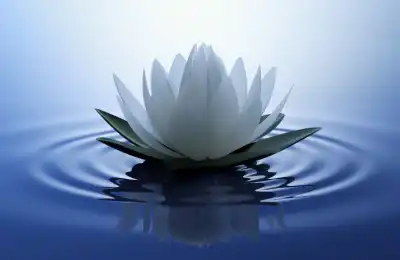
Symbols associated with Brahman reflect its transcendental nature and its role as the ultimate reality in Hinduism:
- Om: The most prominent symbol of Brahman is Om, the sacred sound and symbol. Om is considered the primordial sound of the universe, representing the essence of all creation. It is believed that chanting or meditating on Om connects the practitioner with the divine essence of Brahman. This symbol is used in prayers, mantras, and meditation as a way to align oneself with Brahman’s infinite energy.
- Lotus: The lotus is another symbol closely tied to Brahman. It represents purity, spiritual awakening, and enlightenment. Emerging from the murky waters of material existence, the lotus flower unfolds towards the light, much like Brahman reveals itself to those who seek spiritual understanding. The lotus signifies the ability to rise above the illusion of the material world and attain the wisdom of Brahman.
Brahman’s Lineage and Connections
Brahman doesn’t have a lineage in the traditional sense. While gods like Vishnu, Shiva, and Brahma are part of Hindu mythology and are often said to have family connections (e.g., Vishnu and Lakshmi), Brahman is not confined to any specific family or lineage.
However, Brahman is sometimes connected to the Trimurti, the trio of gods that represents the different aspects of creation: Brahma, Vishnu, and Shiva. These gods are thought to embody the qualities of Brahman, but Brahman itself is a formless and transcendent reality, so it doesn’t have familial connections as we typically understand them.
Why Is Brahman Special?
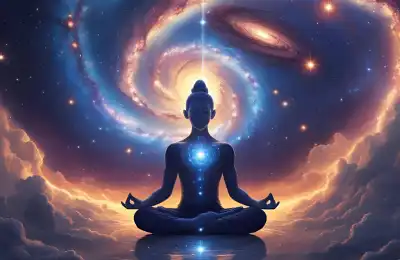
What makes Brahman special is its all-encompassing nature. It is beyond time, space, and any form. It is neither male nor female, neither good nor evil. Brahman is the source of everything, and everything in the universe is a manifestation of Brahman.
Brahman is also special because it is the ultimate goal of spiritual practice in Hinduism. Those who follow the path of devotion (bhakti), knowledge (jnana), and meditation (dhyana) aim to realise the true nature of Brahman and reach moksha (liberation), escaping the cycle of birth, death, and rebirth.
Brahman in Modern Culture
In modern culture, Brahman is often discussed in spiritual or philosophical contexts. Many people who study Hindu philosophy and spirituality seek to understand Brahman as the essence of the universe. In modern times, Brahman has influenced spiritual movements like yoga and meditation, where practitioners aim to connect with the divine essence through various techniques.
Brahman also appears in many philosophical discussions, especially in the context of non-duality (Advaita Vedanta), which teaches that there is no difference between the individual soul (atman) and Brahman.
Brahman’s Worship and Legacy
While Brahman itself is not worshipped directly in most Hindu traditions, many worship its various manifestations, such as Vishnu, Shiva, and others. Brahman is the foundation of all these deities and the ultimate source of creation.
The legacy of Brahman is seen in the way Hindu philosophy views the interconnectedness of all things. It is the reason why everything in existence is seen as sacred and worthy of respect, as it all stems from the same ultimate reality.
Recommended for you!
Best SellersFrequently Asked Questions About Brahman
Is Brahman a god?
Brahman is not a god in the traditional sense. While gods like Brahma, Vishnu, and Shiva are manifestations of Brahman, Brahman itself is the ultimate, formless reality that transcends all deities. Brahman is the source of all creation and the essence that underlies everything in the universe.
What is the difference between Brahman and Brahma?
Brahman and Brahma are often confused, but they are very different. Brahman is the supreme, formless reality, while Brahma is one of the gods in the Hindu pantheon, specifically the creator god. Brahma is considered a manifestation of Brahman, but Brahman itself is beyond any individual deity or form.
Why don’t Hindus worship Brahman directly?
Hindus generally don’t worship Brahman directly because it is formless and beyond human comprehension. Instead, they worship the gods like Vishnu, Shiva, and Brahma, who are seen as different manifestations of Brahman. Worship of these gods is a way to connect with the divine essence of Brahman in a more accessible and personal form.
Can Brahman be seen or experienced?
Brahman cannot be seen in the way physical objects can. It is beyond form and is an abstract concept. However, many Hindus believe that Brahman can be experienced through meditation, spiritual practices, and by realising the interconnectedness of all life. It is often realised through inner peace and enlightenment.
Why is Brahman called "the supreme essence"?
Brahman is referred to as the supreme essence because it is the foundation of all existence. Everything in the universe, whether it is matter, energy, or consciousness, emanates from Brahman. It is the ultimate cause and reality, existing beyond all human understanding or description.
Does Brahman have a role in the afterlife?
Brahman itself does not play an active role in the afterlife, as it is beyond individual experiences like life and death. However, understanding and realising Brahman is believed to lead to liberation (moksha), where one transcends the cycle of rebirth and unites with the divine essence, free from the cycle of samsara (birth, death, and rebirth).
Study Our Hindu Mythology Diploma for £29
If you’re fascinated by Brahman and want to explore more about Hindu mythology, you can deepen your knowledge with the Hindu Mythology Diploma Course from Centre of Excellence. For just £29, you can gain a comprehensive understanding of Hindu myths, gods, symbols, and philosophies. Whether you’re a beginner or someone looking to expand your knowledge, this course will guide you through the rich and diverse world of Hindu mythology.