Across the world, Lord Krishna is one of the most loved and recognisable figures in Hindu mythology. Known for his blue skin, enchanting flute, and divine wisdom, the Hindu god is the embodiment of love and joy, representing the eternal connection between the divine and humanity.
This guide explores the myths that surround Krishna, his powers, his connections, and the symbols that define his divinity. You’ll also discover the reasons he holds such a special place in Hindu belief, and how his worship continues to thrive in modern culture.
Jump to:
Who Is Krishna in Hindu Mythology?
Lord Krishna is a central figure in Hinduism and is worshipped as the eighth avatar of Vishnu, the preserver and protector of the universe. Vishnu is believed to descend to Earth whenever the world falls into imbalance, and Krishna’s appearance marks one of these divine interventions.
The name Krishna comes from the Sanskrit word Kṛṣṇa, meaning “dark” or “black”, symbolising the infinite and mysterious nature of the divine. He is often described as both a playful child and a wise philosopher; a god who lived among people yet possessed cosmic power.
In art and scripture, Krishna is portrayed as eternally youthful, smiling, and radiant. His personality combines joy and serenity, showing that spiritual enlightenment can be found through lighthearted play and compassion.
Recommended for you!
Best Sellers


The Myths of Krishna
The life of the Hindu deity Krishna is filled with extraordinary myths that reveal his divine character and eternal wisdom.
The Miraculous Birth
Born to Devaki and Vasudeva in the prison of King Kansa, Krishna arrived under extraordinary circumstances. Kansa, fearing a prophecy that Devaki’s eighth child would bring about his death, imprisoned the couple and killed each of their children. When Krishna was born, the prison doors opened miraculously, and Vasudeva carried the infant across the Yamuna River to safety in Gokul, where he was raised by Nanda and Yashoda. This night of divine birth is still celebrated as Krishna Janmashtami, one of the most joyful Hindu festivals.
Childhood and Divine Play
As a child, Krishna was known for his playful spirit and mischief. He stole butter from his mother’s kitchen, teased the village girls, and danced joyfully with the gopis (cowherd maidens). These stories, while charming, also carry deep symbolism. They illustrate divine love in its purest form: the soul’s longing to be close to God.
The Serpent Kaliya and the Mountain Govardhan
Among the many heroic tales, Krishna’s subduing of the serpent Kaliya and his lifting of Mount Govardhan are some of the most celebrated. When the Yamuna River was poisoned by Kaliya, Krishna danced on the serpent’s heads until it surrendered, symbolising the triumph of good over evil. Later, he lifted Mount Govardhan on his little finger to protect his devotees from a storm sent by the god Indra, demonstrating both his strength and his deep compassion for humanity.
Radha and Krishna
The story of Radha and Krishna represents the deepest expression of spiritual love. Radha symbolises the human soul yearning for divine connection, and though Krishna never married her, their love is seen as eternal and divine, beyond physical form.
What Powers Did Krishna Possess?
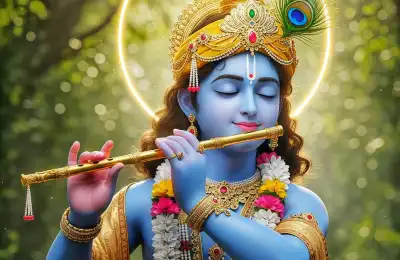
The powers of Lord Krishna are described across ancient Hindu texts as expressions of divine perfection. His wisdom and compassion reveal the qualities of a god who bridges heaven and earth. Krishna possessed immense physical and spiritual power. He defeated demons and restored peace wherever chaos arose. As a child, he performed miracles that revealed his divine nature, from swallowing forest fires to multiplying food to feed thousands.
As an adult, Krishna’s most notable power lay in his wisdom. In the Bhagavad Gita, he served as the charioteer and spiritual teacher to Prince Arjuna during the great war of Kurukshetra. His teachings on duty, selflessness and devotion form one of the most important philosophical texts in Hinduism.
Unlike other gods who remain distant, Krishna participated in the human world with compassion and humour. His divine powers were not used for conquest, but for protection, guidance and love.
Symbols Associated with Krishna
The symbols connected to Krishna reveal his divine nature and timeless message. Each carries deep meaning and is found throughout art, literature and worship.
- Flute (Bansuri): Krishna’s flute is one of the most recognisable symbols in Hinduism. The sound of his flute is said to captivate all beings, symbolising the call of the divine to the human soul.
- Peacock Feather: Worn in his crown, the peacock feather symbolises beauty, grace and the joy of creation. It also reminds followers of Krishna’s connection to nature and his role as protector of all living beings.
- Blue Skin: Krishna’s blue skin symbolises infinity, like the endless sky or ocean. It reflects his divine essence: eternal and boundless.
- Sudarshana Chakra: Krishna holds a spinning disc weapon, the Sudarshana Chakra, often shown resting on his little finger. This symbol represents divine order and the destruction of evil, reminding devotees that truth and justice always prevail.
- Lotus Flower: The lotus represents purity, detachment and spiritual growth. The flower’s association with Krishna reflects the idea that divine love can blossom even amid life’s challenges.
Krishna’s Lineage and Connections
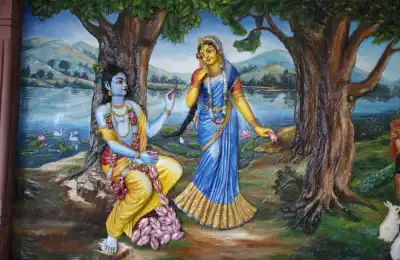
Krishna was born into the Yadava dynasty as the son of Devaki and Vasudeva. His foster parents, Nanda and Yashoda, raised him in the pastoral village of Gokul, where he spent much of his youth among the cowherds. His brother Balarama, also an incarnation of Vishnu’s strength, accompanied him throughout his early adventures.
Krishna later became a prince in the city of Dwarka and played a central role in the Mahabharata, one of India’s great epics. His guidance to the Pandava brothers, especially Arjuna, ensured the triumph of righteousness.
Krishna’s connection to the goddess Radha represents divine love, while his marriages to Rukmini, Satyabhama, and other queens symbolise his cosmic relationships with different aspects of feminine divinity. He’s said to have had 16,108 wives; a number that symbolises his infinite capacity for love and care, not literal marriage.
His death, described in the Mahabharata, occurred when a hunter accidentally shot him in the foot, mistaking him for a deer. This marked Lord Krishna’s death and the end of the Dvapara Yuga, an age of balance and virtue.
Why Is Krishna Special?
Krishna’s uniqueness lies in his balance of the divine and the human. Unlike many gods who exist beyond emotion, Krishna lived fully among people: laughing, loving, guiding, and forgiving. He revealed that spirituality is not separate from joy or playfulness, but found within them.
Worship of Krishna in Modern Culture
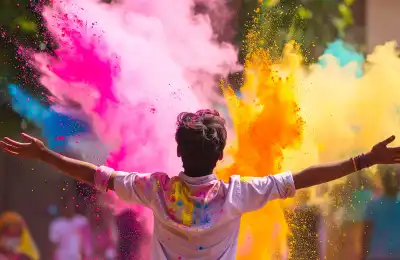
The worship of Krishna continues to flourish across the world today. Temples dedicated to Lord Krishna can be found throughout Asia and the Western continents.
Festivals celebrating Krishna’s life are vibrant and joyous. Janmashtami, his birthday, is marked with fasting, singing, dancing, and dramatic re-enactments of his stories. Holi, the festival of colours, is also closely associated with Krishna and his playful spirit in Vrindavan.
In modern times, Krishna’s teachings have transcended cultural boundaries. The Hare Krishna movement (ISKCON) has introduced his message of love and devotion to people around the world. Through chanting, meditation, and study, followers seek to live in harmony with Krishna’s timeless wisdom.
Frequently Asked Questions About Krishna
Where is Krishna’s flute now?
According to tradition, Krishna left his flute behind in the forests of Vrindavan when he departed for Dwarka. It’s believed that he never played it again after parting from Radha and the gopis. The act of leaving his flute is deeply symbolic, representing the completion of his earthly playfulness and the transition to his divine mission as a guide and protector.
What were Krishna’s last words?
Hindu scriptures suggest that Krishna’s final moments were peaceful and filled with wisdom. Before leaving his mortal body, he’s said to have spoken words of forgiveness and understanding, urging people to live righteously and without hatred. His final message reinforced his lifelong teaching that the soul is eternal and that love and truth are the path to liberation.
Why is Krishna often shown with cows?
Krishna’s association with cows symbolises gentleness and the sacred connection between humans and nature. During his childhood in Vrindavan, he worked as a cowherd, tending to the herds with love and care. This reflects his role as Gopala or Govinda: the protector of cows and the guardian of all living beings.
Where is Krishna believed to reside now?
Devotees believe that Krishna exists eternally in Goloka Vrindavan, a spiritual realm beyond the material universe. It is described in scriptures as a place of pure love, beauty and eternal bliss where Krishna continues to play his flute surrounded by his devotees. Spiritually, it’s also believed that Krishna lives within every heart, accessible through devotion, prayer and love.
Why did Krishna not marry Radha?
Krishna did not marry Radha because their relationship represents spiritual love, not worldly attachment. In Hindu mythology, Radha and Krishna’s bond goes beyond physical or social conventions; it symbolises the eternal connection between the soul (jivatma) and the divine (paramatma).
Recommended for you!
Best SellersStudy Our Hindu Mythology Diploma for £29
If you’d like to explore more about Lord Krishna, along with other gods, goddesses, and sacred stories, the Hindu Mythology Diploma Course from Centre of Excellence offers a fascinating and accessible way to deepen your understanding. You can enrol today for a discounted price of £29 and begin your journey into the timeless stories that continue to inspire people across the world.