Many people are fascinated by the stories of Hanuman, the monkey god whose courage and strength are an inspiration to many. He’s a central figure in Hindu mythology, celebrated as a symbol of loyalty and divine power.
This guide explores who Hanuman is, the myths that surround him, the powers he possesses, and the symbolism that makes him such a unique and beloved deity.
Jump to:
Recommended for you!
Best Sellers


Who Is Hanuman in Hindu Mythology?
He’s believed to be the son of the wind god, Vayu, and the celestial nymph Anjana, who was cursed to be born as a monkey. Hanuman is often called Vayuputra, meaning “son of the wind.” He symbolises perfect devotion (bhakti), self-control and service to a higher purpose, while his unwavering loyalty to Rama represents the highest form of love and surrender to the divine.
The Myths of Hanuman
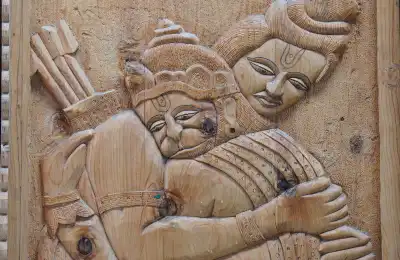
The stories of Hanuman reveal his courageous and compassionate character.
Hanuman’s Birth and Divine Blessings
Hanuman’s birth is considered miraculous. When Anjana prayed for a child, the wind god Vayu delivered the divine energy of Lord Shiva into her womb. This made Hanuman a partial incarnation of Shiva himself. From birth, he possessed incredible energy and curiosity, qualities that often led him into mischief.
Hanuman and the Sun
One of the earliest stories tells of Hanuman mistaking the sun for a ripe fruit. In his playful innocence, he leapt into the sky to grab it, only to be struck down by Indra, the king of the gods.
Vayu, heartbroken, withdrew all air from the world, causing chaos. The gods quickly revived Hanuman and blessed him with immense powers, but he was also given a curse that he would forget these abilities until someone reminded him of them.
This legend explains what is known as the curse of Hanuman: a symbol of dormant potential waiting to be awakened through purpose and faith.
Hanuman and His Devotion to Rama
Hanuman’s most famous role comes from the Ramayana, where he becomes Rama’s devoted companion. He helps find Sita, who was kidnapped by the demon king Ravana, and leads an army of Vanaras in her rescue. His love for Rama runs so deep that he once tore open his chest to reveal Rama and Sita in his heart.
The Sanjivani Mountain
Another well-known myth tells of Hanuman flying across the sky to retrieve the Sanjivani herb to heal Rama’s brother, Lakshmana, who was wounded in battle. Unable to identify the specific plant, Hanuman lifted the entire mountain and carried it back. This story represents his boundless strength, faith and determination to save others, no matter the cost.
Hanuman’s Meeting with Krishna
Later Hindu texts tell of Hanuman meeting Krishna, another avatar of Vishnu. Hanuman immediately recognised him as the same divine essence he had served as Rama. His devotion transcended form and time, showing that true faith remains constant regardless of how divinity appears.
What Powers Did Hanuman Possess?
Hanuman could change his size at will, becoming as small as a fly or as large as a mountain. He could fly across oceans, move with the speed of the wind, and lift objects of unimaginable weight.
He possessed perfect control over his senses and emotions, which allowed him to remain humble despite his strength. His energy was limitless, his intellect sharp, and his heart pure. The secret of Hanuman lies in this balance between strength and humility, and the ability to use divine power only for good, never for pride or destruction.
Symbols Associated with Hanuman
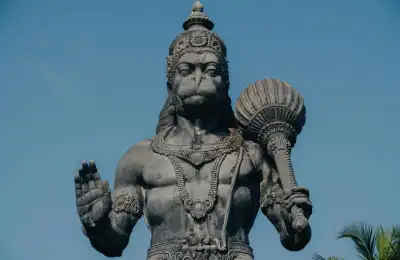
Throughout Hindu art and worship, Hanuman is represented through powerful symbols that reflect his virtues and divine energy.
- Mace (Gada): The mace represents Hanuman’s strength and authority. It reminds worshippers that power should always serve righteousness and protection rather than harm.
- Mountain: Often depicted holding a mountain in one hand, Hanuman symbolises his role as a protector and healer, carrying the Sanjivani herb to restore life.
- Open Heart: Hanuman’s open chest, revealing Rama and Sita inside, symbolises pure devotion and love for the divine that exists within the heart of every believer.
- Tail: His long, coiled tail signifies vitality and spiritual energy. In myths, his tail was set on fire by Ravana, yet Hanuman used it to burn down Lanka, showing the transformation of suffering into strength.
- Five Faces (Panchamukha Hanuman): These five forms represent protection and divine power in all directions. Each face ( Hanuman, Narasimha, Garuda, Varaha, and Hayagriva) embodies courage and the ability to overcome evil.
Hanuman’s Lineage and Connections
Hanuman’s divine lineage connects him to several major deities in Hinduism. He’s the son of Vayu, the god of wind, whose power flows through him. His mother, Anjana, was once a celestial being who regained her divine status through the birth of her son.
As an incarnation of Lord Shiva, Hanuman bridges two great divine forces: Shiva and Vishnu. This unique connection shows the unity between two powerful aspects of the Hindu trinity.
Though Hanuman is widely believed to be celibate, some regional traditions tell of a wife named Suvarchala and a son named Makardhwaja, who was miraculously born from a drop of Hanuman’s sweat swallowed by a fish.
Why Is Hanuman Special?
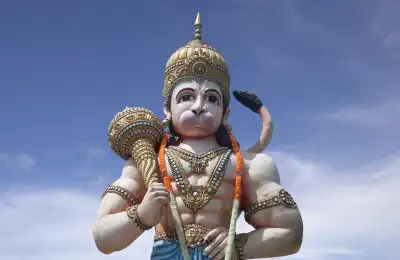
Hanuman stands apart in Hindu mythology because of his complete selflessness. His actions were never motivated by desire or recognition, but by devotion and service. This is why he is seen as the perfect devotee (bhakta), an ideal example of faith in action.
He symbolises qualities that every person can aspire to: strength without arrogance, courage without aggression, and knowledge without pride. His humility and discipline show that greatness does not depend on birth or appearance but on one’s dedication to truth and goodness.
Worship of Hanuman in Modern Culture
Hanuman continues to be worshipped throughout India and across the world. Temples dedicated to him are filled with chants of the Hanuman Chalisa, a devotional hymn praising his bravery and loyalty.
Tuesdays and Saturdays are considered the most auspicious days for his worship. Devotees fast, meditate, and offer prayers seeking his protection and guidance. His image also appears in literature, art, and film.
Recommended for you!
Best SellersFrequently Asked Questions About Hanuman
What is the spiritual significance of chanting the Hanuman Chalisa?
Chanting the Hanuman Chalisa is believed to bring courage, focus and protection. The forty verses praise Hanuman’s strength, humility and devotion, helping devotees connect with his energy and overcome fear and negativity. Regular recitation is said to calm the mind and strengthen faith.
Why is Hanuman often shown kneeling or bowing?
Hanuman’s posture in art and temples symbolises his humility. Even though he possesses immense strength and divine power, he always kneels before Lord Rama, showing that true greatness comes from service and surrender, not pride or dominance.
Are there different forms or avatars of Hanuman?
Beyond his five-faced (Panchamukha) form, some regional traditions describe Hanuman in various aspects, such as Veer Hanuman (the brave warrior), Bajrangbali (the strong protector), and Sankat Mochan (the remover of obstacles). Each form reflects a different quality of his divine energy.
Why do wrestlers and athletes often worship Hanuman?
Hanuman is considered the patron deity of physical strength and endurance. Many wrestlers, martial artists, and athletes in India pray to him for energy and protection before training or competition. His example reminds them that true strength is guided by discipline and moral integrity.
What are the main temples dedicated to Hanuman?
Some of the most famous Hanuman temples include the Sankat Mochan Temple in Varanasi, the Hanuman Garhi in Ayodhya, and the Jakhoo Temple in Shimla. Outside India, major temples can be found in Nepal, Indonesia, Mauritius, and Trinidad, reflecting his global following among Hindu communities.
Study Our Hindu Mythology Diploma for £29
If you’re inspired by the stories and symbolism of Hanuman and want to explore the wider world of Hindu mythology, the Hindu Mythology Diploma Course is the perfect next step. Through your studies, you’ll gain a deeper understanding of divine figures like Hanuman, exploring their timeless lessons and relevance in modern life. Enrol today for a discounted price of just £29.