The Flag of the Bahamas is one of the most instantly recognisable national symbols in the Caribbean, and for good reason. With its bold blue, yellow and black design, it captures the essence of the islands in a single glance: sea, sun and spirit, all stitched into one beautifully simple emblem.
What's in this Guide?
In this guide, you'll discover the history, meaning and symbolism behind the Bahamas flag, along with the story of who designed it and why. You'll also learn about the Bahamian flag colours, what the flag looked like before 1973, and why so many ships around the world choose to sail under it.
Jump to:
- What is the Bahamas Flag?
- What Does the Bahamas Flag Symbolise?
- A Closer Look at the Bahamian Flag’s Colours
- What Was the Flag of The Bahamas Before 1973?
- Who Created the Bahamian Flag?
- Why Do Ships Sail Under the Bahamas Flag?
- The Flag of Nassau, Bahamas, and Regional Variations
- Fun Facts and Cultural Importance
- Flag Etiquette in the Bahamas
- Study Heraldry for £29
What is the Bahamas Flag?
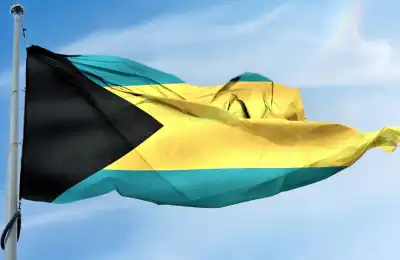
The Bahamas flag is a striking combination of three horizontal stripes (two aquamarine and one gold), with a bold black triangle on the hoist side pointing inward. It was officially adopted on 10 July 1973, the same day the country gained independence from the United Kingdom, and it's since become one of the most recognisable national symbols in the Caribbean.
The flag’s design is almost instantly identifiable, even among the many colourful flags of the world. Every element tells a story about the land, the sea and the people who call these islands home.
What Does the Bahamas Flag Symbolise?

The Bahamas flag is a visual summary of the nation itself. The symbolism is beautifully simple, which is part of its charm:
- The two aquamarine stripes represent the clear, turquoise waters that surround the 700 islands and cays of the Bahamas.
- The single yellow (or gold) stripe in the middle stands for the glorious sunshine and the golden sand beaches that have made the country a world-renowned destination.
- The black triangle pointing towards the body of the flag represents the strength, vigour and unity of the Bahamian people, and their determination to harness the natural resources of the land and sea.
Put these elements together, and you've got a flag that tells you almost everything you need to know about the Bahamas before you even set foot on its shores.
Why a Triangle and Not a Square or Circle?
You might be wondering why the designers chose a triangle specifically. Triangles in heraldry and vexillology (the study of flags) often represent strength, stability and forward movement. The shape is dynamic, suggesting progress and ambition. When you see that black triangle pushing inwards, it's meant to feel like the Bahamian people themselves are driving forward into a bright, sunlit future.
A Closer Look at the Bahamian Flag’s Colours
Aquamarine Blue
This is the shade often referred to as Bahamian blue, and it's quite distinct from the navy or royal blues you see on many other national flags. It's lighter, brighter and more tropical, designed to mirror the crystal-clear waters that surround the islands. Anyone who's ever snorkelled in the Bahamas will tell you that the sea genuinely does look like this; it isn't artistic licence, it's accurate colour matching.
Gold (or Yellow)
The yellow stripe represents the sun and the sandy beaches. It sits right in the middle of the flag, flanked by the two blue stripes, almost as if the beaches are being gently lapped by the sea on either side. It's a clever bit of visual storytelling.
Black
The black of the triangle represents the strength and unity of the Bahamian people. It's a powerful, grounding colour that balances the brightness of the blue and yellow. Without it, the flag would feel incomplete.
What Was the Flag of The Bahamas Before 1973?
Before independence in 1973, the Bahamas flew a flag based on the British Blue Ensign, which was common for British colonies at the time. This older design featured the Union Jack in the upper left corner (the canton), with a badge on the right side depicting a British ship pursuing pirates, a nod to the islands' colourful maritime history. The motto "Expulsis Piratis Restituta Commercia" (meaning "Pirates Expelled, Commerce Restored") was sometimes included.
While the colonial flag was certainly historic and carried its own stories, it didn't reflect the identity of the Bahamian people themselves. When independence came, the country wanted a symbol that belonged to them, not one imposed by a former ruling power. The current design was the answer, and it's been flown with pride ever since.
Who Created the Bahamian Flag?
The current Bahamas flag was the result of a national competition held in the lead-up to independence. Rather than handing the job to a single designer, the Bahamian government invited its citizens to submit ideas, ensuring that the final design would truly belong to the people.
While no single individual is credited with the final version, the flag is generally considered a composite design, drawing on elements from several of the most popular entries. A committee then refined these ideas into the design we see today. This democratic approach to creating a Bahamas national symbol was fitting for a newly independent country that wanted to celebrate unity from day one.
Why Do Ships Sail Under the Bahamas Flag?

If you've ever spent time near a major port, you may have noticed an unusually high number of ships flying the Bahamas flag. This isn't a coincidence, nor is it because every single one of those vessels is owned by someone living in Nassau. The answer lies in something called a "flag of convenience".
The Bahamas operates what's known as an open registry, which means that ship owners from anywhere in the world can register their vessels under the Bahamian flag. There are several reasons why this is such a popular choice:
- Favourable tax arrangements for shipping companies
- Well-regarded maritime safety standards
- A strong international reputation for regulatory compliance
- Simpler registration processes compared with some other nations
- Access to Bahamian diplomatic and consular support around the world
As a result, the Bahamas has one of the largest ship registries on the planet. The next time you see a cargo ship or cruise liner bearing that distinctive blue, yellow and black flag, you'll know it's likely taking advantage of the country's respected maritime framework.
The Flag of Nassau, Bahamas, and Regional Variations
Nassau doesn't have its own widely used city flag. The national flag is flown across the entire country, including in Nassau, which is the political, cultural and economic heart of the islands.
That said, individual islands and organisations within the Bahamas sometimes have their own emblems, crests or banners for local use. But when it comes to the flag you'll see flying from government buildings, hotels, schools and private homes in Nassau, it's the national flag.
Fun Facts and Cultural Importance
Here are a few lesser-known details that might surprise you:
- The Bahamas flag is one of very few national flags in the world to feature a triangle as a central design element.
- The official specifications for the flag are laid out in law, including the exact shades of blue, yellow and black that must be used.
- Flag Day in the Bahamas is celebrated alongside Independence Day on 10 July, making it one of the most festive occasions in the national calendar.
- Schoolchildren across the islands learn the meaning of the flag from a young age, often reciting the symbolism as part of their education.
- The flag appears on everything from military uniforms to souvenir tea towels, making it a constant presence in everyday Bahamian life.
Recommended for you!
Best Sellers





Flag Etiquette in the Bahamas
Like most countries, the Bahamas has clear rules about how its flag should be treated. Understanding these rules is a lovely way to show respect if you're ever visiting the islands or displaying the flag elsewhere.
- The flag should always be flown the right way up, with the black triangle on the hoist side (the side attached to the pole).
- It shouldn't be allowed to touch the ground.
- When flown alongside other flags, the Bahamas flag should take a position of honour, usually on the right or in the centre.
- Damaged or faded flags should be replaced and disposed of respectfully.
- On days of national mourning, the flag is flown at half-mast.
These little touches show that the flag is far more than just decoration. It's a living symbol, treated with the same care as the country it represents.
Study Heraldry for £29
If reading about the symbolism of the Bahamian flag has sparked a little curiosity, why stop here? The world of flags, crests, coats of arms and heraldic tradition is endlessly fascinating, and you can explore it properly with the Heraldry Diploma Course from Centre of Excellence. For a limited time, you can enrol for just £29!