In Hindu mythology, Goddess Parvati is celebrated as a symbol of love, devotion and balance. She embodies not only cosmic energy but also qualities that feel deeply human, taking on the roles of daughter, wife and mother.
This blog post explores her myths, lineage, symbols, and significance, offering a clear understanding of who she is and why she continues to inspire worship and storytelling today.
Jump to:
Recommended for you!
Best Sellers



Who is Parvati in Hindu Mythology?
Parvati was born to Himavan, the king of the Himalayas, and his queen, Mena. Her name means “daughter of the mountains,” directly linking her identity to her birthplace. She is considered one of the most important manifestations of the Divine Feminine in Hindu belief, embodying love, beauty and devotion.
While her husband, Shiva, represents pure consciousness and detachment, Parvati represents life, movement, and nurturing. Together they form a perfect balance of opposites, showing that neither can exist in full expression without the other.
Myths and Stories of Parvati
The mythology of Goddess Parvati is rich with tales that reveal her devotion, strength and ability to transform.
The Story of Sati and Rebirth as Parvati
In her first life, Parvati appeared as Sati, who married Shiva despite her father’s disapproval. When her father insulted Shiva, Sati gave up her life in protest. Overcome with grief, Shiva withdrew into deep meditation. Sati was later reborn as Parvati, the daughter of the mountains, destined to reunite with him.
Devotion and Penance
To win Shiva’s love and recognition, Parvati carried out long acts of devotion, including meditation and self-discipline in harsh conditions. Her persistence eventually touched Shiva, and he accepted her as his consort. This tale symbolises the union of renunciation and devotion, showing how their balance sustains the universe.
Mother of Ganesha and Kartikeya
Parvati’s stories also extend into family life. With Shiva, she became the mother of Ganesha, the remover of obstacles, and Kartikeya, the god of war. These myths bring a human quality to the divine household, depicting love, care, and occasional disagreements within the family.
Transformations into Durga and Kali
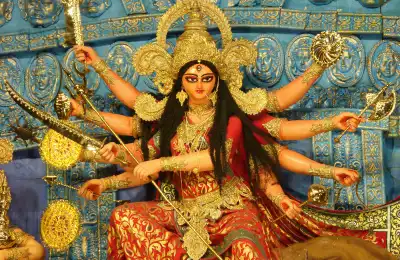
Parvati is also known for her powerful transformations. When the world required strength and protection, she became Durga, the warrior goddess who defeated the demon Mahishasura. In another form, she appeared as Kali, the fierce goddess of time and destruction, who restored cosmic balance by vanquishing evil. These stories show that Parvati is not only gentle and nurturing but also fierce and protective when necessary.
Powers of Parvati
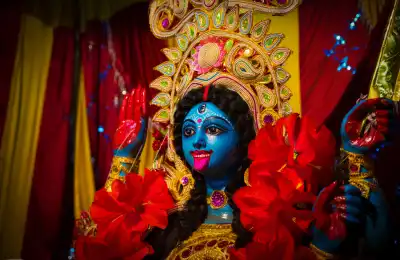
Parvati is seen as the source of Shakti, the divine energy that gives power to the universe. This power is essential for creation, preservation and transformation. Without Shakti, even Shiva remains still and inactive, which shows that Parvati provides the energy that allows cosmic forces to function.
Parvati holds the ability to transform herself whenever strength and protection are needed. In her form as Durga, she becomes the warrior goddess who defeats powerful demons and restores balance to the world. As Kali, she takes on an even fiercer role, destroying evil and cutting through ignorance and darkness.
For devotees, Parvati embodies the idea that true power lies in balance: love and compassion on one side, courage and determination on the other.
Symbols Associated with Parvati
The imagery of Devi Parvati is filled with symbols that express her powers and qualities. Each symbol carries a deeper meaning, helping devotees understand her role as both nurturing and strong.
- The Lotus Flower: The lotus represents purity, resilience and spiritual awakening. It grows in muddy waters but rises above them, reminding devotees that Parvati guides growth and strength in difficult times.
- Red Clothing: Red is the colour of fertility, love and energy. It reflects Parvati’s role as the life-giver and her connection to passion and creation.
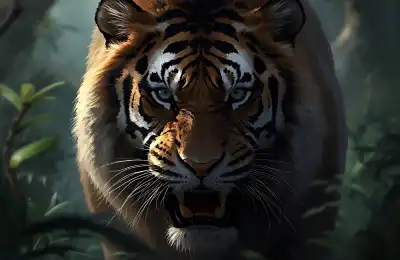
- The Lion or Tiger: These animals symbolise courage and strength. When Parvati is shown with them, it highlights her protective power and her ability to control the most primal forces of nature.
- Hand Gestures (Mudras): Her raised hand in abhaya mudra offers protection and reassurance, while varada mudra symbolises blessings and generosity. These gestures show her compassion and care for her devotees.
Why Parvati is Special
Parvati is honoured as one of the most significant goddesses in Hinduism. Her presence reminds followers that strength and compassion go hand-in-hand. She symbolises the importance of harmony between opposites, showing how love and discipline, gentleness and strength, work together to sustain life and creation.
Worship of Parvati in Modern Culture
Parvati is worshipped in temples and homes throughout India and across the world. She is celebrated in festivals such as Navratri, where her many forms, including Durga and Kali, are honoured. She is also revered as Annapurna, the goddess of nourishment, who provides food to all.
While Shiva is often worshipped as the god of meditation and destruction, Parvati is worshipped for her nurturing qualities, protective power and ability to restore balance. Together, Lord Shiva and Parvati embody the complete cycle of life, and their worship continues to inspire millions today.
Recommended for you!
Best SellersFrequently Asked Questions about Parvati
Are Lakshmi, Saraswati, and Parvati connected?
In Hindu tradition, Parvati, Lakshmi, and Saraswati are often grouped together as the three main forms of the Divine Feminine. Parvati represents power and love, Lakshmi represents wealth and prosperity, and Saraswati represents knowledge and wisdom.
Is Parvati worshipped outside India?
Parvati is honoured by Hindu communities worldwide, with temples dedicated to her in Nepal, Sri Lanka, Southeast Asia, and beyond. Her stories and images are also an important part of global Hindu practice and culture.
Does Parvati appear in the epics?
Parvati features in both the Ramayana and the Mahabharata. In these texts, she is portrayed as the compassionate mother goddess and as an important source of strength for the gods and heroes.
Why is Parvati sometimes shown with many arms?
In her forms as Durga or Kali, Parvati is often depicted with multiple arms, each carrying a weapon or symbol. This imagery shows her immense power, her ability to protect her devotees, and her readiness to fight against evil from all directions.
How many names does Parvati have?
Parvati is known by many different names, each reflecting a unique aspect of her character. She is called Uma for her radiance, Gauri for her golden complexion, Annapurna as the goddess of nourishment, and Shakti as the embodiment of divine energy. These names highlight her many roles as nurturer, protector and cosmic power.
Study Our Hindu Mythology Diploma for £29
To discover more about these powerful myths and the gods and goddesses who shape them, you can enrol in the Hindu Mythology Diploma Course with Centre of Excellence. This course is designed to make complex traditions easy to understand and enjoyable to study, no matter your level of experience. Right now, the course is available for the discounted price of £29.