The harp has been loved for thousands of years. It has carried stories, healing, and identity, and has expressed emotions that words couldn’t hold. Even today, the idea of the harp continues to inspire people who are exploring personal symbolism, mythology, and deeper spiritual themes.
Below, you’ll find a guide that breaks down the spiritual, cultural, and emotional meanings behind the harp.
Jump to:
- The Harp Across Time
- What Is the Meaning of a Harp?
- What Does the Harp Mean Spiritually?
- Harp Symbolism in Different Cultures
- Is the Harp a Symbol of Love?
- What Are Harps Associated With?
- Why the Harp Represents Healing and Transformation
- Is the Harp a Symbol of Resistance?
- The Harp Analogy
- Why People Still Feel Drawn to Harp Symbolism
- Study Spirit Animals and Totems for £29
The Harp Across Time
The harp has been woven into human history since the beginning of time. Ancient civilisations, including those in Mesopotamia, Egypt, Greece, and Ireland, created early versions of the instrument, and while its structure developed over centuries, its emotional pull stayed the same.
People have often associated harps with peace, beauty, compassion, and communication between worlds. Unlike instruments that produce loud and dramatic sounds, the harp’s gentler tone encourages reflection. This alone gives a clue to why the harp has been seen as calming and healing.
What Is the Meaning of a Harp?
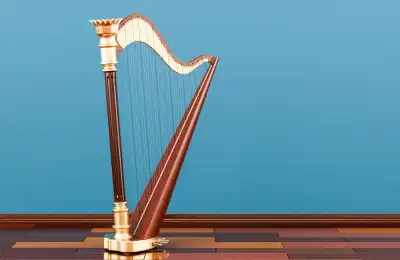
The harp is symbolic of harmony and balance. Many see it as a bridge, capable of connecting the physical world with something softer and more divine.
The harp is often symbolic of serenity, creativity, healing, and spiritual communication. Its sound flows rather than strikes, which is why it’s connected with gentleness and higher wisdom.
What Does the Harp Mean Spiritually?
Spiritually, the harp is linked to upliftment and inspiration, and many people believe that the harp’s vibrations can calm the nervous system and open the heart. It represents a shift into a more mindful or reflective state, encouraging you to reconnect with your inner self.
Some spiritual traditions also teach that the harp’s strings can reflect the “strings” of human emotions or energy. When those inner strings feel strained or disconnected, harp symbolism can remind you of the importance of restoring balance.
Harp Symbolism in Different Cultures
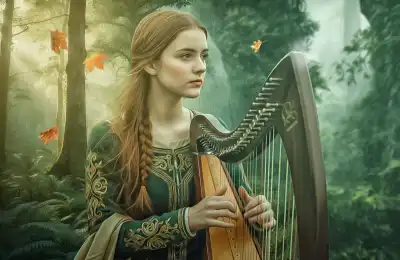
Throughout history, cultures around the world have given the harp its own unique layers of meaning. Here are some of the most significant cultural interpretations of harp symbolism:
Ancient Greece
Although the lyre was more common, the harp-like instruments of Greek mythology symbolised divine inspiration, harmony, and higher wisdom. They were linked to gods such as Apollo, associated with music and healing. The harp’s association with the muses also meant it represented the flow of inspiration.
Irish Mythology and Cultural Identity
The harp holds extraordinary power in Irish legend, appearing in stories as a magical instrument capable of stirring deep emotion, shaping destiny, and bringing balance to the world. The most famous myth involves the Dagda, a powerful god whose enchanted harp controlled the seasons and the feelings of those who heard it.
The Irish harp symbol is one of the most recognisable emblems of Ireland. As the Irish national instrument, it appears on coins, documents, and the national flag. Its symbolism goes beyond music, representing cultural pride and unity. Historically, it was used as a powerful emblem of identity during times when Irish cultural expression was restricted, marking it as a symbol of resistance for Ireland.
Celtic Traditions
In Celtic culture, the harp symbol was linked with storytelling and the soul’s expression, representing emotional truth, intuition, and the harmony between the seen and unseen worlds. The Celtic harp symbol remains important today, often used to represent a deep connection to ancestral knowledge.
Christian Symbolism
In Christian art, the harp has been used to represent heavenly harmony and divine communication. It is often associated with angels, reflecting the belief that harp music can lift the soul closer to spiritual realms. The harp became a reminder of peace, devotion, and the hope of spiritual renewal.
Medieval Europe
During the medieval period, the harp was linked with nobility and storytelling. Musicians who played the Irish harp instrument or its European variations were seen as carriers of history and emotion. This contributed to the idea of the harp representing honour and romantic devotion.
Hindu Tradition
While the harp itself does not appear as prominently in Hindu myths, its symbolic qualities of music and cosmic harmony mirror the significance of sound in the creation and maintenance of the universe. Instruments with flowing strings are sometimes associated with Saraswati, the goddess of wisdom, music, and art. Her symbolism aligns with the themes of inspiration and creative flow that the harp represents.
Buddhism and Tibetan Practice
Stringed instruments similar to harps appear in certain forms of Buddhist ritual music. Their soft tones encourage inner stillness and mindful focus. In Tibetan symbolism, sound is often associated with guiding consciousness and supporting spiritual awakening. The harp’s gentle resonance reflects these same qualities and supports the idea of spiritual clarity.
West African Spirituality
While the kora, a close relative of the harp, is more common in West African cultures, it carries similar symbolic meanings. It represents ancestral wisdom and the passing down of history through sound. These associations mirror how the harp is viewed in other cultures, as a bridge between past and present, and between the physical and spiritual worlds.
Is the Harp a Symbol of Love?
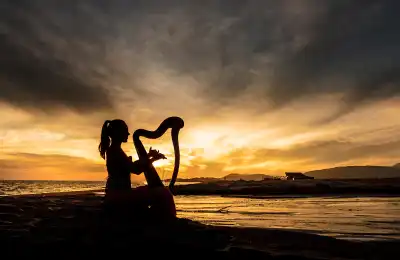
The harp is often seen as a symbol of love because of its association with tenderness and emotional bonding. The sound of the harp is warm, flowing, and expressive. Its music encourages vulnerability and emotional openness, which is why it is commonly used at weddings or intimate ceremonies.
In love, the harp symbolises affection, gentleness, harmony between two people, and the ability to speak from the heart. In mythology and art, harps are also linked to love goddesses, muses, and emotional expression.
What Are Harps Associated With?
Harps tend to be associated with themes such as:
- Peace and serenity
- Emotional clarity
- Spiritual communication
- Healing and wellbeing
- Creativity and imagination
- Storytelling and cultural preservation
- Feminine energy
- Connection to the divine
The harp’s power lies in its ability to shift emotions and connect people to something deeper, whether that’s spirituality, history, or personal reflection.
Why the Harp Represents Healing and Transformation
The harp’s gentle sound waves are often described as soothing or restorative. Many harpists use the instrument in therapeutic settings, such as meditation classes, healing sessions, and holistic wellbeing practices. This idea has inspired the concept of the harp of healing, which symbolises emotional release and peace.
The harp encourages stillness. It can help people access buried emotions or release stress, making it a powerful symbol for anyone seeking spiritual or emotional balance.
Is the Harp a Symbol of Resistance?
The harp is often associated with tenderness and harmony, but it also carries a powerful history of resilience, particularly in Irish culture.
The Irish harp instrument became a sign of identity during times when Irish culture was under pressure. Musicians who played it were once so influential that ruling powers attempted to restrict them. Rather than disappear, the harp became an emblem of protest, preserving culture through music and art.
The Harp Analogy
The harp analogy suggests that human emotions or spiritual energy can be compared to harp strings. When one string is out of tune, the whole sound is affected. In the same way, when a part of your life feels disconnected or strained, it can influence your overall wellbeing.
This analogy is used in counselling, spirituality, and creative writing to help illustrate how interconnected human experiences are. Just as a harp needs gentle tuning, people also need moments of reflection and balance.
Why People Still Feel Drawn to Harp Symbolism
Even with modern instruments and digital music, the harp continues to captivate people. Its connection to folklore and beauty makes it a symbol that speaks to the emotional and intuitive side of life. People who feel connected to harp symbolism often describe being drawn to:
- The softness of its sound
- Its ability to bring peace
- The stories and myths surrounding it
- Its cultural roots, especially in Ireland
- Its link to healing or spiritual reflection
Recommended for you!
Best Sellers
Study Spirit Animals and Totems for £29
If you’re drawn to symbolism and deeper meaning, our Spirit Animals and Totems Diploma Course is a wonderful next step. You can learn at your own pace, explore spiritual guidance in a practical and enriching way, and deepen your understanding of the signs and symbols that appear in your life. Follow the link to access the course for a discounted price of £29!