Dian Cécht is a powerful figure in Celtic Mythology, associated with healing, protection, and remarkable craftsmanship.
This guide walks you through who he was, what he represented, and why his stories remain so intriguing today.
Jump to:
Who Is Dian Cécht in Celtic Mythology?
Dian Cécht is known as the healer god of the Tuatha Dé Danann, the supernatural race who appear throughout Irish mythology. His name is often associated with skill, precision, and the ability to restore life or health when all seems lost.
In many traditions, he is described as the physician of the gods, someone whose presence was called upon whenever warriors were wounded or when illness struck. The definition of Dian Cécht places him firmly as a figure of knowledge and mastery, capable of healing both the body and, in some stories, the land itself.
He is also connected to themes of restoration and resilience, showing how important healing and recovery were in early Celtic belief systems.
How Do You Pronounce Dian Cécht?
Dian Cécht is commonly pronounced “DEE-an kett.” The final sound is similar to the -cht in the Scottish “loch,” though softened. Some variations include “KEHKT” or “KAYKT,” depending on regional accents.
What Is Dian the God Of?
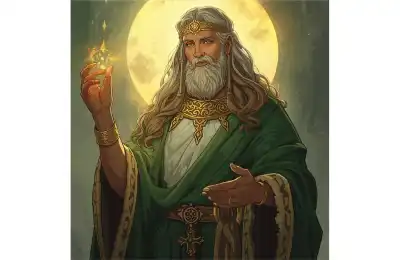
Dian Cécht is primarily known as the god of healing. His abilities go far beyond simple remedies or herbal knowledge. In myths, his healing powers are described as:
- Miraculous – he could bring the injured back from the brink of death.
- Precise – he understood the body and ailments with uncanny skill.
- Restorative – he repaired not just flesh, but strength, vitality, and wholeness.
He also had abilities linked to protection and sacred knowledge. His role reflects the Celtic understanding that healing was a deeply spiritual process, connected to destiny and the wellbeing of the entire community.
Dian Cecht’s Most Famous Myths
Irish mythology is full of striking stories, but some of the most memorable involve Dian Cécht’s healing feats. These tales show the depth of his powers along with the complexities of his relationships with other gods.
Healing Nuada’s Arm
One of the most well-known myths tells of Nuada, a leader of the Tuatha Dé Danann, who lost his arm in battle. Because a king needed to be whole to rule, this injury meant Nuada could no longer remain on the throne.
Dian Cécht crafted a silver arm for him, complete with full movement and strength. This incredible feat restored Nuada’s dignity and allowed him to continue serving his people. The silver arm became one of the most famous symbols in Celtic mythology and demonstrated Dian Cécht’s extraordinary abilities.
Later, his son Miach improved upon this work by creating a fully living, flesh-and-blood arm, which led to tension between father and son.
The Healing Well
Another powerful part of Dian Cécht’s story is the Well of Sláine, a sacred site where wounded warriors were brought for revival. Under his care, the well became a source of supernatural healing. Warriors who bathed in its waters during the Second Battle of Moytura were said to have risen fully restored, ready to fight again.
This myth highlights the role of water as a cleansing, life-giving force in Celtic belief, and shows how healing was connected to both medical skill and spiritual energy.
Family Conflict and the Death of Miach
Although Dian Cécht was wise and skilled, he was not without flaws. He had a complicated relationship with his children, especially Miach, who surpassed him in healing ability. When Miach healed Nuada’s arm more perfectly than Dian Cécht could, jealousy and fear overtook him.
The story tells that he struck Miach several times, ultimately causing his death. From Miach’s grave grew 365 healing herbs, one for each joint and sinew of the body. This myth explores themes of competition and the passing of healing wisdom from one generation to the next.
The Children of Dian Cécht
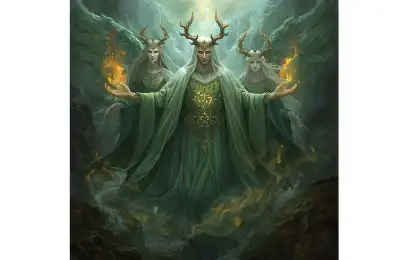
Dian Cécht’s legacy is carried forward through his children, many of whom inherited his healing abilities or played important roles in Celtic mythology.
- Miach – The most famous of Dian Cécht’s children, Miach was a gifted healer whose abilities eventually surpassed his father's. His restoration of Nuada’s arm with living flesh sparked jealousy in Dian Cécht, leading to tragedy.
- Airmed – A healer associated with herbal knowledge and the natural world. After Miach’s death, Airmed arranged the 365 healing herbs that grew from his body, each said to correspond to a part of the human form.
- Cian (in some traditions) – In several versions of the mythic genealogy, Cian is named as another child of Dian Cécht. He is best known as the father of Lugh, linking Dian Cécht to one of the most celebrated heroes of Irish mythology.
- Octriuil (Octríul) – A lesser-known child who appears briefly in some texts. Although little is recorded about him, his presence reinforces the wide mythological network surrounding Dian Cécht and the Tuatha Dé Danann.
What Are the Symbols of Dian Cécht?
Dian Cécht’s symbols reflect his connection to healing and the restoration of strength. Although Celtic mythology doesn’t rely on fixed iconography, several meaningful motifs have become closely associated with him over time.
- The Silver Arm – Linked to his creation of Nuada’s silver limb, this symbol represents restoration after loss.
- Healing Wells and Sacred Water – Inspired by the Well of Sláine, these waters symbolise cleansing and spiritual transformation, echoing the role of sacred springs in Celtic healing practices.
- Healing Herbs – Connected to the story of Miach’s grave, herbs represent natural medicine and the Celtic belief in the healing power of the earth.
- Tools of Medicine and Craftsmanship – Modern interpretations associate Dian Cécht with tools such as surgical instruments, smithing tools, and metals like iron and silver, capturing his dual identity as healer and artisan.
Dian Cécht’s Powers and Abilities
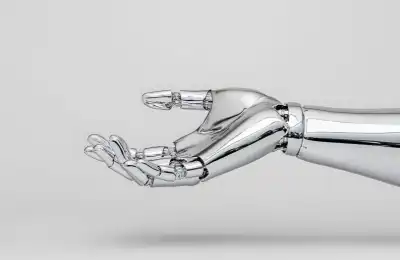
Dian Cécht is remembered for his remarkable healing skills, magical craftsmanship, and protective influence. His abilities show how deeply the Celts valued both physical restoration and spiritual wellbeing.
- Mastery of Healing – He treated wounds and illnesses with a blend of medical skill and magical insight, often restoring warriors to full strength when hope seemed lost.
- Magical Craftsmanship – His creation of Nuada’s moving silver arm demonstrates his talent for combining metalwork with magic, reflecting the sacred nature of craftsmanship in Celtic tradition.
- Protection and Restoration – During great battles, his healing ensured the survival of the Tuatha Dé Danann, allowing injured warriors to return to the field renewed and protected.
- Sacred Knowledge – He held extensive wisdom in herbs, ritual healing, and mystical practices, influencing generations of Celtic healers and shaping many traditional healing customs that followed.
The Legacy of Dian Cécht in Modern Culture
Dian Cécht remains a fascinating figure for anyone interested in healing traditions and ancient spirituality. His stories reflect timeless themes:
- The struggle between ego and wisdom.
- The importance of knowledge.
- The balance between physical and spiritual healing.
Many modern interpretations of Celtic healing honour Dian Cécht as a symbol of resilience, renewal, and the ongoing search for harmony within the body and mind. His myths also appeal to those exploring herbalism and Celtic spiritual paths, as they offer insight into the early roots of these practices.
Recommended for you!
Best Sellers
Study Celtic Mythology for £29
If you’d like to explore this world in greater depth, you can take your learning further with the Celtic Mythology Diploma Course. Enrol now for a discounted price of £29, giving you the opportunity to learn more about Celtic myths, gods, heroes, and folklore.