Aengus, also known as Aengus Óg or Angus the Young, stands out as one of the most romantic and enchanting figures in Irish mythology. If you’ve ever come across the poem The Song of Wandering Aengus by W.B. Yeats, you might already have a sense of the dreamlike beauty and longing that surrounds this fascinating figure. But who exactly was Aengus, and what does he represent in Celtic myth?
Whether you’re drawn to his symbolism, curious about his name, or simply love exploring Celtic legends, this article will guide you through the myths, powers, and symbols associated with Aengus.
Jump to:
- What Is the Celtic Myth of Aengus?
- Aengus and Caer: A Myth of Love and Transformation
- What Does the Name Aengus Mean in Irish?
- Aengus’s Home: Brú na Bóinne
- What Are the Symbols of Aengus?
- The Powers and Influence of Aengus
- Aengus in Yeats’s The Song of Wandering Aengus
- Why Aengus Still Matters Today
- Study Irish Mythology for £29
What Is the Celtic Myth of Aengus?
The myth of Aengus tells the story of a Celtic god born from love and surrounded by mystery. He is the son of the Dagda, a chief god of the Tuatha Dé Danann, and Boann, the goddess of the River Boyne. Because their union was secret, Aengus’s birth was hidden from Boann’s husband. To cover up the affair, the Dagda made the sun stand still for nine months so Aengus could be conceived and born in a single day. From the start, his existence was touched by magic and divine power.
Aengus grew up to become the god of love, youth, and poetic inspiration. Unlike many other deities known for war or vengeance, Aengus represents passion and the pursuit of beauty. His myths often centre around dreams, music, and romance, the more delicate yet powerful forces that shape human experience.
Aengus and Caer: A Myth of Love and Transformation
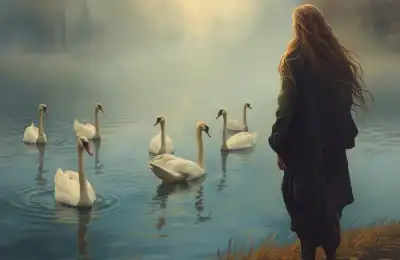
The most famous tale about Aengus is the story of his love for Caer Ibormeith, a beautiful maiden who appeared to him in dreams. Every night he saw her, and every morning she vanished, leaving him yearning for her more and more. This tale is the inspiration behind Yeats’s Song of Wandering Aengus, which captures the theme of searching endlessly for a lost love or dream.
In the myth, Aengus fell so deeply in love that he became ill with longing. When he discovered that Caer was a woman cursed to turn into a swan for one year and back into a human for another, he set out to find her. When he finally did, he was told that if he could recognise her among 150 swans on a lake, she would be his.
Aengus called out to her, and when she answered, he transformed himself into a swan too, so they could fly away together. As they flew over Ireland, their song put everyone who heard it into a deep, peaceful sleep.
This story reflects the essence of Aengus: a love that transcends form and reality. It’s a tale of devotion and the belief that love is a force beyond human limits.
What Does the Name Aengus Mean in Irish?
The name Aengus (pronounced “AYN-gus” in Irish) comes from the Old Irish Óengus or Oíngus, which is believed to mean “one strength” or “true vigour.” Some scholars interpret it as “unique choice” or “the chosen one,” fitting for a god who embodies the singular power of love and creativity.
Aengus’s name reminds us that love and youth carry their own strength, a different kind of power from battle or conquest.
Aengus’s Home: Brú na Bóinne
Aengus is closely linked to Brú na Bóinne, one of the most sacred sites in Ireland, now known as Newgrange. According to legend, he tricked his father, the Dagda, into giving him ownership of this magnificent place. Aengus asked to live there “for a day and a night,” but after the Dagda agreed, Aengus cleverly pointed out that “a day and a night” could mean every day and every night. The Dagda had no choice but to concede, and Aengus claimed the site as his own.
Brú na Bóinne became a symbol of renewal and rebirth, echoing Aengus’s connection to eternal youth and love that never fades. Even today, the site aligns with the winter solstice, when sunlight fills its ancient chambers as a reminder of the enduring power of light and life.
What Are the Symbols of Aengus?
Like many Celtic deities, Aengus is rich in symbols revealing his nature and values. Understanding these symbols helps to see how he fits into the broader Celtic worldview, where gods and nature are deeply intertwined.
1. Swans
Swans are Aengus’s most iconic symbol, representing grace and eternal love. In Celtic mythology, swans often link the human and spiritual worlds, and Aengus’s ability to turn into one shows his power to cross those boundaries. The swan also symbolises purity and music, both key aspects of his character.
2. Harp and Music
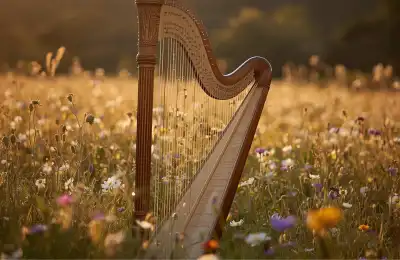
Aengus is frequently associated with the harp, an instrument rooted in Irish tradition. His music was said to bring peace and harmony, even to those who were restless or troubled. It reflects his role as a god of poetic inspiration and emotional healing.
3. Youth and Beauty
Aengus’s eternal youth is itself a powerful symbol. He never ages, embodying the beauty and promise of youth and the idea that love and creativity are timeless. This makes him a symbol of renewal and vitality.
4. Dreams and Visions
Dreams play a major role in Aengus’s mythology. His love story with Caer begins in a dream, and his power often manifests through visions. To the Celts, dreams were gateways to other worlds, and Aengus’s presence in them signifies divine inspiration and emotional truth.
The Powers and Influence of Aengus
Aengus’s powers are more about harmony than control. He’s often described as a bringer of dreams, a healer of hearts, and a patron of lovers and poets.
- The Power of Love: Aengus can unite lovers, often appearing in dreams to guide them. His power shows that love can overcome any boundary, whether distance or physical form.
- Power of Transformation: His shapeshifting abilities, like turning into a swan, highlight his mastery over change. This reflects the Celtic belief that transformation is a natural part of existence and something to embrace rather than fear.
- Power of Inspiration: As a god linked to poetry and song, Aengus embodies creative energy. His influence touches anyone seeking to express beauty through art.
Aengus in W.B. Yeats’s The Song of Wandering Aengus
The Irish poet W.B. Yeats immortalised Aengus in his beautiful poem The Song of Wandering Aengus. In the poem, Aengus catches a silver trout that turns into a glimmering girl, who calls his name and disappears. He spends the rest of his life searching for her. The story captures the timeless longing for something just out of reach, an echo of Aengus’s myth with Caer.
The poem reflects the idea that love and spiritual fulfilment are things we continually seek. They may never be fully captured, but the journey gives life its meaning. Yeats used the story of Aengus to express the eternal human desire for connection and transcendence.
Why Aengus Still Matters Today
Aengus may come from ancient Celtic mythology, but his story continues to resonate because it speaks to universal themes. Everyone has experienced longing or the pursuit of something beautiful that feels just out of reach. Aengus reminds you that love and creativity are forces that keep you growing, dreaming, and discovering new parts of yourself.
Recommended for you!
Best Sellers
Study Irish Mythology for £29
If Aengus’s story has captured your imagination, you can explore these myths in depth through the Irish Mythology Diploma Course, now available for just £29. The course guides you through Ireland’s legendary deities, tales, and symbols, helping you understand their origins and influence.