This guide explores the origins, meanings, sightings, and theories surrounding the Yowie, helping you understand why it continues to be discussed today.
Jump to:
- What is a Yowie in Australia?
- Yowie Meaning and Cultural Origins
- The Yowie in Aboriginal Stories and Folklore
- Yowie Sightings: What Do People Report?
- Where Are Yowie Sightings Most Common?
- Theories Behind the Yowie Legend
- Comparisons with Global Legends
- Is a Yowie a Cryptid?
- Do Yowies Still Exist?
- Yowie Animal or Misidentified Wildlife?
- What’s the Difference Between a Bunyip and a Yowie?
- Why the Yowie Still Captures Interest Today
- Study Cryptozoology for £29
What is a Yowie in Australia?
A Yowie is a legendary, ape-like creature said to live in the Australian wilderness. Often compared to an Australian Bigfoot, the Yowie is described as tall, heavily built, and covered in dark hair, with a strong smell and a deep, intimidating call.
The idea of yowies in Australia comes from a mix of Indigenous oral traditions and more recent reports from settlers and rural communities. Unlike creatures invented purely for entertainment, the Yowie has deep roots in storytelling that long predate European arrival.
Yowie Meaning and Cultural Origins
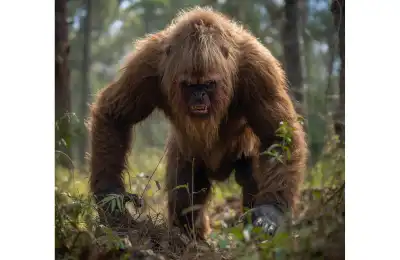
The Yowie meaning varies depending on the region and the Aboriginal language group involved. Many Indigenous Australian cultures have stories of human-like or spirit beings that live in the bush. Some names used across different areas include “Yahoo”, “Yowie”, “Hairy Man”, and other regional terms.
In Aboriginal lore, these beings are not always monsters: sometimes they are protectors of the land, sometimes tricksters, and sometimes dangerous figures meant to teach respect for nature. These stories often carried lessons, warning people about travelling alone or entering sacred places without care.
It is important to understand that the modern idea of the Yowie blends these ancient stories with later interpretations. Over time, oral traditions mixed with colonial fears, newspaper reports, and popular culture, gradually shaping the Yowie into the figure many people recognise today.
The Yowie in Aboriginal Stories and Folklore
Long before the term “cryptid” existed, Aboriginal Australians told stories of powerful bush beings. These stories were part of a wider understanding of the land, and both its dangers and spiritual significance.
In some traditions, the Yowie-like figure is seen as a reminder that humans are not the only beings with a claim to the land. Encounters often occur when someone breaks cultural rules or shows disrespect. In this way, the legend reinforced social values and safety.
Modern discussions about the Yowie sometimes overlook these origins. However, understanding the folklore behind the stories helps explain why the legend has endured for so long.
Yowie Sightings: What Do People Report?
Reports of Yowie sightings have appeared for more than a century. These accounts come from bushwalkers, farmers, campers, and even road travellers who claim to have seen something unusual.
Common details tend to repeat across stories. Witnesses often describe a tall figure, sometimes over two metres in height, walking upright. Many mention thick hair, broad shoulders, glowing or deep-set eyes, and a strong, unpleasant smell. Some reports include loud howls or screams echoing through the bush at night.
Footprints are another frequently mentioned detail. Large, human-like tracks found near rivers or forest paths often spark renewed interest in the legend. While many turn out to have ordinary explanations, others remain unexplained, at least to those who discover them.
Where Are Yowie Sightings Most Common?

Sightings are most often reported along Australia’s east coast, particularly in New South Wales, Queensland, and Victoria. Mountainous and forested regions such as the Blue Mountains are frequently mentioned.
These areas make sense when you consider the environment. Dense bushland, limited visibility, and unfamiliar animal sounds can easily heighten the senses. For those already aware of the legend, the mind may try to make sense of something strange by linking it to the Yowie.
This does not mean that everyone who reports an encounter is mistaken. Instead, it highlights how the environment and human perception all play a role in shaping experiences.
Theories Behind the Yowie Legend
There are several theories that attempt to explain why the Yowie legend exists. One idea is that it stems from ancient memories of extinct animals, preserved through storytelling. Another suggests it is a psychological response to isolation and fear in remote environments.
Social factors also play a role. Stories spread through word of mouth and popular culture, and each retelling adds new details, keeping the legend fresh.
Rather than focusing on whether the Yowie is real in a physical sense, many researchers now look at what the legend reveals about human behaviour and our relationship with nature.
Comparisons with Global Legends
The Yowie is often called the Australian Bigfoot, and the comparison is easy to understand. Both are described as large, hairy, and elusive, living far from urban areas.
Similar creatures appear in folklore worldwide. The Yeti, Sasquatch, and Almasty all share overlapping traits. This raises interesting questions about why so many cultures imagine or report similar beings.
Some researchers believe these legends may stem from a shared human fear of the unknown. Others suggest that ancient encounters with now-extinct animals could have inspired stories passed down through generations. In Australia’s case, some speculate about long-extinct megafauna influencing early myths.
Is a Yowie a Cryptid?
A cryptid is a creature whose existence is suggested by anecdotal evidence but not confirmed by mainstream science. The Yowie fits this definition well, since there is no verified physical proof, such as a body or clear DNA evidence, yet there are many stories and reports that keep the debate alive.
Cryptozoology, the study of such creatures, does not aim to replace science. Instead, it examines folklore, eyewitness accounts, and cultural patterns to better understand why these stories persist and what they reveal about human belief.
Do Yowies Still Exist?
Some people firmly believe that Yowies exist, pointing to recent sightings and unexplained evidence. Others see the Yowie as a powerful symbol rather than a physical creature.
From a scientific perspective, the survival of a large, unknown species in Australia would be difficult to support without clear evidence. Australia’s ecosystems are well studied, and large animals tend to leave behind traces.
However, belief does not always depend on proof alone. For many, the Yowie represents the idea that not everything in the natural world is fully understood, and that sense of mystery has its own value.
Yowie Animal or Misidentified Wildlife?
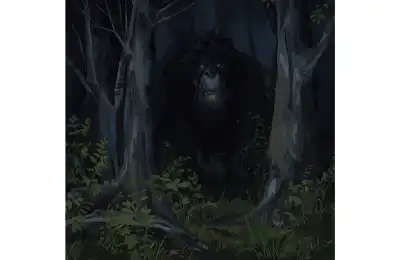
Another popular explanation is that the Yowie is not a separate species at all, but a case of misidentification. Australia is home to many animals that can appear surprising, especially at night or from a distance.
Large kangaroos standing upright, emus moving through trees, or even humans in unusual conditions have all been suggested as explanations. Poor lighting and unfamiliar sounds can easily distort perception.
What’s the Difference Between a Bunyip and a Yowie?
Although both the Yowie and the Bunyip come from Australian folklore, they are quite distinct.
The Bunyip is usually associated with water, such as swamps, rivers, and billabongs. Descriptions vary widely, but it is often portrayed as a dangerous creature lurking beneath the surface.
The Yowie, on the other hand, is linked to forests, mountains, and bushland. It is typically humanoid in shape and associated with land rather than water.
Why the Yowie Still Captures Interest Today
In a world mapped by satellites and documented online, the idea of an unknown creature is strangely comforting to some. The Yowie reminds people that mystery still exists, especially in vast natural landscapes.
Interest in cryptids and unexplained phenomena has grown in recent years, with documentaries and online communities giving new life to old stories, introducing them to younger audiences.
For many, learning about the Yowie is less about fear and more about wonder. It invites you to think differently about history, storytelling, and the limits of knowledge.
Recommended for you!
Best Sellers




Study Cryptozoology for £29
If you’ve enjoyed learning about Yowie myths, theories, and sightings, you might want to go deeper into the world of mysterious creatures and hidden legends. The Cryptozoology Diploma Course lets you explore the study of undiscovered animals, from Yowie and the Loch Ness Monster to lesser-known cryptids from around the world. Enrol today for a discounted price of £29!