For centuries, tales of a mysterious ape-like being have echoed through the icy peaks of the Himalayas. Known by many names – the Yeti, the Abominable Snowman, the Himalayan Snowman – this creature has fascinated explorers and scientists alike. Perhaps you’re here because you’ve heard about the Yeti in films or documentaries and wondered whether it might truly exist. Could there be a real animal behind the legend, or is it just one of the world’s most enduring myths?
Let’s take a closer look at what the Yeti is said to be, the stories behind it, the scientific investigations, and the theories that continue to surround this legendary creature.
Jump to:
- What Is a Yeti?
- What Does the Yeti Look Like?
- Where Does the Yeti Live?
- What Do Yetis Eat?
- Yeti Sightings and Theories
- The Myths and Legends of the Yeti
- The Dyatlov Pass Incident and the Yeti Connection
- The Yeti’s DNA and Scientific Investigations
- Is the Yeti a Myth or Fact?
- The Continuing Mystery of the Yeti
- Common Questions About the Yeti
- Study Cryptozoology for £29
What Is a Yeti?
The Yeti is often described as a large, ape-like creature covered in white or brownish fur, said to inhabit the remote mountains of Nepal, Tibet, and Bhutan. The word “Yeti” comes from Tibetan, roughly translating to “man of the rocky place”. Western explorers first heard the term in the 19th century, and it quickly captured the imagination of the world.
Descriptions vary, but the Yeti creature is typically said to stand between six and ten feet tall, with enormous footprints left behind in the snow. It’s sometimes called the Abominable Snowman because early reports described a terrifying, snow-dwelling beast. Yet, depending on local stories, the Yeti can be seen as either a guardian spirit of the mountains or a fearsome wild monster.
What Does the Yeti Look Like?
Reports of what the Yeti looks like differ, but most agree on a few key features. Witnesses claim it has a muscular body, long arms, and a conical head covered in thick fur. Some say it looks more like a giant bear; others describe it as more human-like, with a face that’s expressive and intelligent.
Because of these varying descriptions, some researchers wonder whether sightings could actually be of known animals, such as bears or langurs, seen at a distance in poor conditions. Still, believers argue that these explanations can’t account for all the strange tracks and eyewitness reports.
Where Does the Yeti Live?

The Yeti is said to live high in the Himalayas, an environment few humans can easily reach. These snow-covered mountains stretch across several countries and are home to countless mythical creatures. Locals in Nepal and Tibet have passed down stories of the Yeti for generations, long before Western explorers arrived.
In remote Himalayan monasteries, there are even relics said to come from Yetis, such as scalp fragments or bones, though most have turned out to belong to other animals upon scientific testing. Even so, the belief in a Yeti in the Himalayas remains strong among many mountain communities.
What Do Yetis Eat?
According to local folklore, the Yeti’s diet depends on the story you hear. Some tales say it’s a vegetarian, eating roots, moss, and mountain plants. Others insist it’s more of a hunter, preying on goats and other mountain wildlife. Because of the extreme climate, food sources in the high mountains are scarce, so if the Yeti is a real animal, it would need to be highly adaptable to survive there.
Yeti Sightings and Theories
The most famous reports of Yeti sightings began in the early 20th century, when explorers claimed to have found enormous footprints in the snow. The British mountaineer Eric Shipton famously photographed a mysterious footprint in 1951 while attempting to climb Mount Everest. The image sparked worldwide debate and inspired countless expeditions.
In later years, several leading theories tried to explain the Yeti phenomenon:
- The Misidentified Animal Theory: Many scientists believe the Yeti is a case of mistaken identity, with sightings likely being bears standing upright or moving through snowdrifts.
- The Surviving Ape Theory: Some cryptozoologists suggest the Yeti could be a descendant of Gigantopithecus, a massive ape that lived in Asia hundreds of thousands of years ago.
- The Mythical Spirit Theory: In some interpretations, the Yeti is not an animal at all but a spiritual being or mountain guardian, existing on a different plane to humans.
- The Human Connection Theory: Others believe the Yeti stories may have begun with early encounters between humans and now-extinct relatives like Neanderthals or Denisovans.
Each theory tells us something about how people try to make sense of what they can’t explain, whether through science, story, or spirituality.
The Myths and Legends of the Yeti
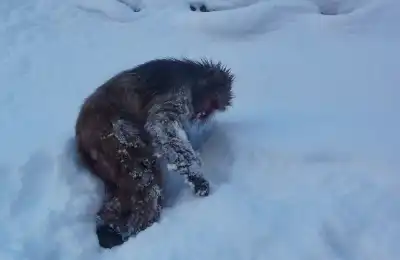
The story of the Yeti goes back hundreds of years. In Tibetan and Sherpa folklore, the creature is often viewed with respect rather than fear. The Yeti is seen as a protector of the mountains, punishing those who disrespect nature or sacred sites.
In other versions of the tale, the Yeti is portrayed as dangerous, kidnapping animals or even people who wander too far into the snow. The variation in stories shows how deeply the Yeti is woven into Himalayan culture, where the line between spirit and animal is often blurred.
The Dyatlov Pass Incident and the Yeti Connection
The Dyatlov Pass Incident in 1959 remains one of the most chilling mysteries of the 20th century. Nine experienced hikers died under strange circumstances in the Ural Mountains of Russia. Some early newspaper reports and conspiracy theories claimed the Yeti was to blame, describing strange footprints found near the site.
Though this theory has largely been dismissed and most evidence points to an avalanche, it shows how deeply the idea of the Yeti monster has entered public imagination.
The Yeti’s DNA and Scientific Investigations
Several teams have tried to uncover scientific proof of the Yeti through DNA analysis. Samples of hair and bone collected from supposed Yeti relics were tested, and most results showed they belonged to known animals, such as bears or yaks. However, one 2014 study found that two samples matched the DNA of a prehistoric polar bear, suggesting there may be an undiscovered hybrid species in the region.
While these findings don’t confirm a Yeti in real life, they do show how myths can sometimes lead to real scientific discoveries. Every investigation helps scientists learn more about the rare and fascinating animals that live in the Himalayas.
Is the Yeti a Myth or Fact?
So, does the Yeti exist? That’s the big question.
Despite decades of searches, no one has ever captured a live specimen or produced solid proof such as clear photos, bones, or DNA unique to an unknown species. This makes the Yeti a cryptid – a creature whose existence is unproven by science. However, believers argue that the Himalayas are vast and largely unexplored, so it’s possible something could still be hiding there.
Scientists, on the other hand, often explain Yeti sightings as misidentified animals or even psychological phenomena. When you’re high in the mountains with low oxygen and heavy snow, it’s easy to mistake shapes or sounds.
The Continuing Mystery of the Yeti
Even today, new expeditions set out in search of the Yeti. Some use drones and heat-sensing cameras to scan the remote valleys of Nepal and Tibet, while others study local folklore for new clues. Every so often, a fresh footprint or photograph renews interest.
Whether the Yeti turns out to be a real creature or purely a legend, its story challenges us to keep exploring, questioning, and respecting the mysteries of nature.
Common Questions About the Yeti
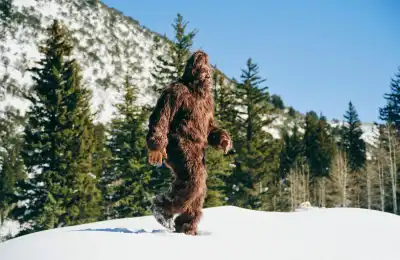
Are Yetis Good or Evil?
Whether the Yeti is good or evil depends on who you ask. In some Himalayan villages, people leave offerings to the Yeti, hoping for its protection or good fortune. In others, it’s viewed as a dangerous being best avoided. Rather than being entirely good or bad, the Yeti reflects the dual nature of the mountains themselves.
What Does the Yeti Symbolise?
In many Himalayan traditions, the Yeti symbolises the untamed power of nature. It represents mystery and respect for the mountains. For some, it’s also a symbol of human curiosity and the desire to explore the unknown and push beyond our limits.
Is There Any Real Photo of the Yeti?
Over the years, many photographs have claimed to show the Yeti, but none have been proven genuine. Most turn out to be hoaxes or misidentifications. Despite modern technology, including drones and high-resolution cameras, no conclusive image has ever been captured. That’s part of what keeps the mystery alive.
Is a Yeti Just a Bear?
Many scientists argue that the simplest answer is usually the correct one: the Yeti may be a bear. The Himalayan brown bear and the Asiatic black bear both stand upright at times and leave large footprints in melting snow that can appear humanoid. Still, believers point out that not all sightings fit this explanation, keeping the debate alive.
What is The Chinese Yeti Myth?
In China, there’s a similar creature known as the Yeren or “Wild Man”, said to live in the remote forests of the Hubei province. Much like the Yeti, it’s described as a tall, hairy humanoid with immense strength. The similarities between these myths across Asia suggest a shared human fascination with the idea of hidden wilderness beings.
What Are Some Common Misconceptions About the Yeti?
There are plenty of misunderstandings about the Yeti. Some believe it’s always violent or evil, but local legends often describe it as neutral or even protective. Another misconception is that it’s simply a version of Bigfoot, yet the two legends are culturally distinct: the Yeti belongs to Himalayan folklore, while Bigfoot comes from North American stories.
Others think the Yeti myth started with Western explorers, but in truth, the tale existed long before outsiders arrived. The stories were part of the region’s oral traditions, rooted in spiritual beliefs about nature and balance.
Recommended for you!
Best Sellers





Study Cryptozoology for £29
If you’ve ever wondered about the Yeti, Bigfoot, sea serpents, or other legendary beings, you might enjoy learning more through our Cryptozoology Diploma Course. This course explores the fascinating world of mythical creatures and cryptids, and the scientific efforts to uncover the truth behind them. Right now, you can enrol for a discounted price of £29!