If you’ve ever watched a documentary or read a news story about strange footprints deep in the forest, chances are you’ve heard of Bigfoot. The legend of Bigfoot, sometimes called Sasquatch, has fascinated people for generations. Whether you’re drawn to the mystery, the science, or the stories that have spread across continents, the question remains: is Bigfoot real?
In this article, you’ll explore where the Bigfoot story comes from and why so many people claim to have seen it. Along the way, we’ll look at the facts about Bigfoot, the most famous sightings, and what scientists and Native American legends say about this mysterious creature.
Jump to:
- What Is Bigfoot?
- The Legend of Bigfoot: Ancient Myths and Native American Beliefs
- Modern Sightings and Famous Bigfoot Stories
- Who Took the First Picture of Bigfoot?
- What Is the Largest Bigfoot Ever Recorded?
- Facts About Bigfoot: What Do People Claim to Know?
- Is Bigfoot Real? The Search for Proof
- What Do Scientists Think of Bigfoot?
- Why Was Bigfoot Banned?
- Theories About What Bigfoot Might Be
- Could Bigfoot Have Gone Extinct?
- Study Cryptozoology for £29
What Is Bigfoot?
Bigfoot is said to be a tall, hairy, ape-like creature that walks upright like a human. Descriptions vary, but most accounts describe Bigfoot as standing between six and nine feet tall, with dark brown or black fur, a strong odour, and glowing red or yellow eyes.
Those who have seen it often say it moves surprisingly quietly for its size. Some describe the creature as more human than animal, while others compare it to a prehistoric ape — a so-called Sasquatch animal that might have survived from an ancient time.
Bigfoot’s meaning is fairly straightforward: the name comes from reports of enormous, human-like footprints found in remote forests, often measuring more than 40 centimetres long.
The Legend of Bigfoot: Ancient Myths and Native American Beliefs
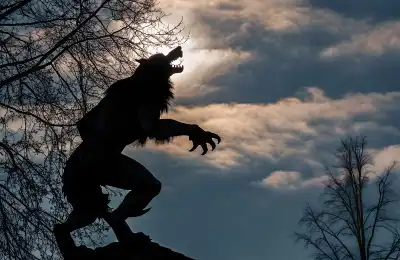
Long before the term Bigfoot became popular in the 20th century, Indigenous tribes across North America told stories of large, hairy beings living in the wilderness. These tales often described them as powerful, spiritual creatures; sometimes protectors of nature, sometimes mysterious beings to be feared.
Many Native American legends speak of Bigfoot Sasquatch not as a monster, but as a guardian spirit of the forest. For example, the Salish people of the Pacific Northwest used the word “Sasq’ets,” meaning “wild man.” These stories are some of the oldest references to the legend of Bigfoot, showing that the idea of such a creature has deep cultural roots rather than being a recent invention.
In many traditions, Bigfoot is seen as a symbol of balance, reminding people to respect nature and live in harmony with the world around them.
Modern Sightings and Famous Bigfoot Stories
The modern Bigfoot story really began in 1958 when a journalist published a report about huge footprints found near Bluff Creek, California. This sparked public fascination, and soon after, sightings began to pour in from across the United States and Canada.
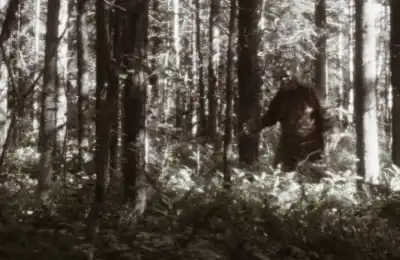
Perhaps the most famous Bigfoot sighting of all time is the Patterson–Gimlin film, recorded in 1967. It shows a large, hairy figure walking through a forest clearing, turning briefly towards the camera. While some believe it to be Bigfoot itself, others insist it was simply a man in a costume. Despite being analysed for decades, the footage remains one of the most debated pieces of Bigfoot proof in existence.
There have since been thousands of reported sightings across North America, particularly in the Pacific Northwest, with states like Washington, Oregon, and northern California being known hotspots. Most Bigfoot sightings tend to cluster around large forested areas and national parks, where few humans venture.
Who Took the First Picture of Bigfoot?
The first widely known photograph of Bigfoot footprints appeared in 1958, taken by Jerry Crew, a construction worker in California. He made plaster casts of the huge tracks and showed them to a local newspaper, giving birth to the name “Bigfoot.” Later, the Patterson–Gimlin film became the first moving image that supposedly captured the creature itself. Whether you see it as proof of Bigfoot or an elaborate hoax, it’s a landmark moment in the legend of Bigfoot.
What Is the Largest Bigfoot Ever Recorded?
Reports vary, but the largest Bigfoot ever recorded in eyewitness accounts is said to be around ten feet tall. These stories often come from hunters or hikers who describe seeing massive figures in the distance. Of course, without physical evidence, it’s impossible to say whether these reports describe real creatures or simply misidentifications.
Facts About Bigfoot: What Do People Claim to Know?
While none are confirmed scientifically, here are some of the most commonly reported characteristics and claims:
- Gigantic Height: Witnesses often describe Bigfoot as between 6 and 9 feet tall.
- Massive Footprints: Prints measuring up to 24 inches long have been found, hence the creature’s famous name.
- Distinctive Smell: Many witnesses mention a strong, musky odour before seeing or hearing anything.
- Vocal Sounds: Strange howls and screams, recorded in remote areas, are sometimes claimed to be Bigfoot calls.
- Elusive Nature: Despite hundreds of reports, no Bigfoot found has ever been confirmed.
Some claim there are multiple creatures. While there’s no evidence to support a specific number, believers argue that a small population could remain hidden in vast forested regions.
Is Bigfoot Real? The Search for Proof
For decades, researchers and scientists have asked the same question: Is Bigfoot real? Evidence so far has been limited to blurry photos, footprints, and eyewitness accounts. These claims are fascinating, but they haven’t provided solid proof of Bigfoot.
Some samples of hair, blood, and DNA have been tested, but none have been proven to belong to an unknown species. Occasionally, samples thought to be from Bigfoot turn out to belong to bears, deer, wolves, and even humans. This makes Bigfoot a cryptid – a creature whose existence is unproven by science.
That said, lack of proof doesn’t necessarily stop people from believing. Many argue that the world’s forests are vast and largely unexplored — large enough to hide even an enormous monster like Bigfoot.
What Do Scientists Think of Bigfoot?
Most scientists remain sceptical. They argue that there is no physical evidence, like bones or verified biological samples, to prove the Bigfoot legend. Experts in wildlife biology point out that a breeding population of large primates would leave clear traces, from remains to consistent DNA.
However, some scientists keep an open mind. They suggest that stories about Bigfoot may come from encounters with bears walking upright, or from ancient human memories of extinct animals like Gigantopithecus, a giant ape that once lived in Asia.
Why Was Bigfoot Banned?
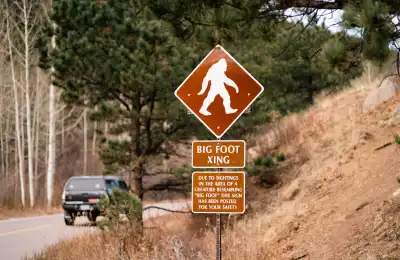
You might be surprised to learn that some areas once considered banning Bigfoot hunting entirely. In the 1960s and 70s, parts of the United States, including Skamania County in Washington, declared Bigfoot an endangered species to prevent harm to anyone (or anything) mistaken for the creature. The banning of Bigfoot hunting was actually to protect both wildlife and human safety.
Theories About What Bigfoot Might Be
Over the years, countless theories have emerged to explain what Bigfoot is. Here are a few of the most popular ideas:
- A Surviving Prehistoric Species: Some believe Bigfoot could be a descendant of Gigantopithecus, an enormous ape that lived hundreds of thousands of years ago.
- An Unknown Type of Human: Others suggest Bigfoot might be a relative of early humans, possibly an isolated group that survived in remote regions.
- A Spiritual or Interdimensional Being: In some Indigenous and New Age beliefs, Bigfoot is described as a creature that moves between dimensions, explaining why it’s so hard to find.
- A Misidentified Animal: Many scientists think sightings can be explained by bears, moose, or even humans in heavy clothing.
- A Cultural Phenomenon: Some argue that Bigfoot exists more as a reflection of our fascination with mystery and wilderness than as a physical creature.
Could Bigfoot Have Gone Extinct?
Some theories suggest that if Bigfoot ever existed, it might now be extinct. Possible explanations include climate change, habitat loss, or a small population that simply couldn’t survive over time. However, others claim new sightings happen every year. Proof, they say, that Bigfoot is still out there.
Recommended for you!
Best Sellers





Study Cryptozoology for £29
If you’ve enjoyed learning about Bigfoot myths, theories, and sightings, you might want to go deeper into the world of mysterious creatures and hidden legends. The Cryptozoology Diploma Course lets you explore the study of undiscovered animals, from Bigfoot and the Loch Ness Monster to lesser-known cryptids from around the world. Enrol today for a discounted price of £29!