Whether your cat is bored, exploring new textures, craving attention, or responding to instinct, the reasons behind cat eating plants can be more varied than you might think. This guide breaks everything down so you feel confident about what’s normal and what you can do to help your cat stay safe.
Jump to:
- Why Do Cats Eat Plants?
- Why Do Indoor Cats Eat Plants?
- Do Cats Eat Plants Because They Lack Something?
- Why Do Cats Eat Flowers?
- Are Plants Only Toxic If Cats Eat Them?
- What to Do If Your Cat Eats a Toxic Plant
- Is It Okay for Cats to Chew on Plants?
- Do All Cats Eat Houseplants?
- How Do I Stop My Cat from Eating Plants?
- Do Cats Eat Plants Out of Stress?
- Will This Behaviour Go Away on Its Own?
- Study Feline Behaviour and Psychology for £29
Why Do Cats Eat Plants?
Despite being obligate carnivores, cats often show an interest in greenery. This can feel puzzling, but several instinctive behaviours come into play.
Exploration and curiosity
Cats are naturally investigative. They paw, sniff, tap, taste, and sometimes chew new textures simply to learn what they are. Leaves move, dangle, and catch the light – all irresistible to a playful cat. If you’re wondering why your cat is obsessed with plants, curiosity is usually the simplest answer.
Digestive support
Some cats chew on plants to help stimulate digestion or to move hair through their system. Cats often eat grass to eliminate hairballs more easily.
Instinctive behaviour from the wild
While domestic cats are carnivores, their wild ancestors consumed plant matter occasionally, usually indirectly through prey. So, while cats don’t particularly need plant nutrients, occasional chewing isn’t unusual.
Scent and texture stimulation
Plants have interesting scents and surfaces. Some cats are drawn to certain aromatic plants, leaves with soft textures, or flowers with strong smells. You may find your cat rubs their face against your houseplants or taps them repeatedly before chewing.
Why Do Indoor Cats Eat Plants?
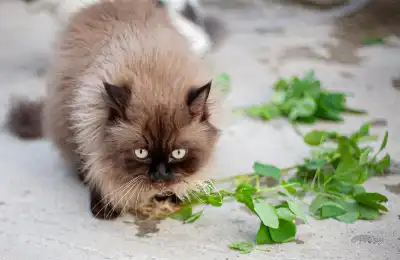
Cats living indoors sometimes display plant-chewing behaviour due to emotional needs or boredom.
Boredom and under-stimulation
A cat without enough stimulation may turn to anything that moves or looks interesting. A bored cat may chew out of sheer entertainment.
Attention-seeking behaviour
If your cat learns that chewing a leaf makes you rush over, the behaviour can turn into a reliable way to get attention. Even negative attention counts.
Lack of appropriate alternatives
Cats need things to bite and chew; not for nutrition, but for enrichment. Without toys, chews, and grass alternatives, they may go for your houseplants.
Do Cats Eat Plants Because They Lack Something?
The idea that cats eat plants due to nutritional deficiencies is common, but not always accurate.
Most cats on high-quality food are nutritionally balanced. However, cats with pica (a behaviour involving eating non-food items) may chew plants for reasons related to stress, underlying medical issues, and behavioural needs.
If your cat suddenly begins chewing plants excessively or eats large amounts of non-food materials, it’s worth speaking to a vet to rule out medical causes.
Why Do Cats Eat Flowers?
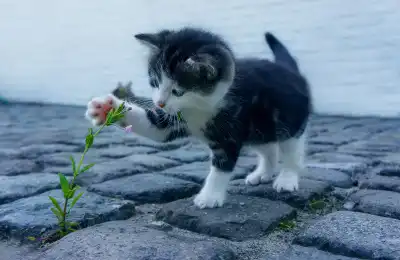
With their different scents and colours, flowers can be especially tempting for cats. Here are some reasons they may eat flowers:
- The attraction of movement and smell: Petals are light and fluttery, and many flowers carry strong fragrances that pique a cat’s curiosity.
- Soft textures: Petals feel gentle on the tongue, and the softness may encourage extra nibbling.
However, cats eating flowers can be dangerous if the flowers are toxic, which brings us to the next key point.
Are Plants Only Toxic If Cats Eat Them?
Not all houseplants or flowers are safe for pets. Some are harmless, while others can be highly toxic.
Plants can be dangerous in different ways. In most cases, toxicity occurs when the plant is chewed or swallowed. However, some plants have sap that can irritate the skin or eyes, and pollen from lilies can be dangerous even if licked from fur.
Common toxic plants for cats include:
- Lilies (extremely dangerous)
- Aloe vera
- Pothos (Devil’s Ivy)
- Peace lilies
- Dieffenbachia
- Tulips and daffodils
If you’re unsure whether a plant is safe, always double-check using trusted sources or by asking a veterinarian.
What to Do If Your Cat Eats a Toxic Plant
If your cat has eaten a toxic plant, quick action matters. Follow these steps immediately:
- Remove access immediately so your cat can’t eat more.
- Check the plant name and search its toxicity level.
- Look for symptoms, such as vomiting, drooling, wobbliness, hiding, or difficulty breathing.
- Call your vet or an emergency vet helpline straightaway, even if your cat seems fine.
- Bring part of the plant to the vet if possible; it helps with identification.
- Never wait for symptoms to appear with highly toxic plants like lilies.
Is It Okay for Cats to Chew on Plants?
Mild and occasional chewing on safe plants is usually nothing to worry about, as safe options can satisfy your cat’s urge to nibble without putting them at risk. Some safe cat plants to eat include:
- Cat grass
- Catnip
- Valerian
- Lemon balm
- Parsley (in small amounts)
If you want to give your cat something natural to chew, these are safer choices than houseplants.
Do All Cats Eat Houseplants?
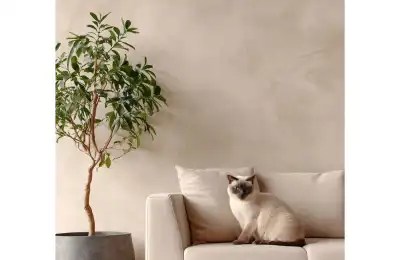
If you’ve noticed cats eating houseplants more often in particular households, that’s because individual personality plays a significant role. Some cats ignore greenery completely, while others treat your plants like a personal snack bar. Cats that are playful, energetic, and highly inquisitive are more likely to chew leaves or dig in soil.
How Do I Stop My Cat from Eating Plants?
Preventing a cat from eating plants usually involves a combination of redirection, environmental changes, and gentle training. With a few simple adjustments, you can protect your plants while helping your cat feel stimulated and satisfied.
1. Offer Safe Alternatives to Chew
A lot of plant-chewing behaviour comes from curiosity or the desire to bite something soft and leafy. Giving your cat something safe to chew is often the most effective starting point.
Cat grass works particularly well. It’s safe, inexpensive, and gives your cat a designated option that feels far more interesting than the houseplants you’re trying to protect. Placing it somewhere easy to reach helps your cat learn that this is the “approved” plant.
Catnip and valerian toys can also tempt your cat away from your plants. The interesting smells and textures can keep your cat engaged far more than the greenery on your windowsill.
2. Adjust Your Plant Placement
Sometimes a small change in layout is enough to stop your cat from viewing your plants as an irresistible challenge. Moving plants out of reach can help break the habit, especially for cats who chew simply because the opportunity is there.
High shelves, hanging planters, or wall brackets keep plants safely away from curious paws. Enclosed displays like terrariums or glass-fronted cabinets also work well. If your cat enjoys digging in soil, adding decorative stones or gravel on top can make it less appealing.
3. Use Gentle, Natural Deterrents
Some scents naturally discourage cats and can help reduce interest in your plants. Citrus, certain safe mint varieties, and pet-safe bitter sprays can act as mild deterrents if used carefully. Coffee grounds may work around the base of some plants, but must be used sparingly and always out of reach to avoid ingestion.
It’s always best to test any scent in a small area first to make sure your cat isn’t bothered or irritated by it.
4. Increase Enrichment to Reduce Boredom
Boredom can play a role in cats eating plants. Increasing mental and physical stimulation helps redirect your cat’s energy into more positive activities.
A few helpful enrichment ideas include food puzzle toys, climbing spaces such as cat trees or wall shelves, window perches for bird-watching, and interactive toys like feather wands. Regular play sessions help burn off energy, which in turn reduces boredom-related chewing.
5. Train Your Cat with Gentle Guidance
Training a cat not to chew plants is entirely possible when done with patience and consistency. The aim is to show your cat what they should interact with rather than scolding them for what they shouldn’t.
Redirecting the behaviour is a simple but effective method. Each time your cat approaches a forbidden plant, gently guide them towards something appropriate, such as their cat grass or a chewable toy. When they make the right choice, use praise, treats, or affection to reinforce that behaviour.
Soft temporary barriers like mesh, light covers, or small decorative fences can also help while your cat learns new habits. The key is to stay consistent so your cat doesn’t receive mixed messages.
Do Cats Eat Plants Out of Stress?
While not always the cause, stress can contribute to nibbling behaviour. Changes in the home, like new pets, new people, moving house, loud noises, or schedule disruptions, may push a sensitive cat to seek comfort through familiar behaviours like chewing.
If you notice other signs of stress or anxiety, such as hiding, over-grooming, or changes in appetite, consider speaking to a vet or feline behaviourist.
Will This Behaviour Go Away on Its Own?
Some kittens grow out of plant-chewing. Others continue into adulthood unless redirected. If the behaviour is frequent, it’s best to intervene early so your cat learns healthier habits.
Recommended for you!
Best Sellers






Study Feline Behaviour and Psychology for £29
If you’d like to understand your cat on a deeper level, including why they do what they do, how they communicate, and how to support their emotional wellbeing, you may enjoy our Feline Behaviour and Psychology Diploma Course. You can follow the link to get the full course and certification for a discounted price of £29.