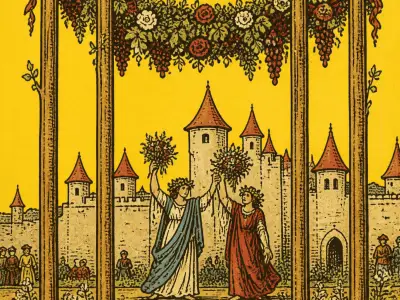
Grapes have captured human imagination for thousands of years, appearing in ancient myths, religious texts, works of art, and even fortune-telling traditions. If you're researching grape symbolism because you're on a broader journey of spiritual discovery, or perhaps working through what these symbols mean for you personally, you're in exactly the right place.
What's in This Guide
In this post, you'll discover what grapes symbolise across mythology, religion, art, witchcraft, tarot, and dreams. From the ancient deities to the spiritual significance of different grape colours, this guide covers everything you need to know.
Jump to:
- A Brief History of Grape Symbolism
- What do Grapes Symbolise?
- What do Different Coloured Grapes Symbolise?
- What do Grapes Represent in Different Cultures and Mythologies?
- What do Grapes Stand For in the Bible?
- What do Grapes Mean in Love?
- Do Grapes Symbolise Wealth and Good Luck?
- The Grapevine Meaning: A Metaphor Worth Knowing
- Sour Grapes Meaning
- What do Grapes Symbolise in Art?
- Grapes in Witchcraft and Spiritual Practice
- What do Grapes Mean in Tarot?
- What do Grapes Represent in Dreams?
- Study Spirit Animals and Totems for £29
A Brief History of Grape Symbolism
Grapes are one of the oldest cultivated fruits in human history, with evidence of winemaking dating back over 8,000 years. From the vineyards of ancient Mesopotamia to the sun-drenched hillsides of Greece and Rome, grapes and their vines have been woven into the fabric of human culture. They weren't simply food; they were symbolic, sacred, and sometimes even controversial.
The sheer universality of grapes tells you something important: across wildly different cultures and time periods, people kept returning to the grape as a meaningful symbol.
What do Grapes Symbolise?
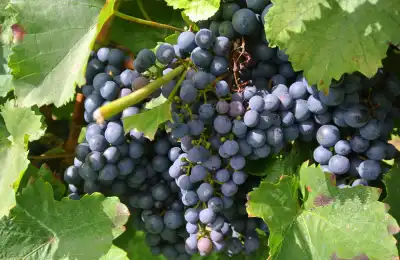
Across cultures and history, grapes represent an impressive range of ideas:
- Abundance and fertility — A full cluster of grapes is an image of nature's generosity.
- Transformation — Grapes become wine, and that process of change has long been seen as symbolic of spiritual or personal transformation.
- Joy and celebration — Wine made from grapes has been at the heart of feasts and festivities for millennia.
- Wisdom — In many traditions, the patient tending of a vineyard and the ageing of wine are metaphors for the slow cultivation of wisdom.
- Temptation and indulgence — Grapes appear in cautionary tales just as often as celebratory ones.
The grape symbol, then, is not a simple one. It holds complexity, and that's part of what makes it so enduring.
What do Different Coloured Grapes Symbolise?
Colour adds another layer of meaning to grape symbolism. Here's a quick breakdown:
- Green grapes — new beginnings, growth, and financial abundance
- Red grapes — passion, vitality, and physical energy
- Purple grapes — spiritual wisdom, intuition, and transformation
- Black grapes — mystery, the subconscious, and ancestral connection
- White/golden grapes — purity, clarity, and divine blessing
What do Grapes Represent in Different Cultures and Mythologies?
According to Greek myth, it was Dionysus who introduced viticulture to humanity, making grapes his defining sacred symbol. He was a god of both liberation and chaos, and the grapevine came to represent the dual nature of pleasure itself: creative and joyful, but capable of tipping into excess.
Dionysus is far from alone. Here are some of the key deities associated with grapes across different traditions:
- Osiris (Egyptian mythology) — Sometimes credited with discovering wine, Osiris links grapes to resurrection and the cycle of life and death.
- Shezmu (Egyptian mythology) — A god of wine and oil presses, often depicted crushing grapes, he represents both nourishment and the destructive power of the harvest.
- Liber (Roman) — An ancient Italian deity of viticulture and fertility, later merged with Bacchus, associated with freedom and abundance.
In each case, grapes signify something beyond the fruit itself: life, death, renewal, and the divine gifts given to humanity.
What do Grapes Stand For in the Bible?
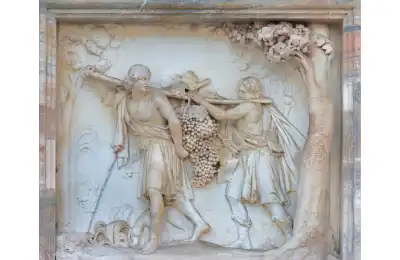
What Does God Say About Grapes?
Grapes hold significant meaning throughout scripture, appearing in both the Old and New Testaments. In the Old Testament, the image of sitting "under your own vine and fig tree" (Micah 4:4) was a symbol of peace, security, and divine blessing. Grains in the bible represent prosperity, the covenant between God and his people, and the promises of a fruitful land.
God's instructions regarding vineyards were detailed and intentional: farmers were told not to harvest every grape, but to leave some for the poor. This connects grapes to generosity and justice as much as abundance.
What do Grapes Symbolise in Catholicism?
In Christian and Catholic tradition, the symbolism of grapes becomes even more concentrated around the Eucharist. Wine, made from grapes, represents the blood of Christ, making the grape one of the most sacred symbols in the faith. In John 15:1, Jesus says, "I am the true vine, and my Father is the gardener," drawing a direct spiritual metaphor from the grapevine, positioning himself as the source of life and believers as branches.
Some interpretations link the fruit in the Garden of Eden to the grape or its wine, though this is more theological speculation than established doctrine. What the grape does consistently represent in this context is the tension between sacred gift and human temptation.
What do Grapes Mean in Love?
Grapes have a gentle but meaningful association with love and romance. Their lushness, sweetness, and the act of sharing them make them natural symbols of intimacy. In ancient Rome, grapes were associated with Venus, the goddess of love, and were present at wedding feasts and romantic gatherings. In love, grapes can represent:
- Sensuality and physical pleasure
- The sweetness of a new relationship
- Fertility and the hope for a growing family
- Nurturing, since just as a vine requires constant care, so does love
Purple grapes, in particular, carry a depth of feeling. Purple symbolises spirituality, transformation, and deep emotional connection, so purple grapes can represent a love that goes beyond the surface, one rooted in soul-level understanding.
Do Grapes Symbolise Wealth and Good Luck?
The Myth of the 12 Grapes
Grapes are widely considered symbols of wealth and good fortune. One of the most charming traditions linked to luck is the myth of the 12 grapes. In Spain and several Latin American countries, it's customary to eat 12 grapes at midnight on New Year's Eve, one for each chime of the clock. Each grape represents good luck for one month of the coming year. In this tradition, the grapes represent twelve chances at a prosperous, fruitful life.
The Superstition About Grapes
Beyond New Year's traditions, there are numerous superstitions associated with grapes. In some cultures, dreaming of grapes is considered a highly auspicious sign. In others, finding a vine laden with fruit is taken as an omen of good things to come. The superstition about grapes often connects to their visual quality: a full, heavy cluster represents a life equally full and rewarding.
The Grapevine Meaning: A Metaphor Worth Knowing
You've likely heard the phrase "I heard it through the grapevine." But what is the grapevine, exactly, when used as a metaphor? The grapevine meaning in everyday speech refers to informal channels of communication: rumour, gossip, and the way news travels person to person before it becomes official.
The metaphor has its roots in the 19th century American Civil War era, when telegraph wires were compared to tangled grapevines. Messages passed along these lines were often garbled or unreliable, and so "the grapevine" came to mean secondhand, unverified information. It's a fitting metaphor when you consider how grapevines themselves sprawl and twist in all directions, connecting everything they touch.
Sour Grapes Meaning
The phrase "sour grapes" has its origins in one of Aesop's famous fables. In the story, a fox who cannot reach a bunch of grapes convinces himself they must be sour anyway, a neat bit of self-deception to avoid admitting disappointment. The sour grapes meaning, then, refers to the act of pretending not to want something you simply cannot have. It's a small but sharp piece of human psychology, captured perfectly in the image of a grape just out of reach.
What do Grapes Symbolise in Art?
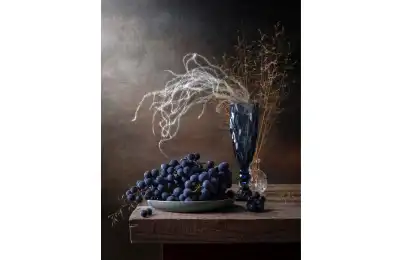
The grape symbol in art has a long and varied history. In Renaissance paintings, grapes often appeared alongside other fruits as symbols of abundance and the pleasures of earthly life. In still-life paintings especially, they signalled wealth and the sophisticated taste of the patron.
Beyond prosperity, grapes also represent:
- The harvest and the passing of seasons — grapes ripen in autumn, linking them to cycles of life.
- The Eucharist — grapes and wine in religious paintings carry obvious spiritual weight.
- Bacchanalian excess — in scenes of feasting and revelry, grapes are rarely absent.
- The fleeting nature of pleasure — overripe or falling grapes in vanitas paintings remind viewers that all earthly joy is temporary.
Artists from Caravaggio to Frida Kahlo have used grapes not merely as decoration, but as carriers of meaning.
Grapes in Witchcraft and Spiritual Practice
Are Grapes Spiritual?
In witchcraft and earth-based spiritual traditions, gapes are used in ritual and spellwork connected to abundance, fertility, transformation, and celebration. They’re associated with the harvest sabbats, particularly Mabon (the autumn equinox), and are offered on altars to honour the season's gifts.
Grapes are also considered a fruit of manifestation, used to amplify intentions around prosperity, love, and creative energy. Placing grapes on an altar, consuming them during a ritual, or even using grape imagery in visualisation work is thought to attract abundance and sweetness into your life.
What Colour Grapes Are Used for Manifestation?
- Green grapes — associated with abundance, money, and new beginnings.
- Red grapes — linked to love, passion, and vitality.
- Purple grapes — connected to spiritual insight, intuition, and psychic development.
What do Grapes Mean in Tarot?
Grapes appear in the tarot most notably on The Emperor and The World cards in some decks, and are also referenced in cards connected to cups (water, emotion, and the subconscious). In tarot, grapes often represent:
- Earthly rewards and material abundance
- The fruits of effort and what you've worked hard to grow
- Celebration and the enjoyment of life's pleasures
When grapes appear in a reading, whether directly or as background imagery, they tend to speak to themes of harvest: what have you cultivated, and are you ready to enjoy it?
What do Grapes Represent in Dreams?
Dreams about grapes are generally considered positive omens. Different dreams and their symbolism include:
- Eating ripe, sweet grapes — suggests coming joy, success, or romantic fulfilment.
- Picking grapes — indicates that rewards for your hard work are within reach.
- Unripe or bitter grapes — may signal that something you're pursuing isn't quite ready yet.
- A lush vineyard — often points to long-term prosperity and a period of growth.
As with all dream symbolism, context matters. But grapes, on the whole, are a welcome sight in the dream world.
Recommended for you!
Best Sellers







Study Spirit Animals and Totems for £29
If exploring grape symbolism has sparked a broader curiosity about the spiritual meanings found in nature, the Spirit Animals and Totems Diploma Course from Centre of Excellence is the perfect next step. It explores how animals, plants, and natural symbols carry deep significance across cultures and traditions. Enrol today at a discounted price of just £29!