If you’ve ever come across the name Hræsvelgr while exploring Norse mythology, you might have found yourself intrigued. Who was Hræsvelgr? What role did he play in the Norse cosmos? And why is his legend still so popular today?
This log post guides you through everything you need to know about Hræsvelgr, from how to pronounce his name to understanding his powers, symbols, and the myths that make him such a fascinating figure.
Jump to:
- Who is Hræsvelgr in Norse Mythology?
- How Do You Pronounce Hræsvelgr?
- The Myth of Hræsvelgr: The Eagle Who Creates the Wind
- Is Hræsvelgr a Jotunn?
- How Powerful Is Hræsvelgr?
- Is Hræsvelgr Evil?
- Hræsvelgr’s Symbolism
- Hræsvelgr in Modern Culture
- The Connection Between Hræsvelgr and Other Norse Beings
- What Hræsvelgr Can Teach You
- Study Norse Mythology for £29
Who is Hræsvelgr in Norse Mythology?
In Norse mythology, Hræsvelgr (sometimes written as Hraesvelg) is a giant who takes the form of an enormous eagle. His name translates roughly to “Corpse Swallower” or “He Who Swallows Corpses”, an unsettling title that gives us a clue about his connection to death and the cycle of nature.
Hræsvelgr is said to sit at the edge of the world, high above the heavens, and it’s from his mighty wings that the winds of the world are born. Each time he flaps his wings, gusts sweep across the land and seas of Midgard, bringing both life and destruction.
The name “Corpse Swallower” may sound grim, but it reflects the Norse view of nature as a balance of creation and decay —a constant cycle where even death serves a purpose. Hræsvelgr wasn’t simply a symbol of doom; he represented the power and inevitability of natural forces.
How Do You Pronounce Hræsvelgr?
The Old Norse language can be tricky for modern speakers. Hræsvelgr is generally pronounced as “HRAHS-vel-ger” or “HRES-vel-ger”, depending on dialect. The “Hr” sound at the beginning is a rough, breathy ‘h’, similar to a strong exhale before rolling into the ‘r’.
The Myth of Hræsvelgr: The Eagle Who Creates the Wind
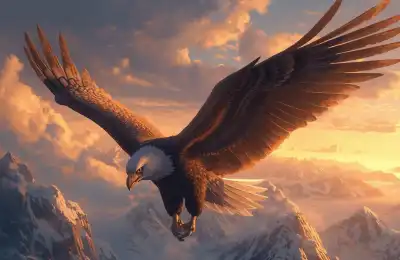
Hræsvelgr’s most famous mention appears in the Poetic Edda, one of the primary sources for Norse mythology. In the poem Vafþrúðnismál, the god Odin engages in a wisdom contest with the giant Vafþrúðnir. During their exchange, Odin asks where the wind comes from and the giant replies that it originates from Hræsvelgr, who sits at the end of heaven in the form of an eagle. When Hræsvelgr beats his wings, the winds blow across the worlds.
This powerful image gives Hræsvelgr cosmic significance as a force of nature itself, controlling one of the essential elements that shape life and weather.
The myth suggests that the Norse didn’t see nature as separate from divine beings; rather, the two were one and the same. Hræsvelgr is the wind, not just its cause. His existence embodies the raw, untamed energy that moves through the Nine Realms.
Is Hræsvelgr a Jotunn?
In Norse mythology, the Jotnar (singular: Jotunn) are powerful giants often associated with nature’s primal forces. They are neither purely evil nor wholly benevolent.
Hræsvelgr is indeed described as a Jotunn. But unlike the chaotic frost giants who battle the Norse gods, Hræsvelgr has a different, almost divine purpose. He is not portrayed as a villain or a direct threat to the gods. Instead, he represents balance, acting as a natural power that both supports and challenges the world.
This highlights an important theme in Norse belief: that power doesn’t have to be moral to be meaningful. The Jotnar were essential to the world’s functioning, just as storms and winds are vital to Earth’s balance.
How Powerful Is Hræsvelgr?
Hræsvelgr’s strength lies in his elemental force. His wings command the winds of all the worlds, influencing weather, travel, and even life itself.
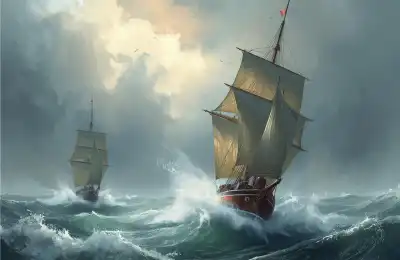
In Norse culture, wind was a divine breath that could either bless sailors with smooth passage or wreck their ships in an instant. Hræsvelgr, therefore, was both a giver and taker, the unseen power behind the air itself.
Is Hræsvelgr Evil?
In Norse mythology, evil isn’t always tied to malice. Instead, it’s about balance and consequence. Hræsvelgr may be fearsome, but he doesn’t act out of cruelty or desire to harm. His winds can destroy ships and stir up violent storms, but they also bring the breezes that cool the land and carry life across the world.
Hræsvelgr’s Symbolism
Hræsvelgr’s story carries several layers of meaning that still resonate today.
- The Wind as a Symbol of Change: The wind has always represented movement, transformation, and unseen power. Hræsvelgr symbolises the unpredictable nature of change and the way life can shift direction in an instant.
- The Cycle of Life and Death: With a name like “Corpse Swallower”, it’s clear that Hræsvelgr is connected to death. Yet his winds also give life. This duality mirrors the Norse view of the world, where creation and destruction are two sides of the same coin.
- The Power of Nature: Hræsvelgr embodies the wildness of nature. He reminds us that some forces are beyond our control, and rather than fighting them, we must learn to respect them.
Hræsvelgr in Modern Culture
Though he’s not as famous as Odin or Thor, Hræsvelgr has found a quiet resurgence in modern times. He appears in video games, literature, and art, often depicted as a colossal eagle cloaked in storm clouds. These portrayals tend to emphasise his mystery and power, capturing the awe the ancient Norse felt for the natural world.
The Connection Between Hræsvelgr and Other Norse Beings
Hræsvelgr’s place in the mythological hierarchy is fascinating because he bridges the worlds of giants and natural forces. Some scholars compare him to Ymir, the primordial giant from whose body the world was made. Both figures embody nature’s vastness and power.
There’s also an interesting parallel between Hræsvelgr and Odin’s ravens, Huginn and Muninn. All are bird-like figures associated with wisdom and communication between realms. In this way, Hræsvelgr can be seen as part of a wider pattern in Norse mythology where birds represent transition and cosmic energy.
What Hræsvelgr Can Teach You
Beyond mythology, Hræsvelgr’s story holds timeless lessons. His presence in the skies can be seen as a reminder that:
- Change is inevitable. The winds shift constantly, and so does life.
- Power doesn’t have to be loud. Hræsvelgr’s might is silent and unseen, yet it moves the world.
- Balance is everything. Like wind that can comfort or destroy, true strength lies in harmony, not dominance.
Recommended for you!
Best Sellers


Study Norse Mythology for £29
If Hræsvelgr’s story has inspired you to explore Norse mythology further, you can deepen your understanding with our Norse Mythology Diploma Course. This self-paced online course guides you through the legends, gods, and cosmic ideas of Norse myth, from Odin and Loki to giants like Hræsvelgr himself. Right now, you can enrol for a discounted price of £29!