Throughout Celtic mythology, few figures embody grace and freedom quite like Epona, the Celtic goddess of horses. She is a powerful symbol of fertility and the deep connection between humans and animals. Whether you’re drawn to mythology or simply curious about ancient deities, Epona’s story offers a fascinating look into the beliefs and traditions of the ancient Celts.
Let’s explore who Epona is and what her myths and symbols reveal about the people who worshipped her.
Jump to:
- Who Is Epona in Celtic Mythology?
- Epona’s Symbols
- Why Is Epona Special?
- Was Epona Worshipped in Britain?
- What Is the Significance of Epona to the Celts?
- Are There Any Temples Dedicated to Epona?
- How to Worship Epona
- The Legacy of the Celtic Horse Goddess
- Frequently Asked Questions About Epona
- Study Celtic Mythology for £29
Who Is Epona in Celtic Mythology?
Epona was known as the Celtic goddess of horses, one of the few deities from Celtic tradition who was also adopted into Roman religion. Her name comes from the Gaulish word epos, meaning “horse,” perfectly describing her role as the protector and nurturer of horses, mules, and donkeys.
She also represented fertility and travel. Many Celtic communities relied heavily on horses for farming, transport, and warfare, so it’s easy to see why they honoured her as both a horse goddess and a symbol of prosperity.
In Roman times, soldiers, especially cavalry units, prayed to her for safe journeys and good fortune. Shrines to Epona were even found inside military stables, showing how deeply her protection was valued.
Epona’s Symbols
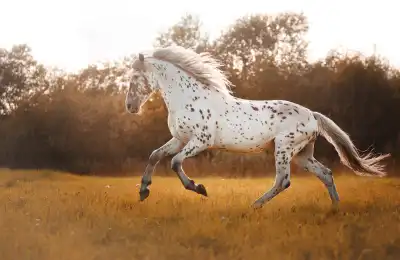
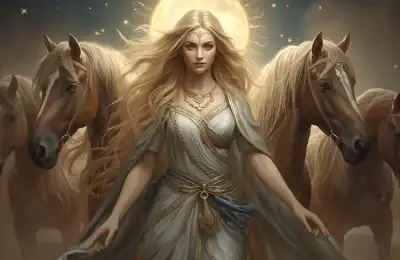
When you picture Epona, think of a powerful woman riding or standing beside one or more horses. Epona’s symbols often include:
- Horses, naturally, as her sacred companions and messengers.
- Cornucopias (horns of plenty), representing fertility and abundance.
- Keys, thought to signify her connection to the spirit world and protection over gateways or transitions.
- Foals, symbolising new beginnings and growth.
In some depictions, she carries a basket of fruit or is surrounded by birds, linking her to nature and renewal. Together, these symbols of Epona show her as a bridge between the physical and spiritual realms.
Why Is Epona Special?
Epona stands out among Celtic goddesses because she was one of the few whose worship spread beyond the Celtic world. The Romans officially included her in their pantheon, which was a rare honour for a Celtic deity.
Her uniqueness also lies in her dual nature. She embodies both nurturing and strength, both gentleness and command. She was seen as a protector of horses and riders, a bringer of fertility, and even a guide of souls to the afterlife.
Epona’s appeal also lay in her accessibility. She was worshipped by common folk, farmers, and soldiers alike. Whether you relied on a horse to plough your land or to ride into battle, Epona was there to safeguard and bless your journey.
Was Epona Worshipped in Britain?
Epona was worshipped in Britain, especially during the period of Roman occupation. Archaeological finds, including altars and carved reliefs, show that her influence extended across much of Western Europe, from Gaul (modern France) to Britain.
Roman cavalrymen stationed in Britain brought her worship with them, and her image was often placed in stables and temples. Though her origins were Celtic, her reach became truly international, symbolising how spiritual ideas could travel and evolve through culture and conquest.
What Is the Significance of Epona to the Celts?
For the Celts, horses were far more than working animals. They were seen as sacred beings that connected the earthly world with the divine. As the Celtic goddess of horses, Epona represented that sacred link.
Horses carried people across distances, and Epona’s role was to guide and protect them along the way. Her significance stretched from the practical (keeping horses healthy) to the mystical (guiding souls to the afterlife).
Epona’s image also appeared on coins and carvings, showing how deeply she was woven into everyday Celtic life. To honour her was to honour the natural cycles of life, death, and rebirth.
Are There Any Temples Dedicated to Epona?
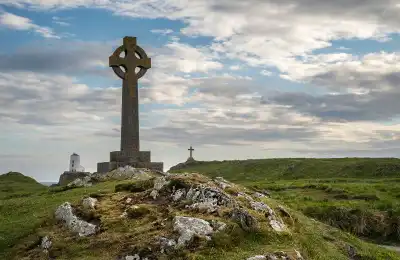
Though Epona’s temples were relatively rare compared to those of major Roman gods, several have been discovered across Europe. Many were found in Gaul, Germany, and Britain, often near Roman military sites. These temples were usually small shrines or altars decorated with carvings of Epona seated on a horse or feeding foals.
One of the most famous finds is from Burgundy in France, where a detailed stone carving shows Epona surrounded by horses and holding a cornucopia. Her presence in Roman stables and households suggests she was deeply loved by ordinary people rather than confined to grand temples.
How to Worship Epona
Ancient followers of Epona would have offered grain, apples, bread, or carved horse figurines as gifts to win her favour. Modern-day admirers who feel drawn to her energy might honour her in similar ways. If you wish to connect with Epona spiritually, you could:
- Spend time with horses or volunteer at a stable.
- Leave small offerings like fruit or oats as a gesture of respect.
- Meditate on her qualities of strength, nurturing, and freedom.
- Create a small altar with images of horses or nature.
Worshipping Epona today is often about appreciation for the harmony between humans and animals, and the beauty of nature itself.
The Legacy of the Celtic Horse Goddess
The Celtic horse goddess Epona continues to inspire artists and historians, as well as storytellers. Her mythology reminds us of the deep respect ancient people had for animals and the land, and how interconnected life truly is.
Her enduring legacy is one of balance, between gentleness and power, human and nature, life and spirit.
Frequently Asked Questions About Epona
What Is Epona Based On?
Epona may have begun as a local nature spirit connected to horses and fertility before evolving into a major goddess. Her mythology blends Celtic reverence for animals with the Roman appreciation for divine order and protection.
She’s also thought to be influenced by earlier Indo-European traditions that linked horses with sun gods and travel between worlds. Unlike the Greek horse gods such as Poseidon (who was also the god of the sea and horses), Epona’s focus remained on nurturing and protection rather than dominance or control.
Are Epona and Rhiannon the Same?
Epona and Rhiannon, another Celtic horse goddess, are often compared, but they are not exactly the same. Rhiannon belongs to Welsh mythology, particularly in the Mabinogion, while Epona’s origins are Gaulish.
However, they share several traits. It’s possible that Rhiannon’s character was inspired, at least in part, by earlier stories of Epona. The two goddesses reflect a shared Celtic respect for horses and the feminine power they represent.
Is Epona a Hero?
While Epona isn’t a hero in the traditional sense, she embodies a quieter, spiritual kind of heroism. Her strength lies in guidance, compassion, and care. She is the hero of the fields and the open road, offering safety and renewal to those who honour her.
How Strong Is Epona?
Epona’s strength isn’t measured in physical power but in influence. Her worship spread across an entire empire, and her name still resonates today. To the Celts, her strength came from her balance. She ruled without aggression, guided without force, and protected without domination.
What Kind of Horse is Epona?
The answer lies not in a specific colour or breed but in the horse’s spirit itself – wild, loyal, and deeply connected to the natural world. Some traditions describe her horses as white, a colour that symbolised purity and the divine in Celtic mythology.
Recommended for you!
Best Sellers
Study Celtic Mythology for £29
If you’ve found Epona’s story captivating, you’ll love exploring the wider world of Celtic myths with our Celtic Mythology Diploma Course. You can discover the origins of Celtic deities, understand their symbolism, and connect with the rich storytelling traditions that shaped Europe’s spiritual landscape. Enrol today for just £29!