The flag of Angola is one of the most distinctive flags of the world, bold, symbolic, and steeped in the country's turbulent history. If you've found yourself curious about what the red and black on Angola's flag mean, or what that striking central emblem actually represents, this guide covers everything you need to know.
What's in this Guide?
From the colours and symbols to the political history behind the design, we'll walk through the meaning of the Angolan flag.
Jump to:
- What Does the Angola Flag Look Like?
- Angola Flag Colours: Meaning and Symbolism
- What is the Yellow Symbol on Angola's Flag?
- History of the Angolan Flag
- Why Does the Angola Flag Look Like the Soviet Flag?
- Angola Flag vs Mozambique Flag
- Angola's Proposed New Flag
- Angola Flag: Frequently Asked Questions
- Study Heraldry for £29
What Does the Angola Flag Look Like?
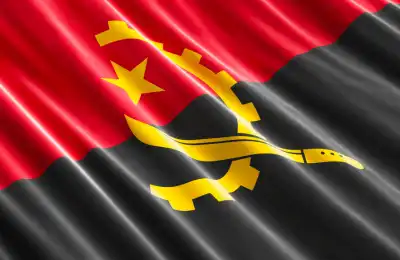
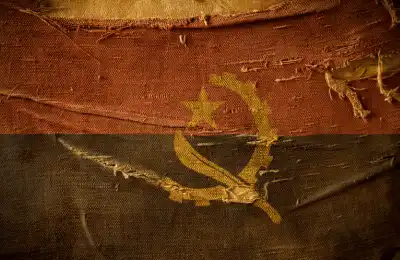
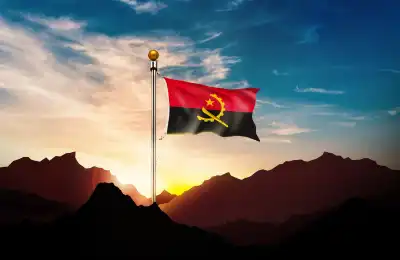
The Angolan flag is divided horizontally into two equal bands: red on the top and black on the bottom. In the centre sits a striking golden emblem made up of a half cogwheel, a machete, and a five-pointed star. It's a bold, immediately recognisable design, and every element of it is intentional.
The flag's proportions follow a ratio of 2:3, which is standard for many national flags. You might have noticed that the Angolan flag emoji sometimes looks slightly different across devices; this is due to how digital rendering handles the central emblem, which can vary in detail at smaller sizes.
Angola Flag Colours: Meaning and Symbolism
The meaning of Angola's flag is deeply rooted in the country's struggle for independence and its post-colonial identity. Here's what the red and black on the Angolan flag mean:
- Red represents the blood shed by Angolans during the fight for independence from Portuguese colonial rule, as well as the sacrifices made by those who built the nation.
- Black symbolises the African continent itself, its people, its heritage, and Angola's proud identity as an African nation.
Together, the Angolan flag colours reflect both suffering and strength: an acknowledgement of the past and a commitment to the future.
What is the Yellow Symbol on Angola's Flag?
The yellow emblem at the centre of the Angolan flag is arguably the most interesting part of its design. It consists of three elements:
- A half cogwheel, representing the industrial workers and the country's working class.
- A machete, symbolising Angola's agricultural workers and the peasant population (not, as sometimes confused, a hammer, though the visual similarity has led to comparisons with Soviet imagery).
- A five-pointed star, representing international solidarity and progress. The star, gold in colour, sits at the top of the emblem and ties the other elements together visually.
History of the Angolan Flag
Angola's national flag has been in use since the country's independence in 1975, and its design is inseparable from the political movement that brought it into being. Here's a closer look at how the flag came to be.
When Was the Angola Flag Adopted?
The Angolan national flag was adopted on 11 November 1975, the same day Angola declared independence from Portugal after more than 400 years of colonial rule. The flag was designed to represent the MPLA (Movimento Popular de Libertação de Angola), the political movement that came to power at independence and has governed the country ever since.
Angola's independence came after years of armed struggle, and the flag's symbols were chosen to reflect the ideology and values of the liberation movement. It's worth noting that the flag is explicitly the ruling party's flag adapted into a national one, a fact that has made it somewhat controversial domestically.
Who Designed the Angola Flag?
The origin of the Angolan flag design is closely tied to the MPLA itself. The flag's visual language drew heavily from the symbolism used by the movement during the independence struggle, adapted into the formal national flag at the point of independence in 1975.
The Angolan Flag’s Meaning After Independence
In the years following independence, Angola descended into a brutal civil war that lasted from 1975 to 2002. The Angolan civil war was fought primarily between the MPLA government and UNITA rebels, supported at various times by external powers including Cuba, the Soviet Union, South Africa, and the United States. Throughout this period, the flag remained a symbol of the MPLA government rather than a neutral national symbol, a distinction that has continued to shape Angolan national identity.
Why Does the Angola Flag Look Like the Soviet Flag?
The Angolan flag shares visual similarities with Soviet-era iconography, and this isn't coincidental. The MPLA was a Marxist-Leninist movement that received significant support from the Soviet Union and Cuba during both the independence struggle and the subsequent civil war. Its symbols, including the star and the workers' imagery, were drawn from the same political tradition.
The machete replaces what would be a sickle in Soviet iconography, and there's no hammer. But the overall aesthetic is clearly inspired by the same political tradition. Whether the Angolan flag is communist depends on how you define the term; it's certainly rooted in Marxist political symbolism, even if Angola today operates as a mixed economy.
Angola Flag vs Mozambique Flag
Both Angola and Mozambique are former Portuguese colonies in sub-Saharan Africa, and both have flags with prominent weapons on them. Mozambique has a gun in its design, specifically an AK-47, whereas Angola has the machete. Both weapons reflect the armed struggles of each country's independence movement, and both flags carry left-leaning political symbolism.
The Mozambique flag also features a book, a hoe, and a yellow star, making it arguably the more complex design. The Angolan flag is simpler in layout but equally loaded with meaning.
Angola's Proposed New Flag
In 2003, there was a formal proposal to redesign the national flag, part of a broader effort to create a symbol that felt more inclusive of all Angolans, regardless of their political affiliation.
The proposed red sun design of the Angolan flag featured a rising sun motif, intended to be less explicitly tied to the MPLA and more representative of the nation as a whole. However, the redesign was ultimately not adopted, and the original 1975 flag remains in use today.
Is Angola Getting a New Flag?
The current status of the Angolan flag redesign remains unchanged: the 1975 flag is still the official national flag. There have been ongoing discussions about national symbols in Angola, particularly as the country moves further from its civil war era, but no formal redesign has been implemented.
Frequently Asked Questions
Does the Angolan Flag Have Any Religious Symbolism?
The Angolan flag doesn't have any significant religious symbolism. Its design is rooted in political and ideological symbolism rather than faith traditions. This distinguishes it from many other African flags, which incorporate Islamic crescents, Christian crosses, or other religious motifs.
What Was Angola's First Flag?
During the colonial period, Angola didn't have its own distinct national flag; it flew the Portuguese flag as a colonial territory. The 1975 independence flag was effectively Angola's first national flag, designed by the MPLA ahead of independence.
Recommended for you!
Best Sellers






Study Heraldry for £29
If you've enjoyed learning about the symbolism and history behind the Angolan flag, there's a whole world of national symbols, heraldry, and vexillology to explore further. The Heraldry Diploma Course at Centre of Excellence takes you through the history and language of symbols, coats of arms, and national emblems in an accessible and engaging way. Right now, you can get started for just £29.