Pigs have represented everything from abundance and good fortune to moral failing and spiritual impurity, and understanding that duality is at the heart of what pigs truly signify.
This guide explores pig symbolism across world religions, folklore, spirit animal teachings, and dream interpretation. Whether you're approaching this from a spiritual perspective or simple curiosity, there's plenty to uncover.
Jump To:
- What Does Seeing a Pig Mean Spiritually?
- The Pig as a Symbol of Abundance and Fortune
- Pig Symbolism in World Religions
- Pigs in British, Celtic, and European Folklore
- Is it Good or Bad Luck to See a Pig?
- How to Know if the Pig is Your Spirit Animal
- What Does it Mean When a Pig Visits or Crosses Your Path?
- Common Pig Phrases and Their Deeper Meanings
- Frequently Asked Questions About Pig Symbolism
- Study Spirit Animals & Totems for £29
What Does Seeing a Pig Mean Spiritually?
The spiritual meaning of pigs isn't a simple one. Depending on the cultural or spiritual tradition you're drawing from, pigs can signify prosperity, earthly wisdom, unchecked appetite, or sacred power. What's consistent across most traditions is that the pig is never a neutral symbol; it always carries weight.
Pigs are deeply connected to the earth. They root through soil with their snouts, finding nourishment in places others overlook. Spiritually, this behaviour is often read as a sign of resourcefulness, groundedness, and the ability to find what you need even in difficult conditions. If a pig appears in your life as a symbol or in a dream, it may be inviting you to dig deeper rather than accept the surface of a situation.
At the same time, the pig's association with overindulgence and sensory pleasure has made it a symbol of excess in many traditions. The spiritual invitation here is one of honest self-reflection: are you nourishing yourself, or are you overindulging in something that's keeping you stuck?
The Pig as a Symbol of Abundance and Fortune
Across a wide range of cultures, particularly in East Asia and parts of Europe, pigs are primarily associated with luck, prosperity, and material wealth. This positive symbolism is well established and historically deep-rooted.
In Chinese culture, the pig is the twelfth sign of the zodiac and is associated with generosity, diligence, and good fortune. People born under the Year of the Pig are said to be honest, kind, and blessed with material comfort. In this tradition, pigs are symbols of wealth and abundance, not shame.
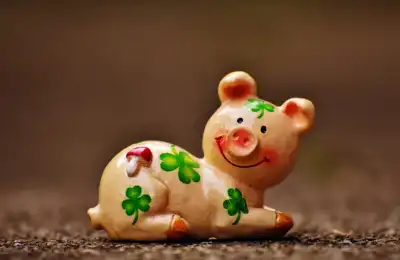
The lucky pig charm tradition in Germany is equally telling. The German phrase 'Schwein haben', literally meaning 'to have pig', translates as being lucky. Chocolate pigs and ceramic pig figurines are exchanged as New Year's good luck gifts across central Europe, and the image of a pink pig remains strongly linked to good fortune in these traditions.
This prosperity symbolism extends to Japanese and Korean culture, where pigs are similarly associated with wealth and good luck. Piggy banks, those familiar childhood objects, have their own symbolism rooted in the pig's historical association with saving and abundance.
Pig Symbolism in World Religions
What Does the Bible Say About Pigs?
In the Bible, pigs carry notably negative symbolism. According to Leviticus and Deuteronomy, they're considered unclean animals because they have split hooves but don't chew the cud, making them ceremonially impure under Mosaic law. This classification had significant cultural weight and remains relevant to Jewish and Christian symbolism today.
The most famous biblical pig reference is the Parable of the Prodigal Son, in which the wayward son ends up feeding pigs, widely understood as the spiritual and moral low point of his journey. The phrase 'pearls before swine' from Matthew 7:6 reinforces this: offering something sacred to those who can't appreciate it is likened to casting precious things before pigs.
It's also worth noting that in the New Testament, Jesus demonstrates power over demons through the Gadarene swine, a herd of pigs into which demons are cast before they rush into the sea. The pig here is a vessel for dark forces, but equally a demonstration of divine authority over them.
Why is the Pig Forbidden in Islam?
In Islam, pork is haram (forbidden), and the Quran explicitly prohibits its consumption. Pigs aren't demonised in Islamic tradition so much as considered ritually impure, connected to uncleanliness and worldly excess. In Islamic cultural contexts, the pig tends to represent that which must be avoided rather than feared.
Pigs in Judaism
Kashrut (Jewish dietary law) also forbids pork, and in Jewish symbolic tradition, the pig has an interesting double character. It shows its split hooves as an outward sign of purity, but doesn't chew the cud, a sign of inner impurity. This has made the pig a symbol of hypocrisy: appearing acceptable on the surface while being impure within.
Pigs in Celtic and Pagan Tradition
In Celtic spirituality, the pig, and particularly the boar, held a very different status. Far from being a symbol of impurity, pigs were sacred animals associated with the Otherworld, abundance, and the divine feast. In Irish mythology, the Tuatha Dé Danann kept magical pigs that could be slaughtered and eaten, then return to life the next day, embodying the cycles of death, regeneration, and endless provision.
Pigs in British, Celtic, and European Folklore
Pig folklore in Britain is rich and at times contradictory. In rural Britain, the pig was economically vital, often called 'the mortgage lifter', and this practical importance shaped its symbolic weight. Pigs were associated with survival, household abundance, and the cycle of the seasons.
Yet British folklore also holds some striking superstitions around pigs. Fishermen in several coastal communities considered it deeply unlucky to even say the word 'pig' before setting out to sea, with some using euphemisms like 'article' or 'grunty' instead. Pigs were believed to be able to see the wind, giving them an almost prophetic, liminal quality.
The boar is equally significant in heraldic and Celtic tradition. Warriors wore boar motifs on their helmets and shields, and the boar appears frequently in heraldry as a symbol of courage, ferocity, and the willingness to face any challenge. The Pictish boar symbol is among the most striking examples of this tradition in Scottish heritage.
In Welsh folklore, the Mabinogion includes tales of magical pigs brought from the Otherworld, reinforcing their status as liminal creatures that connect the world of the living with something beyond ordinary perception.
Is it Good or Bad Luck to See a Pig?
Whether seeing a pig is a good or bad omen depends significantly on context, culture, and tradition. Here's a broad overview:
- Good luck: In much of East Asian, central European, and Celtic tradition, pigs are firmly associated with prosperity, abundance, and fortune. A pink pig or a pig crossing your path in these traditions is generally considered positive.
- Bad luck at sea: In British coastal folklore, pigs, or even the word 'pig', were considered catastrophically unlucky before fishing trips. The superstition was taken seriously enough that alternative words were commonly used.
- A sign of spiritual reflection: In some spiritual traditions, unexpectedly encountering a pig is seen as a prompt to examine your relationship with material excess, comfort, or indulgence.
- A sign of abundance ahead: In others, it's straightforwardly a good omen, indicating that prosperity and material security are on their way.
On balance, pigs are more frequently associated with good fortune than misfortune across the world's traditions. The negative associations tend to be religion-specific or tied to very particular cultural contexts.
How to Know if the Pig is Your Spirit Animal
If you feel a strong pull toward pig symbolism, whether in dreams, in recurring imagery, or through a simple but unexplained resonance, it may be that the pig is one of your spirit animals. Here are some signs to look for.
You're Resourceful and Instinctively Know What You Need
Pigs are remarkable foragers, capable of finding nourishment where other animals can't. If you share this quality, finding solutions others miss and knowing instinctively where to look, the pig may well be guiding you. This is one of the pig's most positive spiritual qualities: an earthy, grounded intelligence that doesn't overcomplicate things.
You Have a Rich Inner Sensory Life
Pigs experience the world intensely through their senses. If you're someone who is particularly attuned to taste, texture, pleasure, and the physical world, and you truly savour experience, this resonance with pig energy may be meaningful.
You're Being Called to Examine Your Relationship With Abundance
The pig as a spirit animal often appears when you need to look honestly at your relationship with material things, comfort, and excess. Are you welcoming prosperity into your life, or are you resistant to it? Alternatively, are there areas where you're overindulging rather than truly nourishing yourself? The pig spirit doesn't judge. It simply reflects.
You Value Loyalty and Community
Pigs are highly social, emotionally intelligent animals. They form strong bonds and communicate in complex ways. If you deeply value loyalty, family, and being part of a group you can trust, the pig may be a fitting spirit guide.
You Have Uncanny Timing
People with a pig as their spirit animal are often described as appearing in others' lives at exactly the right moment, with exactly the right resource, idea, or support. This mirrors the pig's ability to find what's needed even in difficult terrain.
What Does it Mean When a Pig Visits or Crosses Your Path?
Unexpectedly encountering a pig, whether a live pig crosses your path, visits your garden, or appears in an unusual context, is worth pausing to consider spiritually.
In many European folk traditions, a pig crossing your path before a significant event or journey was considered a positive omen, particularly if it crossed from left to right, a direction associated with forward movement and good fortune in many cultures.
A pig visiting your home or land has often been interpreted as a sign of forthcoming abundance, an indication that material security or prosperity is on its way. In this context, the pig's appearance is a blessing rather than a warning.
If the pig appears to be distressed, sick, or behaves unusually, some traditions interpret this as a prompt for self-examination, a reminder to look at what areas of your life need attention, healing, or a change in direction.
As with all animal symbolism, your intuitive response to the encounter matters most. How did you feel when you saw it? That emotional response is often the most reliable guide to what the symbol means for you personally.
Common Pig Phrases and Their Deeper Meanings
Language reveals a lot about cultural attitudes, and pig-related idioms are particularly telling:
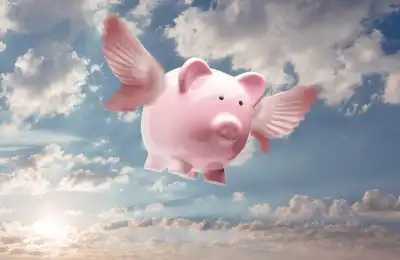
- "When pigs fly" / "Pigs might fly": Used to describe something considered impossible or absurd. Pigs became shorthand for impossibility, though the flying pig has since been reclaimed as a symbol of hope and the unexpected.
- "Pearls before swine": Drawn from Matthew 7:6, this phrase warns against offering things of value to those who won't appreciate them. Swine here represents those lacking spiritual discernment.
- "Sweat like a pig": Ironically, pigs don't actually sweat. They use mud to regulate their body temperature, making this well-known idiom a mischaracterisation of the animal.
- "Pig-headed": Used to describe stubborn refusal to change course. While often used as an insult, there's something to be said for the pig's quiet determination.
- "Happy as a pig in muck": This British phrase captures pure, uncomplicated contentment, the pig as a symbol of unself-conscious enjoyment of physical comfort.
- "Lipstick on a pig": Superficial improvement that doesn't address fundamental issues. The pig here represents plainness and practicality that can't be disguised.
Frequently Asked Questions About Pig Symbolism
What is the spirit of a pig?
The spirit of the pig encompasses intelligence, resourcefulness, earthly wisdom, and abundance. As a spiritual entity, pig energy represents the ability to find nourishment and opportunity in unexpected places, a deep sensory engagement with life, and an honest, grounded approach to the material world.
Is a pig a good spirit animal?
A pig spirit animal brings gifts of resourcefulness, earthly intelligence, sensory wisdom, and an honest relationship with abundance. It's a grounding, practical energy that encourages you to find what you need, trust your instincts, and engage genuinely with the material world rather than either denying it or overindulging in it.
What do pigs mean in dreams?
Pigs in dreams are associated with abundance, material wealth, and earthly matters. A clean, healthy pig often signals financial gain or an opportunity on the horizon. Dirty or distressed pigs may reflect areas where you're overindulging or avoiding a necessary change. For a deeper exploration of what animal dreams might be communicating, take a look at our guide to What Does it Mean When You Dream About Animals?.
What is the lucky pig charm tradition?
The lucky pig charm is particularly strong in German-speaking countries, where the Glücksschwein (lucky pig) is a traditional New Year's symbol. Chocolate pigs, ceramic figurines, and marzipan pigs are given as gifts to wish recipients good fortune in the coming year. The tradition has spread across much of central Europe and reflects the deep-rooted association between pigs and prosperity in European folk culture.
Recommended for you!
Best Sellers




Study Spirit Animals & Totems for £29
If you're fascinated by the spiritual world of animal symbolism, the Spirit Animals & Totems Diploma Course at Centre of Excellence takes you on a journey through the meaning, teachings, and spiritual significance of animals across traditions. This course is designed for all levels and backgrounds. Enrol today for just £29.