If your dog barks at other dogs, you’re probably looking for a solution. Whether it’s a sharp bark, a growl, or lunging at the lead, these outbursts can make daily walks feel stressful and unpredictable.
With a better understanding of why your dog reacts this way and some simple, practical training techniques, this behaviour can be improved. In this guide, we show you how to stop your dog from barking at other dogs and the reasons why they may be doing so.
Jump to:
Recommended for you!
Best Sellers





Why Does My Dog Bark at Other Dogs?
Dogs bark at other dogs for different reasons. Some are excited and want to say hello, while others feel anxious or threatened. Barking, growling, and lunging are ways dogs express emotion. Understanding what’s behind the behaviour is the first step in learning how to stop your dog from barking at other dogs. Here are some common causes:
- Fear or anxiety: Your dog might be frightened and trying to keep the other dog at a distance.
- Frustration: Sometimes called “leash reactivity”, this happens when your dog wants to play or greet another dog but feels restricted by the lead.
- Protectiveness: Your dog may feel the need to protect you or their territory.
- Lack of socialisation: A dog who hasn’t met many other dogs may not know how to behave around them.
6 Steps to Stop Your Dog Reacting to Other Dogs

Training your dog to stay calm on walks takes time, but it’s achievable. Follow these steps to reduce barking and reactivity:
1. Create Distance
If your dog barks at other dogs the moment they see one, create space by stepping to the side or crossing the road if you can. Dogs feel more comfortable when there’s distance between them and what’s upsetting them. This is called finding your dog’s threshold, the distance at which they notice another dog but can still stay calm. Start training at this distance and move closer gradually over time.
2. Use Positive Reinforcement
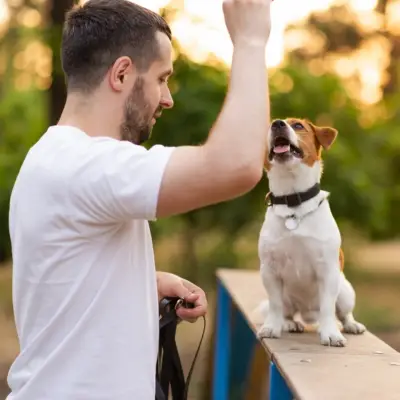
The best way to train your dog is to reward good behaviour. When your dog looks at another dog without reacting, give them a treat and praise. This teaches your dog that calm behaviour around other dogs leads to good things.
3. Practice the “Look at Me” Cue
Teaching your dog to look at you on command is a great way to redirect their focus. To teach this:
- Hold a treat near your face and say “Look at me.”
- When your dog makes eye contact, praise and reward them.
- Practice regularly at home, then on quiet walks, and eventually around other dogs.
4. Keep Walks Calm and Predictable
Avoid busy parks and dog-heavy paths while you’re training. Choose quieter areas where you can control the environment easily. Short, successful walks are better than long, stressful ones.
Try to stay calm yourself; dogs pick up on emotions, and if you feel anxious when you see another dog, your dog is likely to feel the same.
5. Use Desensitisation and Counterconditioning
These two techniques work together to change your dog’s feelings about other dogs. Over time, they’ll learn that seeing other dogs predicts something positive, not something to fear or get overexcited about.
- Desensitisation: Means exposing your dog to the trigger (other dogs) gradually, at a level they can handle.
- Counterconditioning: Means pairing the trigger with something your dog enjoys, like treats or play.
6. Interrupt and Redirect (Don’t Punish)
If your dog starts barking or reacting, try to interrupt with a cheerful voice and move them away. You can use a “Let’s go!” cue and walk in the opposite direction. Once they’ve calmed down, reward them for focusing on you. Avoid shouting or punishing your dog; it won’t teach them what to do instead, and it can increase anxiety and confusion.
What Is the 3 Bark Rule?

The idea behind the 3 bark rule is that if your dog barks once or twice, you give them the chance to stop on their own. If they bark a third time, it’s time to interrupt and redirect their behaviour.
This rule encourages early intervention, so your dog doesn’t build up to a full-blown reaction. It’s not a strict method, but it can help you stay consistent and observant.
How to Stop Your Puppy Barking at Other Dogs
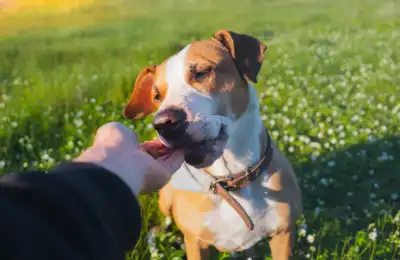
Puppies bark for attention and excitement, and sometimes because they’re unsure. The earlier you start training, the easier it is to shape their behaviour. With a puppy:
- Socialise gently by exposing them to calm, friendly dogs at a safe distance.
- Use treats and toys to create positive experiences around other dogs.
- Avoid overwhelming situations like busy dog parks until your puppy is more confident.
- Keep training sessions short and fun.
How Do You Discipline a Dog to Stop Barking?
Discipline doesn’t mean punishment. In dog training, it means guiding your dog towards better choices using positive techniques. Here’s how to do it:
- Ignore attention-seeking barking at home.
- Reinforce quiet behaviour with treats, toys, and praise.
- Teach an alternative behaviour, like “sit” and “look at me”.
- Be consistent; don’t reward barking sometimes and ignore it at other times.
Focus on what you’d like your dog to do instead of barking, like staying calm, making eye contact with you, or walking past calmly.
Recommended for you!
Best SellersFrequently Asked Questions
How long does it take to train a dog to stop barking at other dogs?
There’s no set timeframe, as it depends on your dog’s age, temperament, history, and how consistently you apply training. Some dogs show improvement in a few weeks, while others may take several months. The key is patience and consistency.
Can neutering help reduce barking or reactivity?
In some cases, neutering can reduce certain behaviours, especially if they’re related to hormones and frustration. However, barking at other dogs is often caused by fear and excitement, or a lack of social experience. These are best addressed through training and behaviour work rather than surgery alone.
Does breed affect how reactive a dog is?
Certain breeds may be more vocal and sensitive to their surroundings, but reactivity isn’t limited to specific breeds. Any dog, regardless of breed, age, or size, can bark at other dogs. Individual temperament, life experiences, and training make a bigger difference than breed alone.
What tools or equipment can help during training?
A well-fitted harness with a front-clip can give you more control without putting pressure on your dog’s neck. A treat pouch, long line (for practising at a distance), and high-value treats are also useful. Avoid tools that cause discomfort and pain, as these can increase fear and make reactivity worse.
Can I train an older dog to stop barking at other dogs?
While habits may be more ingrained in older dogs, they’re still capable of learning. You may need to work more gradually and patiently, but many older dogs respond well to positive reinforcement and structured training.
Is it okay to use a muzzle when training a reactive dog?
A muzzle can be a helpful safety tool in some situations, especially if there’s any risk of biting. However, it should be properly fitted and never used as a punishment. Training should still focus on changing your dog’s emotional response to other dogs, not just managing it.
Study Our Dog Training Diploma for £29
If you’re looking to deepen your understanding and learn step-by-step strategies to support your dog’s behaviour, consider the Dog Training Diploma Course from Centre of Excellence. You can enrol today for just £29, and gain expert insight into everything from basic obedience to solving complex behavioural challenges, all from the comfort of your own home.