
Understanding Canine AnxietyDiploma Course




Learn the emotional, physiological, genetic and behavioural components of canine anxiety, and find out how to deal with dog anxiety.
Course overview:
Certified by CPD
Exclusive access to our study group
Accredited
Learn from desktop, tablet, and mobile
10 modules
Download our learning app
Listen along with every module
Printed and PDF version of course available
Real-time support from our agents
Earn reward points
Accredited CPD courses trusted by
millions worldwide


Available in this special bundle
Animal Care Mastery Collection





















What Will You Learn?
For years, scientists debated whether animals experience emotions at all. Now it is widely accepted amongst ethologists that emotions are a biological phenomenon that animals experience and that they play a vital role in survival. You will learn the biology behind animal emotions, what emotions are attributed to animals, and what factors influence emotions.
Fear and anxiety are key emotions that promote survival in animals. We’ll gain a deeper understanding of anxiety as an animal emotion as well as an understanding of when anxiety is adaptive and when it is pathological.
The feelings and expression of anxiety are strongly routed in physiological processes within the body. The course explores the physiological stress systems within mammalian bodies, specifically as they relate to fear and anxiety.
The nervous and endocrine systems play a vital role in stress systems. You’ll gain deep insight into the physiological mechanisms behind animal emotions, specifically general anxiety and anxiety disorders.
Genetic predisposition and environmental factors contribute to fear and anxiety-related disorders. We’ll review the heritability of fear and anxiety in mammals, along with the epigenetic mechanisms that can alter gene expression.
‘Coping style’ refers to individual differences in stress response and is an aspect of individual animal personalities. You’ll learn how to measure personality, how coping styles are connected to genes and physiology, and how personality affects anxiety.
Fear and anxiety responses begin with the perception of a stimulus as a threat. You’ll learn about the components of dog perception and how they can contribute to anxiety.
People who manage dogs should have a deep understanding of dog body language and the body language cues of anxiety. These, along with other behavioural indicators of dog anxiety, will be discussed.
We’ll look at what is currently known about canine anxiety including what types of anxiety dogs experience and the consequences of anxiety.
Dealing with an anxious dog can be challenging and can lead dogs to relinquishment to shelters or premature death. We’ll explore behavioural and pharmacological techniques for managing and treating anxiety in dogs.
By the end of this course, you should be able to:
- Understand and explain the biological basis for anxiety as an animal emotion
- Define key terms and processes and explain underlying physiological and neurobiological systems that regulate canine anxiety
- Demonstrate an understanding of anxiety by summarising the differing roles of genes, environment and individual personality
- Discuss dog perception and interpret behavioural signs of canine anxiety
- Formulate a plan to address and treat anxiety in dogs by assessing their environment and behaviour
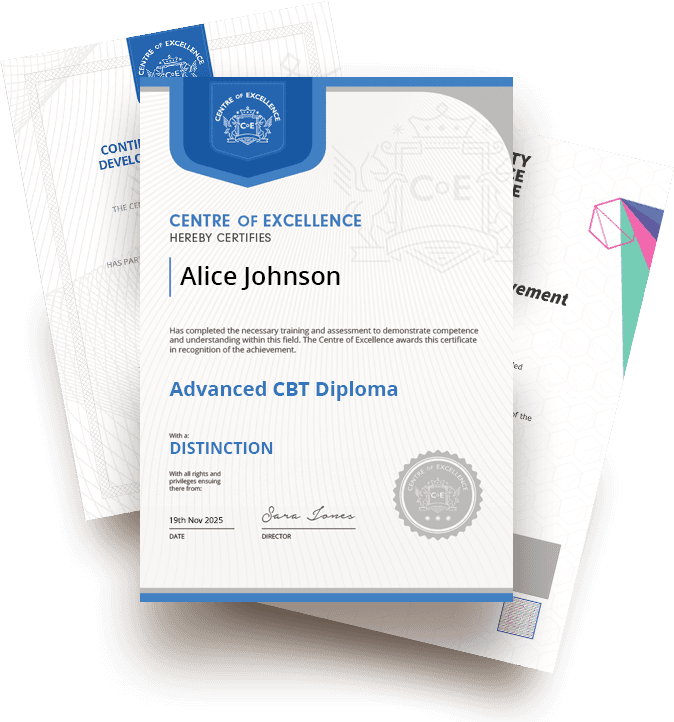
Upon successful completion of the course, you will have the option of printing your CPD accredited certificate.
Who Would Benefit from This Course?
The Understanding Canine Anxiety Diploma Course has been designed to provide dog owners and caretakers with the tools to recognise, understand and address canine anxiety.
Canine anxiety is highly prevalent in domestic dog populations and can result in negative consequences such as problem behaviours, illness and injury, and possibly premature death. Understanding the science behind canine behaviour and anxiety is important for anyone interacting with dogs.
Please note: This course is for educational and continuing professional development (CPD) purposes only. It does not confer a veterinary or therapeutic qualification, and does not permit the diagnosis or treatment of animal health conditions. Always seek the advice of a qualified veterinarian for any animal health concerns.


Over 2 Million Customers Worldwide
Explore our student success stories to see how Centre of Excellence could change your life
Find out moreEnjoy these Bonus Offers when you Purchase this Course Today!

Bonus #1
Bonus #2

Bonus #3
Accredited CPD courses trusted by millions worldwide








FAQs
How Our Courses Help to Change Lives!
The determination and enthusiasm of our students never ceases to impress us and there is nothing better than seeing our graduates go on to succeed in further education, work, business or just life in general!

“After years of reading and studying diet & nutrition from various sources, I'm glad I finally decided to go for a formal certification”
Marwan
Clinical Weight Loss Coach
Read Testimonial



Charlotte's Story
Charlotte
Sensor Processing Disorder Awareness / Advanced Autism Awareness
Read Testimonial
Lydia's Story
Lydia
Health & Social Care & Children and Young People's Mental Health and Wellness
Read Testimonial

Arune's Story
Arune
Depression Counsellor / Couples and Family Therapy / Relationship Psychology
Read Testimonial
“After years of reading and studying diet & nutrition from various sources, I'm glad I finally decided to go for a formal certification”
Marwan
Clinical Weight Loss Coach
Read TestimonialCharlotte's Story
Charlotte
Sensor Processing Disorder Awareness / Advanced Autism Awareness
Read TestimonialLydia's Story
Lydia
Health & Social Care & Children and Young People's Mental Health and Wellness
Read TestimonialArune's Story
Arune
Depression Counsellor / Couples and Family Therapy / Relationship Psychology
Read TestimonialDiscover more hand-picked courses tailored to your learning journey




More Ways To Learn!
With each course you complete, you’re unlocking new opportunities - for your career, your wellbeing, your passions, and more...
And just like you, our platform is always growing! Download the FREE CoE app and continue your learning journey whenever and wherever you are.





Introducing our NEW
Grow Access All Membership
All courses. All audio. One membership.
Get instant access to our full library of courses and audio courses, plus entry to our Member Hub, exclusive benefits and member-only discounts.
Sign up today for our lock-in limited price of just £16.00 per month (billed annually)
Subscribe and Save14 day money back guarantee!
Take the time you need to decide! Start a course today and embark on a 14-day journey through our courses, backed by our money-back guarantee. If you discover the course isn't the right fit for you, our customer support team will ensure a friendly and fast refund process!