Furniture scratching is one of the most common frustrations for cat owners. The good news is that stopping cats from scratching furniture isn't about punishing natural behaviour; it's about understanding why it happens and redirecting it. With the right approach, it's entirely possible to protect your home and keep your cat happy at the same time.
Jump to:
- Why Do Cats Scratch Furniture and Carpets?
- Do All Cats Scratch Furniture?
- Why Is My Cat Suddenly Scratching Furniture?
- How to Train a Cat Not to Scratch Furniture
- What Can You Put on Your Sofa to Stop Your Cat from Scratching?
- What Scent Keeps Cats from Scratching Furniture?
- How to Protect Your Couch and Wood Furniture from Cat Scratching
- What Is the Best Material for a Sofa If You Have Cats?
- Study Feline Behaviour for £29
Why Do Cats Scratch Furniture and Carpets?
Scratching is a completely natural and instinctive behaviour for cats, not something they do out of spite or mischief. There are several reasons why cats scratch furniture and carpets:
- Claw maintenance. Scratching helps cats shed the outer sheath of their claws, keeping them sharp and healthy.
- Stretching. Cats use scratching as a full-body stretch, working the muscles in their legs, back, and shoulders.
- Marking territory. Cats have scent glands in their paws, so scratching leaves both a visual mark and a scent signal for other animals.
- Stress relief. Scratching can be a way for cats to release tension, especially in an environment where they feel anxious or overstimulated.
You can't simply stop a cat from scratching altogether — nor should you try. The goal is to redirect that scratching away from your furniture and towards something more appropriate.
Do All Cats Scratch Furniture?
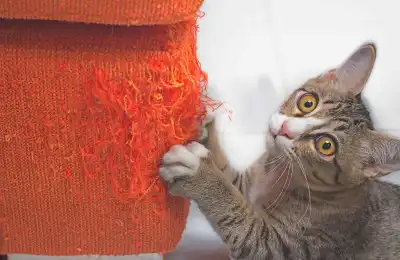
Virtually all cats scratch. It's a biological need rather than a learned behaviour, which means even the most well-behaved cat will scratch something if given the opportunity. The difference between a cat that destroys your sofa and one that uses a scratching post comes down to training, environment, and whether they've been given suitable alternatives.
Some cats are more persistent or enthusiastic scratchers than others, and certain textures or surfaces may be particularly appealing to individual cats. But regardless of breed or temperament, scratching is part of who they are.
Why Is My Cat Suddenly Scratching Furniture?
If your cat has started scratching furniture out of nowhere, it's worth paying attention. A sudden change in behaviour often signals something has shifted in your cat's world. Common triggers include:
If the scratching is accompanied by other changes in behaviour, such as hiding, changes in appetite, or excessive grooming, it's worth consulting your vet to rule out any medical causes.
How to Train a Cat Not to Scratch Furniture
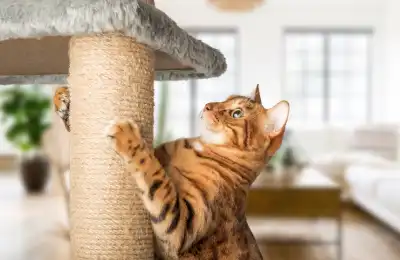
The most effective long-term solution to stop cats from scratching furniture is training, which involves redirecting their instinct towards appropriate surfaces. This takes patience, but it genuinely works.
Provide Appealing Scratching Alternatives
When training a cat not to scratch furniture, the first step is making sure they have something better to scratch instead. Scratching posts and pads should be:
- Tall enough for your cat to fully stretch. Many cats love to scratch while standing upright.
- Sturdy so they don't wobble when in use.
- Positioned near the furniture they currently favour, which makes it easier to redirect them.
- Made from a texture your cat enjoys, such as sisal rope, cardboard, or carpet.
If your cat has been scratching the sofa, place a scratching post directly beside it. Over time, you can gradually move it to a more convenient spot.
Positive Reinforcement Over Punishment
One of the most important things to understand when learning how to teach a cat not to scratch furniture is that punishment doesn't work. Shouting, squirting water, or physically moving your cat away can cause anxiety, which may actually increase scratching. Instead, reward your cat with praise, treats, or play whenever they use the scratching post. This builds a positive association.
How to Train a Kitten Not to Scratch Furniture
Kittens are wonderfully receptive to training, which means the earlier you start, the better. When you notice your kitten approaching furniture, calmly redirect them to a scratching post and reward them for using it. Consistency is everything here. If the whole household responds the same way every time, your kitten will quickly learn what's expected.
It's also worth covering vulnerable furniture while your kitten is still learning. This temporary measure can save a lot of heartache.
What Can You Put on Your Sofa to Stop Your Cat from Scratching?
Several practical physical deterrents can help protect your furniture while your cat is learning new habits.
Anti-Scratch Tape for Cats
Anti-scratch tape is a double-sided sticky tape that can be applied directly to furniture. Cats strongly dislike the sticky sensation on their paws, so they quickly learn to avoid taped areas. It's transparent, so it doesn't ruin the look of your sofa, and it's temporary — once your cat has broken the habit, you can remove it.
Cat Scratch Protectors for Furniture
Cat scratch protectors for furniture include a range of products: clear plastic panels, fabric shields, and adhesive covers that can be placed over sofas, armchairs, and wood furniture. These are particularly useful on corners, which tend to be a cat's favourite target. Many people find that a combination of deterrents and scratching post redirection gives the best results.
Does Tin Foil Deter Cats from Scratching Furniture?
You may have heard that tin foil can deter cats from scratching, and there's some truth to it. Many cats dislike the texture and sound of aluminium foil, so placing it over a scratched area can discourage repeat visits. It's not the most elegant solution, but it can be a useful short-term measure while you establish better habits. As with sticky tape, it works best when combined with a positive alternative nearby.
What Scent Keeps Cats from Scratching Furniture?
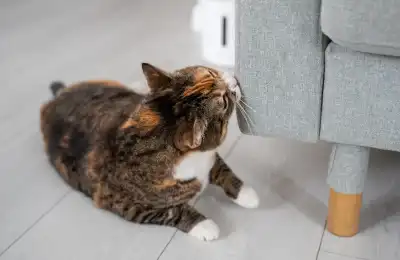
Cats have an exceptionally sensitive sense of smell, and certain scents act as effective natural deterrents:
- Citrus. Cats generally dislike the smell of lemon, orange, and lime. Placing citrus peel near scratched areas or using a citrus-scented spray can discourage them.
- Lavender and eucalyptus. These can work for some cats, though individual reactions vary.
- Rosemary. Another scent many cats find off-putting.
What Can You Spray on Your Couch to Stop Your Cat from Scratching?
There are commercial sprays to keep cats from scratching furniture that are widely available. These typically contain ingredients derived from bitter apple, citrus, or other natural repellents. Look for products specifically designed as cat deterrents, as some general household sprays may contain ingredients that are harmful to cats. Spray lightly and reapply regularly, as the scent fades over time.
How to Protect Your Couch and Wood Furniture from Cat Scratching
If your cat has already scratched your couch or left marks on wood furniture, you may be wondering how to both repair the damage and prevent further harm. For a cat-scratched couch, there are fabric repair kits that can minimise the appearance of snags. For wood furniture, wood filler or touch-up pens can disguise claw marks reasonably well. For ongoing protection:
- Use furniture covers or throws on sofas, which are easy to wash and protect the surface beneath.
- Apply cat scratch protectors to the corners and sides of sofas and wooden table legs.
- Keep your cat's claws trimmed (or ask your vet or a groomer to do this) to reduce the damage caused when they do scratch.
Protecting the sofa from your cat is much easier when you're combining multiple approaches — physical barriers, scent deterrents, and positive redirection working together tend to give the most consistent results.
What Is the Best Material for a Sofa If You Have Cats?
If you're in the market for new furniture, choosing the right material can make a significant difference. The best material for a sofa if you have cats is generally one that's tightly woven and scratch-resistant. Consider:
- Microfibre. Tightly woven and difficult for claws to gain purchase on, it’s a popular choice for cat owners.
- Leather or faux leather. Some cats are less drawn to these surfaces, and small scratches can be buffed out more easily than on fabric.
- Canvas. Durable and less likely to snag than looser weaves.
Avoid loose-weave fabrics such as velvet, chenille, or any textured fabric with loops, as cats tend to find these irresistible. However, it's worth noting that even the most cat-resistant sofa may still attract attention. Material choice is one piece of the puzzle, not a complete solution on its own.
Recommended for you!
Best Sellers






Study Feline Behaviour for £29
Understanding what drives your cat's scratching behaviour is one of the most powerful things you can do as a cat owner. If this topic has sparked your curiosity and you'd like to explore feline behaviour more deeply, the Feline Behaviour and Psychology Diploma Course from Centre of Excellence is a brilliant place to start.
This online course is designed for all levels, whether you're a complete beginner or someone with existing knowledge of animal care, and covers everything from instinctive feline behaviours to training techniques and the psychology behind why cats act the way they do. Enrol today for just £29!