Black flowers have a quiet intensity that instantly draws the eye. You might be researching black-coloured flower varieties because you’ve seen a dark bloom in a garden and want to identify it, or because you’re planning a planting scheme that feels bold and modern.
What makes black flowers so fascinating is that they challenge expectations. Most flowers rely on bright colour to attract attention, yet flowers with black or near-black petals manage to be just as striking.
What’s in This Guide?
This guide looks at a wide range of black flowers gardeners can grow, from popular ornamental plants to rare and historic varieties. You’ll find clear descriptions, flowering habits, and growing tips, alongside references to pictures of black flowers to help with identification.
Jump to:
- Are There Any Flowers That Are Naturally Black?
- Black Rose – Dark and Dramatic
- Black Tulip – Sleek and Sophisticated
- Black Dahlia – Bold and Velvety
- Black Petunia – Soft and Modern
- Black Iris – Elegant and Architectural
- Black Calla Lily – Sleek and Sculptural
- Black Hollyhock – Tall and Striking
- Black Pansy – Soft and Velvety
- Black Anemone – Subtle and Atmospheric
- Black Lily – Dramatic and Unusual
- Black Bat Flower – Exotic and Rare
- Black Lotus – Symbolic and Mythical
- What Is the Rarest Black Flower in the World?
- What Do Black Flowers Symbolise?
- What Plant Is Black in Colour?
- Choosing Black Flowers for Your Garden
- What Is the Most Beautiful Black Flower in the World?
- Study Floristry for £29
Are There Any Flowers That Are Naturally Black?
Naturally black flowers do exist, though they are rare. Selective breeding has helped deepen colours over generations, but many of the most famous black flower plant varieties still grow in the wild or have historical origins.
Because true black pigment is uncommon in plants, these flowers rely on dense concentrations of anthocyanins, which give petals their dark appearance.
1. Black Rose – Dark and Dramatic
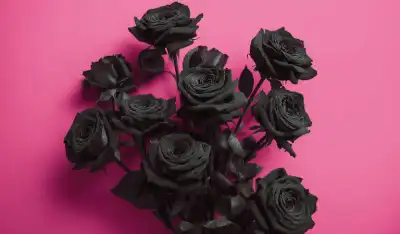
Black roses are among the most talked-about black flowers in the world. While there’s no completely jet-black rose in nature, certain deep red and purple varieties appear almost black, especially in low light. This has earned them a place among the most recognisable black flowers real gardeners grow. They’re often photographed at dusk, when their colour appears deepest and most dramatic.
These flowers are often associated with mystery and intensity and are commonly used in dramatic floral arrangements. They grow well in borders and containers when given plenty of sunlight and well-drained soil. With proper care, many varieties will flower repeatedly throughout the season.
- Latin name: Rosa
- Plant family: Rosaceae
- Flowering season: Late spring to autumn
- Plant type: Shrub
2. Black Tulip – Sleek and Sophisticated
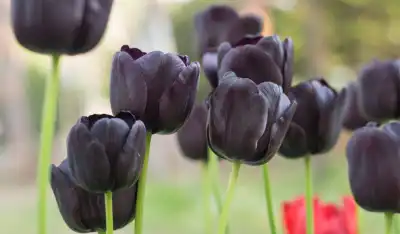
Black tulips are prized for their smooth petals and deep, velvety colouring. Varieties such as ‘Queen of Night’ are frequently featured because they appear almost completely black from a distance. Their colour can shift slightly depending on light and weather conditions.
These black garden flowers bloom in spring and are often used in modern planting schemes where contrast and clean lines are important. They work particularly well alongside pale or pastel-coloured spring bulbs.
- Latin name: Tulipa
- Plant family: Liliaceae
- Flowering season: Spring
- Plant type: Bulb
3. Black Dahlia – Bold and Velvety
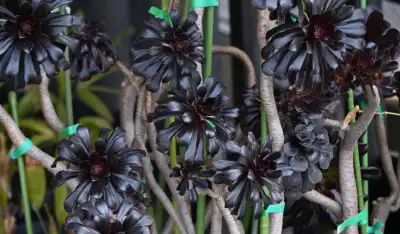
Black dahlias are known for their layered petals and rich, dark colouring. Although technically very deep purple or burgundy, they’re widely regarded as real black flowers due to their dramatic appearance. Their large blooms make them especially striking when planted in groups.
These dark flowers bloom from summer into early autumn and are popular in borders and cut flower arrangements. Regular deadheading encourages continued flowering throughout the season.
- Latin name: Dahlia
- Plant family: Asteraceae
- Flowering season: Summer to autumn
- Plant type: Tuber
4. Black Petunia – Soft and Modern
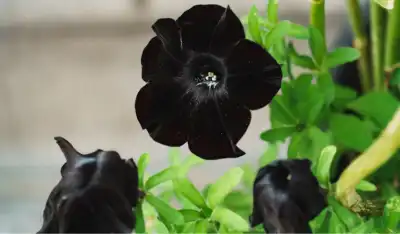
Black petunias, such as ‘Black Velvet’, are some of the darkest flowers available to gardeners. Their soft, matte petals absorb light, making them appear almost black in colour. This texture gives them a distinctive look compared to glossy blooms.
These black garden plants are often used in pots, hanging baskets, and summer displays. They pair well with bright or metallic-toned flowers for added contrast.
- Latin name: Petunia
- Plant family: Solanaceae
- Flowering season: Summer
- Plant type: Annual
5. Black Iris – Elegant and Architectural
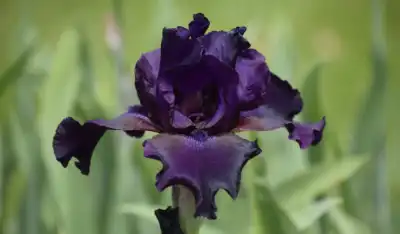
Black irises are admired for their tall stems and intricately shaped petals, which range from deep violet to near black. Their dramatic colouring gives them a strong visual presence in both gardens and floral photography, and they’re often considered among the most refined dark flowers.
These black flowers appear in late spring and thrive in sunny positions with well-drained soil. Once established, they require little maintenance and return reliably each year.
- Latin name: Iris
- Plant family: Iridaceae
- Flowering season: Late spring
- Plant type: Perennial
6. Black Calla Lily – Sleek and Sculptural
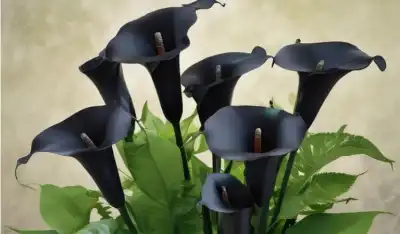
Black calla lilies are known for their smooth, curved petals and elegant shape. Their colour ranges from deep purple to near black, giving them a sculptural, modern appearance. They’re often featured in minimalist floral designs.
These black flowers are commonly used in bouquets and contemporary garden schemes. They prefer warm conditions and well-drained soil to thrive.
- Latin name: Zantedeschia
- Plant family: Araceae
- Flowering season: Summer
- Plant type: Rhizome
7. Black Hollyhock – Tall and Striking
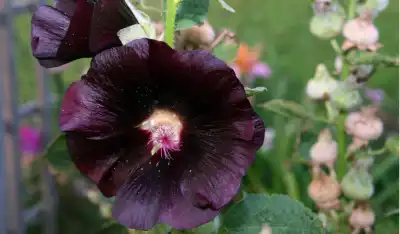
Black hollyhocks produce tall spikes covered in deep, dark blooms that appear almost black in strong sunlight. Their height makes them stand out clearly in cottage-style gardens. They create a bold vertical feature in borders.
These black garden plants flower throughout summer and are often grown against walls or fences. They self-seed easily, allowing them to return year after year with little effort.
- Latin name: Alcea rosea
- Plant family: Malvaceae
- Flowering season: Summer
- Plant type: Biennial
8. Black Pansy – Soft and Velvety
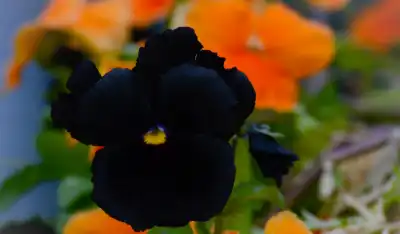
Black pansies are valued for their velvety petals and compact growth habit. Many varieties feature subtle markings or a lighter centre, and their colour appears richest in cooler weather.
These black flowers are ideal for containers, borders, and window boxes. They’re easy to grow and often bloom for long periods with minimal care.
- Latin name: Viola
- Plant family: Violaceae
- Flowering season: Spring to autumn
- Plant type: Annual or perennial
9. Black Anemone – Subtle and Atmospheric
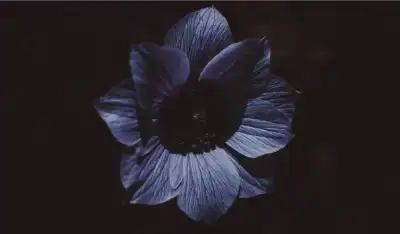
Black anemones display delicate petals in deep purple-black shades, often surrounding a contrasting central disc. Their understated colouring gives them a softer appearance than some darker blooms. They move gently in the breeze, adding a natural feel to gardens.
These dark flowers are commonly planted in borders and woodland-style gardens. They thrive in well-drained soil and partial shade.
- Latin name: Anemone
- Plant family: Ranunculaceae
- Flowering season: Spring or autumn
- Plant type: Perennial
10. Black Lily – Dramatic and Unusual
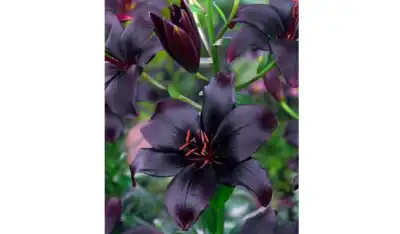
The black lily, commonly referring to Fritillaria persica, produces tall stems lined with bell-shaped, near-black flowers. Its unusual structure makes it instantly recognisable in garden settings. The blooms often deepen in colour as they mature.
This plant with black flowers is typically grown as a focal point in borders. It prefers sunny positions and well-drained soil for best results.
- Latin name: Fritillaria persica
- Plant family: Liliaceae
- Flowering season: Spring
- Plant type: Bulb
11. Black Bat Flower – Exotic and Rare
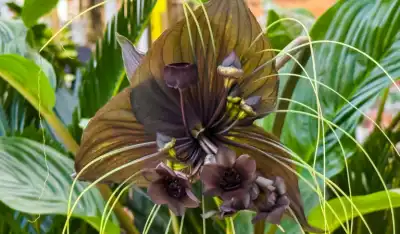
The black bat flower is one of the most unusual black plants, known for its wing-like bracts and long whisker-like filaments. Its appearance is unlike any traditional garden flower, making it popular among collectors of rare plants.
This black flower plant is typically grown indoors or in warm, humid environments. It requires careful conditions to thrive and is not suited to outdoor UK gardens.
- Latin name: Tacca chantrieri
- Plant family: Dioscoreaceae
- Flowering season: Summer
- Plant type: Tropical perennial
12. Black Lotus – Symbolic and Mythical
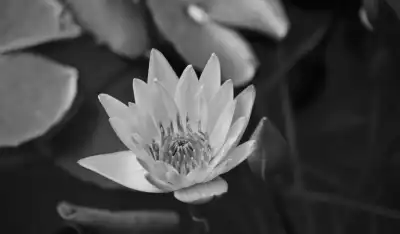
The black lotus flower is largely symbolic rather than botanical, often appearing in mythology, art, and spiritual traditions to represent mystery, rebirth, and inner strength. There is no true naturally black lotus flower in cultivation.
While not a real black flower in nature, the concept remains powerful in cultural storytelling. Deep purple lotus varieties are sometimes described this way due to their intense colour.
- Latin name: Nelumbo (symbolic reference)
- Plant family: Nelumbonaceae
- Flowering season: Summer
- Plant type: Aquatic perennial
What Is the Rarest Black Flower in the World?
The rarest black flowers tend to be those that grow in very specific conditions, such as the Halfeti rose. Because soil chemistry and climate play such a large role, these natural black flowers can be difficult to cultivate elsewhere.
What Do Black Flowers Symbolise?
Black flowers often symbolise mystery, strength, elegance, and transformation. While they’re sometimes associated with mourning, they can also represent independence and deep emotion.
In modern floristry, black flowers are often chosen for bold, unconventional arrangements.
What Plant Is Black in Colour?
Beyond flowers, some black plants feature dark foliage rather than blooms. Plants such as black mondo grass and black elderberry are valued for their leaves and provide year-round interest.
Choosing Black Flowers for Your Garden
When planting black garden flowers, contrast is important. Dark blooms stand out best against lighter foliage or pale flowers. White, silver, and soft green plants help highlight their depth, while red flowers can provide a striking contrast. Mixing black plants with textured leaves and varied heights prevents borders from feeling heavy. Many gardeners also pair black flowers with pastel shades for balance.
What Is the Most Beautiful Black Flower in the World?
Beauty is subjective, but black roses, black tulips, and black dahlias are often named among the most striking. Their popularity in gardens and floral arrangements reflects how visually powerful they are.
Recommended for you!
Best Sellers





Study Floristry for £29
If learning about flowers has sparked a deeper interest, you may enjoy exploring floristry in more detail. Understanding flower varieties, colour symbolism, and arrangement techniques opens up creative and professional opportunities. We offer a Floristry Diploma Course designed for all levels, whether you’re learning for personal enjoyment or considering a new career path. Enrol today for a discounted price of £29!