Red flowers have a way of drawing the eye almost instantly, often linked with love and celebration. This explains why so many people feel drawn to them when choosing flowers for gardens, gifts, or special occasions.
You might be researching red flower names because you want to identify a plant you’ve seen, plan a red flower garden, or simply learn more about beautiful red flowers and what they symbolise.
What’s in This Guide?
This guide explores different types of red flowers, explaining their names, appearance, and characteristics. Each section focuses on a well-known red flower species alongside an image, so you can easily recognise what you’re seeing in gardens and floral arrangements.
Jump to:
- Why Red Flowers Are So Popular
- Roses – The Classic Red Flower
- Tulips – Bright and Cheerful Red Spring Flowers
- Poppies – Symbolic and Striking
- Geraniums – Reliable and Colourful
- Amaryllis – A Dramatic Red Big Flower
- Carnations – Long-Lasting and Versatile
- Dahlias – Bold and Beautiful
- Hibiscus – Tropical and Eye-Catching
- Camellias – Elegant and Glossy
- Zinnias – Bright and Uplifting
- Gladiolus – Tall and Dramatic
- Anemone – Delicate but Striking
- Meaning and Symbolism of Red Flowers
- Red Flowers and Love
- Choosing Red Flowers for Your Garden
- Study Floristry for £29
Why Red Flowers Are So Popular
Red is one of the most emotionally powerful colours in nature. In flowers, it often symbolises love, passion, strength, and joy. This makes red flowers especially popular for romantic gestures and meaningful events.
From small red flower varieties to dramatic large types, red blooms appear across many plant families. Gardeners love them for their impact, while florists value them for the way they add warmth and intensity to arrangements. Red also pairs beautifully with greens, whites, yellows, and soft pinks, making it versatile in both planting schemes and bouquets.
1. Roses – The Classic Red Flower
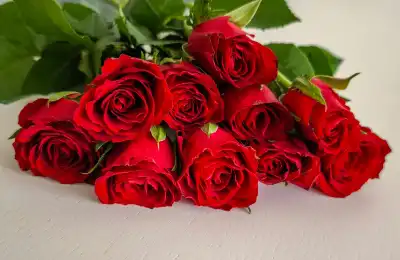
Roses are among the most recognisable red flower types in the world and are closely associated with love and romance. Often thought of as the most beautiful red flower, roses feature layered petals, a rich scent in many varieties, and thorned stems. They’re used widely in gardens, bouquets, and formal displays.
Roses belong to the genus Rosa within the Rosaceae family. Popular red rose types include:
- Deep crimson garden roses
- Velvet red hybrid tea roses
- Climbing red roses
- Dark red antique rose varieties
2. Tulips – Bright and Cheerful Red Spring Flowers
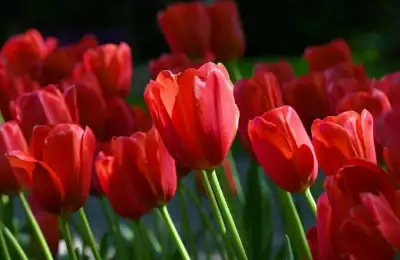
Tulips are well-loved red spring flowers that bring bold colour after winter. Their smooth, cup-shaped blooms and upright stems make them easy to spot in gardens and flower beds. Red tulips are often linked with happiness and affection and are a well-known symbol of joy. Their clean shape also makes them popular in modern floral designs.
Tulips belong to the genus Tulipa in the Liliaceae family. Common red tulip varieties include:
- Classic red garden tulips
- Bright scarlet tulips
- Deep wine-red tulip varieties
- Early-flowering red tulips
3. Poppies – Symbolic and Striking
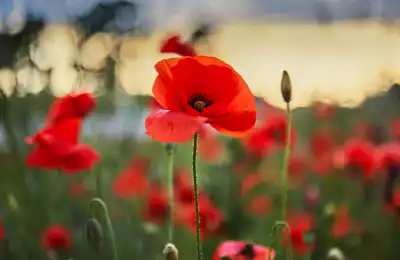
Poppies are instantly recognisable for their paper-thin petals and bold red colour. In the UK, red poppies carry strong cultural meaning and are associated with remembrance and courage. These flowers often appear as both wildflowers and garden plants.
Poppies belong to the genus Papaver in the Papaveraceae family. Common types include:
- Common red poppy (Papaver rhoeas)
- Oriental poppies with large red blooms
- Deep red perennial poppies
4. Geraniums – Reliable and Colourful
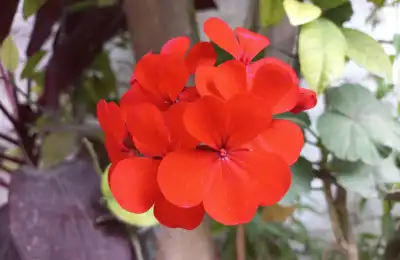
Geraniums are popular red flowers to plant in pots, borders, and hanging baskets. They’re valued for their long flowering season and bright, cheerful appearance. Red geraniums can range from soft red to vivid scarlet shades. They’re often chosen as a beautiful addition to balconies and window boxes.
Geraniums belong to the genus Pelargonium. Popular red geranium types include:
- Upright red geranium plants
- Trailing red geraniums
- Dark red velvety varieties
5. Amaryllis – A Dramatic Red Big Flower
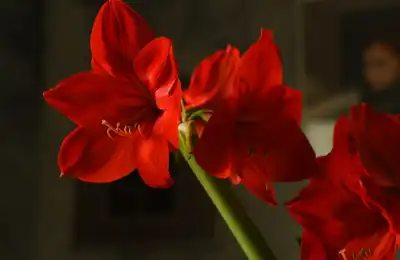
If you’re on the hunt for a large red flower for your garden or flower arrangement, amaryllis fits perfectly. These bold blooms grow on tall stems and are especially popular around winter and festive seasons. Amaryllis flowers are known for their trumpet shape and intense red colour, making them ideal statement flowers.
Amaryllis belongs to the genus Hippeastrum. Common types include:
- Bright red amaryllis
- Red and white striped varieties
- Deep burgundy amaryllis flowers
6. Carnations – Long-Lasting and Versatile
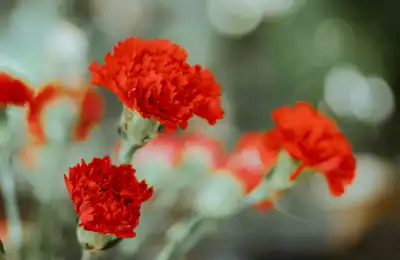
Carnations are often overlooked, but they’re one of the most versatile red flower species. Their ruffled petals and long vase life make them popular in bouquets.
Red carnations symbolise admiration and deep affection. They’ve historically been worn by celebrities as buttonhole flowers at formal occasions, particularly in theatre, opera, and classic Hollywood-style events. This is because they hold their shape well and last without wilting.
Carnations belong to the genus Dianthus. Popular red carnation types include:
- Deep red standard carnations
- Mini red spray carnations
- Dark crimson carnation varieties
7. Dahlias – Bold and Beautiful
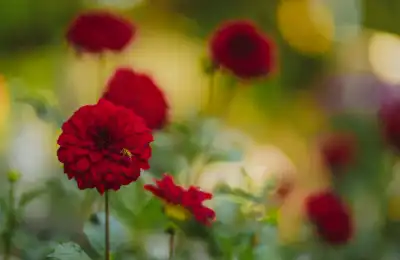
Dahlias are striking flowers known for their layered petals and wide range of shapes. Red dahlias can be soft and romantic or bold and dramatic. They bloom from summer into autumn, making them a favourite for seasonal gardens.
Dahlias belong to the genus Dahlia. Common red types include:
- Pompon red dahlias
- Dinner-plate red dahlias
- Small red flower dahlia varieties
8. Hibiscus – Tropical and Eye-Catching
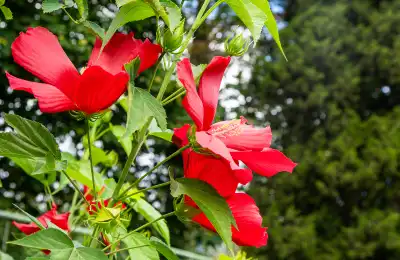
Hibiscus flowers are large, open blooms often associated with warm climates. Their vivid red petals and prominent central stamens give them a distinctive look. Hibiscus is often referred to as a strange-looking red flower due to its bold structure; however, it can be a striking addition to flower arrangements and gardens.
Hibiscus belongs to the genus Hibiscus. Common red hibiscus types include:
- Tropical red hibiscus
- Hardy red hibiscus varieties
- Deep crimson hibiscus flowers
9. Camellias – Elegant and Glossy
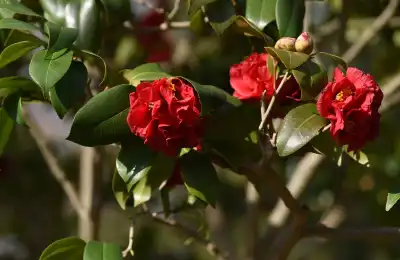
Camellias are evergreen shrubs known for their glossy leaves and rose-like flowers. Red camellias bloom in cooler months, adding colour when many plants are dormant.
They’re often associated with admiration and respect.
Camellias belong to the genus Camellia. Popular red camellia types include:
- Formal red camellias
- Deep red peony-style camellias
- Compact red camellia shrubs
10. Zinnias – Bright and Uplifting
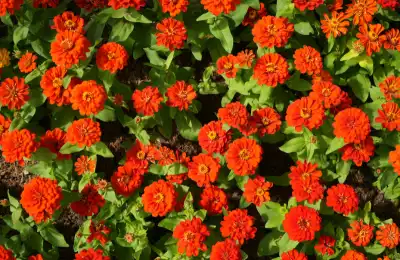
Zinnias are cheerful flowers that thrive in sunny conditions. Their daisy-like shape and bold red colour make them popular in informal gardens. They’re often associated with joy and celebration, which makes them a popular choice for birthday bouquets and other special occasions.
Zinnias belong to the genus Zinnia. Common types include:
- Bright red zinnias
- Small red flower zinnia varieties
- Tall red zinnia plants
11. Gladiolus – Tall and Dramatic

Gladiolus is a popular tall red flower. These flowers grow on high spikes lined with multiple blooms, and are often used in formal arrangements to symbolise strength and integrity.
Gladiolus belongs to the genus Gladiolus. Popular red types include:
- Tall red gladiolus spikes
- Deep red sword-shaped blooms
- Bright scarlet gladiolus flowers
12. Anemone – Delicate but Striking
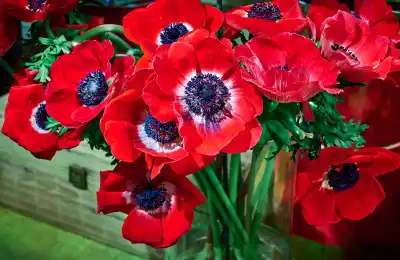
Red anemones have a softer appearance, with open petals and dark centres that create contrast. They’re commonly used in floral arrangements to celebrate special occasions.
Anemones belong to the genus Anemone. Common red varieties include:
- Poppy anemones
- Deep red anemone flowers
- Spring-flowering anemones
The Meaning and Symbolism of Red Flowers
Red flowers are widely associated with love, passion, and courage, and are often chosen for romantic gestures and moments that carry emotional weight. Different shades can slightly change the meaning: bright red flowers feel energetic and joyful, while darker red flowers can suggest depth, commitment, and respect.
Red Flowers and Love
Red flowers have long been used to express deep emotions, particularly in romantic and meaningful settings. Roses are the most well-known symbol of love, but tulips, carnations, and camellias can also convey affection and emotional connection in different ways. Red flowers are often chosen to communicate strong feelings without needing words, which is what makes them such powerful and meaningful gifts.
Choosing Red Flowers for Your Garden
When planning a red flower garden, think about height, bloom time, and shade. Tall red flowers like gladiolus and amaryllis work well at the back of borders, while smaller red flower plants such as zinnias and anemones suit the front.
Mixing red with white or pale pink can soften the overall look, while combining red with deep green foliage creates a strong contrast. Choosing a mix of red spring flowers and summer bloomers helps maintain colour throughout the year.
Recommended for you!
Best Sellers




Study Floristry for £29
If learning about flowers has sparked a deeper interest, you may enjoy exploring floristry in more detail. Understanding flower varieties, colour symbolism, and arrangement techniques opens up creative and professional opportunities. We offer a Floristry Diploma Course designed for all levels, whether you’re learning for personal enjoyment or considering a new career path. Enrol today for a discounted price of £29!