If your dog barks every time a neighbour walks past the window or steps into their garden, you’re not alone. This behaviour is one of the most common challenges dog owners face.
The good news is that with patience and the right training, you can successfully teach your dog to stop barking at neighbours. Below, you’ll find practical techniques you can put into practice straight away.
Jump to:
Why Do Dogs Bark at Neighbours?
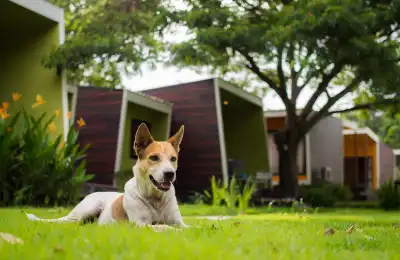
Before you can stop dog barking at neighbours, it helps to understand why it’s happening in the first place.
- Territorial instincts: Many dogs feel the need to protect their home. If your neighbour is seen as an “intruder”, barking is your dog’s way of warning them off.
- Excitement: Some dogs bark because they want to play. Seeing or hearing a neighbour might simply be stimulating.
- Fear or anxiety: If your dog is nervous, the sound or sight of a neighbour can make them uneasy, leading to defensive barking.
- Attention-seeking: Over time, barking can become a learned behaviour if your dog realises it earns them your attention.
- Boredom: Dogs left without enough stimulation sometimes bark at anything that moves.
Recommended for you!
Best Sellers






7 Steps to Stop Your Dog From Barking at Neighbours
Here are seven practical steps you can take to help your dog stay calm and reduce barking at neighbours.
1. Manage the Environment First
The easiest way to reduce barking is to remove the triggers where possible. For example, if your dog barks through the window, you might frost the lower half of the glass or use blinds to block the view. In the garden, solid fences or privacy screens can be useful for blocking visual triggers that set your dog off. If your dog spends hours watching from a particular spot in the house, redirect them to a quieter area where they are less likely to be disturbed by neighbours.
2. Teach the “Quiet” Cue
Teaching your dog to stop barking on command is one of the most effective tools you can use. Here’s how to do it:
- Wait for a bark: Allow your dog to bark once or twice when they hear a neighbour.
- Introduce a cue: Calmly say “quiet” in a firm but gentle voice.
- Reward silence: The moment your dog stops barking, even for a second, praise them and give a treat.
- Build duration: Gradually increase the amount of quiet time required before they earn a reward. Over time, your dog will learn that being quiet leads to positive outcomes.
3. Reward Calm Behaviour

Instead of waiting for barking to start, reward your dog when they stay calm in situations where they’d normally bark. For example, if your neighbour enters their garden and your dog remains relaxed, you can immediately give praise and offer a treat.
4. Create Positive Associations with Neighbours
If your dog barks because they see your neighbour as a threat, you can change that perception through positive association. Each time your dog notices the neighbour but stays calm, reward them generously with treats so that the sight or sound of neighbours becomes linked to something pleasant.
Where possible, you could also ask a friendly neighbour to help with training. Begin at a distance where your dog doesn’t bark, reward their calmness, and then gradually move closer over time. With consistency, your dog will begin to view neighbours as a signal for something good rather than something to bark at.
5. Teach Alternative Behaviours
Teaching alternative behaviours gives your dog something else to focus on.
- Go to bed or mat: Train your dog to go to a specific spot when neighbours are nearby. Reward them for lying down calmly.
- Bring a toy: Encourage your dog to fetch a toy instead of barking when triggered.
- Look at me: Teach a strong “look at me” cue so your dog redirects their attention from the neighbour to you.
6. Ensure Your Dog’s Needs Are Met
Ensuring your dog’s physical and mental needs are met goes a long way in reducing unwanted barking. Daily exercise through walks, runs, and play sessions helps to tire your dog out and release excess energy. Mental stimulation is equally important, and activities such as puzzle feeders, training games, and sniffing exercises can keep their brains engaged. A predictable daily routine also helps to reduce anxiety and creates a sense of security.
7. Stay Consistent and Patient
If your dog has been barking at neighbours for months or years, consistency is key to making progress. Try to avoid shouting, as yelling only adds to the noise and can make your dog more anxious. Instead, focus on staying calm, because dogs pick up on your emotions and respond best to steady, reassuring reactions.
It’s also important to involve the whole household, making sure everyone uses the same cues and rewards so your dog doesn’t become confused. Patience will pay off, and gradual progress will lead to a more peaceful home.
What to Do If Neighbours Complain About Dog Barking

If your neighbours complain about your dog barking, being proactive can help ease tensions. Often, neighbours are more patient when they see you’re actively addressing the problem.
- Acknowledge the issue: Let them know you understand and are working on training.
- Explain your plan: Sharing that you’re teaching commands like “quiet” or rewarding calm behaviour can show your commitment.
- Consider timing: Pay extra attention to barking early in the morning or late at night, when noise is most disruptive.
When to Seek Extra Help
If your dog’s barking is severe or linked to fear and anxiety, you may benefit from additional support. Your vet will be able to provide guidance and rule out any underlying problems. A qualified trainer can help by tailoring solutions to your dog’s specific triggers, offering practical strategies that suit their temperament.
If you’d like to gain expert knowledge yourself, you might find our Dog Training Diploma or Canine Behaviour Training Diploma especially helpful.
Frequently Asked Questions
Why does my dog bark more at some neighbours than others?
Dogs often respond differently to individual people. This can be because of the way someone moves, the sound of their voice, their scent, their appearance, or even whether they are carrying something like a bag or a walking stick. If your dog reacts more to one neighbour, it doesn’t mean they dislike them; it usually just means they stand out as unusual in your dog’s eyes.
Can barking at neighbours ever be a sign of aggression?
While most barking is about excitement, fear, or guarding behaviour, it can sometimes be a warning sign of aggression. If your dog shows stiff body language, growling, snarling, or lunging alongside barking, it’s important to seek advice from a professional trainer or behaviourist. Early support can prevent the behaviour from escalating.
Is it okay to use anti-bark collars or devices?
Quick-fix tools like shock collars or ultrasonic devices are not recommended in any circumstances. They may stop the barking temporarily, but don’t address the underlying cause. In fact, they can make anxiety or aggression worse. Positive training methods are far more effective and kinder for your dog’s well-being.
What should I do if my dog only barks when I’m not home?
Barking that happens when you’re out of the house is often linked to separation anxiety or boredom. You can help by leaving engaging toys, puzzle feeders, or a chew to keep them busy. Building up the time they spend alone gradually and ensuring they’ve had exercise before you leave can also reduce barking when you’re away.
Can older dogs learn to stop barking at neighbours, or is it too late?
It’s never too late to teach a dog new behaviours. Older dogs may take a little longer to adapt, but they are just as capable of learning. With consistent positive reinforcement, even long-established barking habits can be reduced.
Recommended for you!
Best SellersStudy Our Dog Training Diploma for £29
If you’d like to deepen your knowledge and learn proven techniques for managing your dog’s behaviour, consider the Dog Training Diploma Course with Centre of Excellence. This online course gives you step-by-step guidance to support your dog’s training in a positive way. For a limited time, you can enrol for just £29!