Dreamcatcher symbolism is rooted in a specific, meaningful tradition: a woven web designed to filter out bad dreams while allowing good ones through. If you own a dreamcatcher, or you're considering getting one, this guide covers where the tradition comes from, what each part represents, and how to approach it thoughtfully.
What's in this Guide?
This guide explains the origin and spiritual meaning of the dreamcatcher, what each part of its design represents, and how it's used today. You'll also find honest guidance on using this symbol respectfully.
Jump to:
- What Is a Dreamcatcher?
- The Origins of the Dreamcatcher
- What Is the Spiritual Meaning of a Dreamcatcher?
- How Does a Dreamcatcher Work?
- Dreamcatcher Symbolism Explained
- Dreamcatcher Colour Meanings
- Where to Hang a Dreamcatcher
- Dreamcatcher Tattoo Meaning
- Is It Cultural Appropriation to Have a Dreamcatcher?
- Frequently Asked Questions
- Study Symbology for £29
What Is a Dreamcatcher?
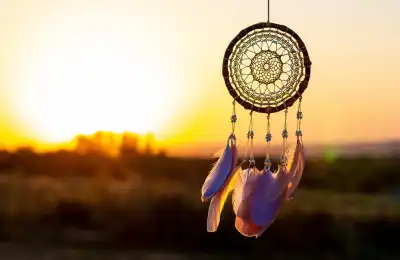
A dreamcatcher is a handmade object, traditionally made from a willow hoop, woven sinew or thread, and decorated with feathers and beads. The tradition originates with the Ojibwe (Anishinaabe) people, where it was originally used to protect sleeping infants and children from bad dreams.
Over the past century, the dreamcatcher has spread well beyond its original Ojibwe context, becoming widely recognised and used across many other cultures, often disconnected from its specific origins and meaning.
The Origins of the Dreamcatcher
The dreamcatcher's origins trace back to Ojibwe legend, most commonly associated with Asibikaashi, the Spider Woman, who was said to watch over and protect the children of the tribe. As the Ojibwe nation spread out across a wider territory, the story goes that Asibikaashi found it harder to reach every child directly, so mothers and grandmothers began weaving webbed hoops modelled on her protective spirit to watch over children in her place.
From there, the tradition spread to neighbouring nations through trade and intermarriage, particularly among other Anishinaabe and Great Lakes tribes. Its popularity expanded far beyond these communities from the 1960s and 70s onwards, during the pan-Indian and Native American rights movements, when the dreamcatcher became a widely recognised symbol of Indigenous identity more broadly. This is also the period when it began to be mass-produced and sold commercially, often stripped of its original tribal specificity, which is part of why its use today remains such a widely discussed topic.
What Is the Spiritual Meaning of a Dreamcatcher?
Spiritually, a dreamcatcher represents protection during sleep, specifically shielding the sleeper from negative dreams and energy while allowing positive dreams to pass through freely. In traditional Ojibwe belief, the night air is thought to carry both good and bad dreams, and the dreamcatcher's web acts as a filter between the two.
Beyond sleep specifically, the dreamcatcher has also come to represent broader protection and positive energy in many modern interpretations, though this is a more recent, generalised meaning layered onto its original, more specific purpose.
How Does a Dreamcatcher Work?
According to tradition, bad dreams become tangled in the dreamcatcher's web and are dissolved by the first light of morning, unable to reach the sleeper below. Good dreams, meanwhile, are said to slip through the web's small opening and glide down the feathers to reach the person sleeping beneath it.
This is why dreamcatchers are traditionally hung above where someone sleeps, allowing the web to do its work through the night.
Dreamcatcher Symbolism Explained
Each part of a traditional dreamcatcher carries its own meaning.
The Hoop
The circular hoop represents the circle of life and the continuous, unbroken nature of the natural world. Traditionally made from willow, the hoop forms the foundation the rest of the dreamcatcher is built around.
The Web
The woven web at the centre is the dreamcatcher's most functional element, believed to physically filter dreams as they pass through during the night, catching negative ones within its threads.
The Feathers
Feathers hang beneath the web and are believed to guide good dreams gently down to the sleeper. In some traditions, owl feathers were associated with wisdom, while eagle feathers were associated with courage, though modern dreamcatchers often use whatever feathers are available rather than following this specific distinction.
The Beads
Beads are sometimes woven into the design, traditionally said to represent the good dreams that were successfully caught and guided down to the sleeper overnight.
Dreamcatcher Colour Meanings
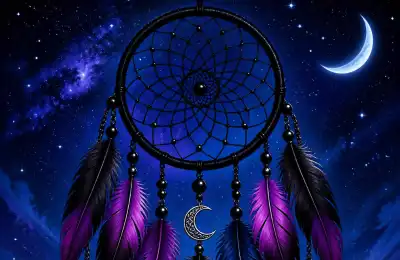
Beyond the traditional natural materials, many modern dreamcatchers incorporate colour, each carrying its own general meaning:
- White dreamcatcher meaning – purity, clarity, and protection, often chosen as the most traditional, versatile colour choice.
- Black dreamcatcher meaning – strong protection against negativity, often chosen for particularly difficult periods or nightmares.
- Blue dreamcatcher meaning – calm, peaceful sleep and emotional healing.
- Purple dreamcatcher meaning – spiritual insight and deeper intuition during sleep
- Green dreamcatcher meaning – healing, growth, and balance.
- Red dreamcatcher meaning – strength, vitality, and protection tied to life energy.
- Multicoloured or rainbow dreamcatcher meaning – broad, general protection and positive energy, drawing on several of the above meanings at once.
These colour associations are largely modern additions rather than part of the original Ojibwe tradition, so they're worth treating as a general guide rather than a fixed rule.
Where to Hang a Dreamcatcher
Traditionally, a dreamcatcher is hung above where someone sleeps, allowing it to filter dreams throughout the night as intended. Many people today also hang them near windows, in cars, or in general living spaces as a broader symbol of protection, though this moves beyond the dreamcatcher's original, more specific purpose.
There's no strict rule about which direction a dreamcatcher should face, though some modern practices suggest positioning it so morning light can reach it, reflecting the belief that bad dreams dissolve with the sunrise.
Dreamcatcher Tattoo Meaning
A dreamcatcher tattoo generally carries the same core symbolism as the object itself: protection, particularly against negative energy or difficult periods, along with the idea of holding onto good rather than letting negativity take hold. It's a popular design choice for people who've been through a difficult time and want a lasting symbol of protection moving forward.
Feathers are often included in the design, sometimes personalised with specific colours or the addition of names or dates to mark a particular meaning, though as with the object itself, it's worth understanding where this imagery comes from before choosing it as a tattoo.
Is It Cultural Appropriation to Have a Dreamcatcher?
This is a genuinely debated question, and it's worth hearing the range of views involved rather than a single verdict. Some Indigenous voices have spoken out against the widespread commercial sale and casual, decorative use of dreamcatchers by people outside Ojibwe and other Native communities, particularly when they're mass-produced without any connection to or benefit for the communities the symbol originates from. For some, this kind of disconnected commercial use feels like it strips away the object's genuine spiritual meaning.
Others take a more relaxed view, seeing the dreamcatcher's spread as a natural result of cultural exchange, provided it's approached with genuine respect and understanding rather than mockery or disrespect. Something that comes up frequently in this conversation is the importance of who profits from a dreamcatcher's sale: buying one made and sold by Native artisans is generally seen as a more respectful choice than a mass-produced version made with no connection to the tradition at all.
If you already own a dreamcatcher, or you're considering one, taking the time to understand its Ojibwe origins and treating it as more than a generic decorative item is a reasonable way to engage with the symbol thoughtfully.
Recommended for you!
Best Sellers
Frequently Asked Questions
Which Tribe Created Dreamcatchers?
Dreamcatchers originate with the Ojibwe (Anishinaabe) people, where they were traditionally used to protect sleeping children from bad dreams.
Are Dream Catchers Considered Bad Luck?
No, dreamcatchers aren't traditionally associated with bad luck. Their purpose is protective, intended to filter out bad dreams rather than bring misfortune.
What Happens If the Threads on a Dreamcatcher Break?
Some traditions hold that a dreamcatcher has done its job and absorbed enough negative energy over time once its web begins to break down, suggesting it may be time to replace it.
Can Adults Use Dreamcatchers?
Yes, while the tradition originally focused on protecting sleeping children, dreamcatchers are commonly used by people of all ages today.
Is It Okay to Gift a Dreamcatcher?
Generally, yes. Gifting a dreamcatcher is commonly seen as a gesture of care and protection, though it's worth choosing one made respectfully, ideally by Native artisans, rather than a generic mass-produced version.
How Do You Dispose of an Old or Broken Dreamcatcher?
Many people choose to bury a worn-out dreamcatcher or return it to nature respectfully, rather than simply discarding it in the bin, treating its retirement with the same care given to other meaningful objects.
Do Dreamcatchers Actually Work Spiritually?
This depends entirely on personal belief. There's no scientific evidence that a dreamcatcher physically affects dreams, though many people find genuine comfort and meaning in the tradition and its symbolism, regardless of literal effect.
Study Symbology for £29
If dreamcatcher symbolism has sparked your interest in symbols and their meaning more broadly, our Symbology Diploma Course explores symbols and traditions from cultures around the world in far more depth. For a limited time, you can enrol for just £29.