Petting aggression in cats is one of the most confusing experiences a cat owner can have, and if you've ever settled in for a cosy cuddle only to receive a sudden bite or scratch seemingly out of nowhere, you're far from alone. The reassuring news is that this behaviour has a name, a clear set of causes, and practical solutions that can make a real difference.
What's in this Guide?
This guide walks you through why petting aggression happens, how to spot the warning signs before things escalate, and what you can do to manage it. You'll also find answers to some of the most commonly asked questions about this behaviour at the end.
Jump to:
What Is Petting Aggression in Cats?
Petting aggression, also known as pet-induced aggression or overstimulation aggression, describes a behaviour where a cat responds to being stroked or handled with biting, scratching, or swatting. It can happen mid-session, often without any obvious change in how you're touching them, which is what makes it so disorienting.
Importantly, this isn't your cat being malicious or ungrateful; it's simply a form of communication. Cats have a limited tolerance for sustained physical contact, and when that threshold is reached, they react instinctively to make it stop.
Understanding this fundamental difference in how cats experience touch, compared to dogs who tend to enjoy extended physical contact, is key to getting to grips with the behaviour.
What Is Cuddle Aggression in Cats?
Closely related to petting aggression is something called cuddle aggression. This describes a specific pattern where a cat appears to be actively seeking closeness, perhaps climbing onto your lap, headbutting you, or kneading, and then suddenly biting or nipping without obvious provocation.
It's thought to be linked to instinctive behaviours, possibly echoing how cats interact during play. The cat isn't being aggressive in the way we typically think of the word; they're expressing a complicated emotional state that can be difficult to interpret. It rarely causes serious harm and generally isn't a sign of a deeper behavioural problem, though it can certainly give you a fright.
How Common Is Petting Aggression?

Petting aggression is one of the most commonly reported behavioural concerns among domestic cat owners. Veterinary behaviourists consistently flag it as a frequent issue, and studies into feline behaviour back this up.
It's particularly prevalent in cats who weren't well-socialised as kittens, those with more independent temperaments, and cats who were rescued or rehomed. That said, it can occur in any cat, regardless of breed or background. So if your cat bites when petting, you're genuinely not alone, and you're not doing anything wrong.
Why Do Cats Bite and Scratch When You Pet Them?
There are several reasons why cats bite and scratch when you pet them, and they're often more interconnected than they might first appear. Understanding each one can help you identify what's happening with your specific cat and adjust your approach accordingly.
Overstimulation
The most common explanation for a cat biting when petting is overstimulation. Cats are extraordinarily sensitive animals, and prolonged physical contact can become overwhelming relatively quickly. What begins as pleasant stimulation can tip into sensory overload, and at that point, biting or scratching is your cat's way of pressing the stop button.
A useful analogy: think about being tickled. It might feel fine initially, but after a sustained period, it becomes unbearable regardless of the other person's intentions. For cats, the experience of being stroked can escalate in a similar way, especially in sensitive areas like the base of the tail or along the back.
Personality and Early Experience
Some cats are simply more touch-sensitive than others. Cats who had limited handling as kittens, those who experienced difficult early environments, or those who are naturally more independent may have a lower threshold for physical contact. This doesn't mean they dislike affection; it means they prefer it on their own terms, and in ways they can control.
Warning Signs You Might Be Missing
Before your cat bites you when petting them, they'll almost always give advance warning. The issue is that these signals can be subtle and easy to miss, particularly if you're distracted or not yet familiar with feline body language. Signs to watch out for include:
- A twitching or lashing tail
- Skin rippling or twitching across the back
- Ears flattening or rotating backwards
- Dilated pupils
- Turning the head to look at your hand
- Going suddenly still or tense in the body
Learning to read these cues is the most powerful tool you have for preventing biting. Once you start noticing them, they become difficult to unsee.
Understanding Your Cat's Mixed Signals
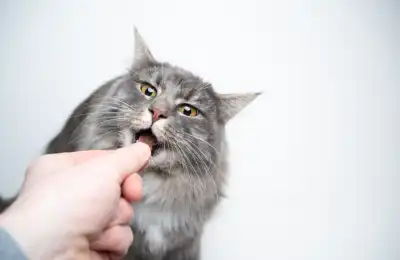
Some of the most confusing moments in cat ownership come when a cat seems to be asking for affection and then reacting against it — and these behaviours can feel deeply contradictory until you understand what's happening beneath the surface. The sections below look at three of the most commonly reported examples.
Why Is My Cat Affectionate Then Aggressive?
The hot-and-cold nature of some cats' behaviour can be genuinely frustrating. One minute they're acting clingy, weaving around your ankles demanding attention; the next they're nipping your hand or launching off your lap in a huff.
Cats are independent animals with complex inner lives, and their desire for affection and their need for personal space can follow closely on one another's heels. A cat may genuinely seek out physical contact and then reach their tolerance threshold within just a few minutes — this is simply how cats are wired.
There are also other factors that can contribute to cat aggression when petting:
- Redirected aggression: the cat is already agitated by something else, such as seeing another cat through the window, and you become the unfortunate outlet.
- Pain or discomfort, particularly relevant in older cats; a sudden change in tolerance is always worth discussing with your vet.
- Stress or anxiety, caused by changes in the home environment or disrupted routine.
- Hormonal factors, which are more common in unneutered cats.
Why Does My Cat Grab My Hand and Bite Me While Purring?
This is a particularly baffling scenario. Your cat is purring, a sound we associate with happiness, so why do they then grab your hand and bite? The key thing to understand is that purring doesn't always indicate contentment.
Cats also purr when they're anxious, overstimulated, or even unwell, which means a purring cat can simultaneously be one who's quietly reached their limit. If your cat grabs your hand and bites while purring, it's very likely they were already communicating discomfort through subtle body language, and when those signals went unnoticed, they escalated to something more direct.
Why Do Cats Swat at You After Petting Them?
Swatting is another common response to overstimulation, and it often follows the same pattern as biting. You may notice your cat swat at you when you touch certain areas of their body, with the belly, the base of the tail, and around the legs and paws being the most typical flashpoints.
Most cats are comfortable being stroked around the head, behind the ears, and under the chin. Venture further south, however, and many cats will let you know quite firmly that they'd rather you didn't. If you're regularly touching these sensitive zones, that's likely why your cat scratches you when you pet them.
How to Stop Petting-Induced Aggression in Cats
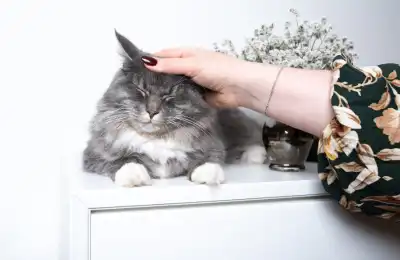
The good news is that petting aggression in cats is a very manageable behaviour. It doesn't require complicated training or professional intervention in most cases; what it does require is consistency, patience, and a willingness to see things from your cat's point of view. The following approaches are tried-and-tested and can make a meaningful difference relatively quickly.
Watch the Body Language
Developing your ability to read feline body language is the single most effective thing you can do. During any petting session, check in with your cat every minute or two. The moment you spot any of the warning signs mentioned earlier, such as tail twitching, skin rippling, or that fixed stare at your hand, stop immediately and give them space.
Keep Sessions Short and Sweet
Rather than long, uninterrupted strokes, try shifting to shorter, more frequent interactions. A two-minute petting session that ends with your cat still relaxed is far more positive than a ten-minute one that ends in a bite. Over time, consistent short sessions can actually help build your cat's confidence and tolerance.
Respect Their Preferences
Pay attention to which areas your cat enjoys being touched and which they don't. If stroking their back consistently leads to a reaction, default to areas they find more comfortable, such as around the chin and cheeks. Respecting these preferences communicates to your cat that you can be trusted, which can gradually expand their openness to contact over time.
Use Positive Reinforcement
When your cat remains calm and relaxed during petting, offer a small treat or gentle verbal praise immediately afterwards. This builds a positive association with being touched and can naturally extend their tolerance threshold as the weeks go on.
Don't Use Punishment
Shouting at, flicking, or spraying your cat for biting won't stop petting aggression. It'll only heighten their anxiety, reduce their trust in you, and potentially make the behaviour worse. Calm, predictable responses are always more effective, and far kinder to your cat in the long run.
Frequently Asked Questions
Should I Stop Petting My Cat if He Bites Me?
The right response when a cat bites during petting is to immediately and calmly withdraw your hand and end the interaction. Avoid pulling your hand away sharply, as this can trigger a predatory response; instead, go briefly still, then quietly disengage and give your cat some space. Over time, this teaches them that biting ends the petting session, which may encourage them to use softer signals instead.
Should I Ignore My Cat After He Bites Me?
There's no need to give your cat the cold shoulder after a biting incident, as ignoring them for an extended period is unlikely to have any meaningful impact on the behaviour. Simply withdraw attention in the moment, allow both of you to calm down, and wait for your cat to re-engage on their own terms before offering attention again.
Do All Cats Get Petting Aggression?
Not every cat will display petting aggression, but it's more widespread than many people assume and can occur in any cat regardless of breed or background. If your cat has always been tolerant of being touched and suddenly becomes reactive, it's worth a trip to the vet to rule out an underlying health issue, as pain is a commonly overlooked cause of increased sensitivity.
Recommended for you!
Best Sellers






Study Feline Behaviour and Psychology for £29
Understanding why your cat behaves the way they do is one of the most rewarding things you can do as a cat owner, and if petting aggression has left you wanting to learn more about feline communication, body language, and wellbeing, the Feline Behaviour and Psychology Diploma Course from Centre of Excellence is an excellent place to start.
Covering everything from the science of cat behaviour to practical guidance on common behavioural challenges, it's designed to be accessible to all levels of experience, and you can access the full course for just £29.