For nearly a century, tales of a mysterious creature lurking in the depths of Scotland’s Loch Ness have fascinated people around the world. Whether you’re a sceptic or a believer, the story of the Loch Ness Monster – affectionately called Nessie – has become one of the most famous legends in modern folklore. Many are drawn to the mystery because it combines ancient myths, scientific curiosity, and the thrill of the unknown.
Could there really be something living beneath the still waters of Loch Ness, or is the legend just a clever illusion? Let’s explore the myths, theories and sightings of the Loch Ness Monster.
Jump to:
- The Story of the Loch Ness Monster
- What Is the Loch Ness Monster?
- The Myth and Legend of Loch Ness
- Early Sightings and Famous Photos
- Searching for Nessie: Hunts, Sonar, and Technology
- Loch Ness: The Perfect Hiding Place
- Scientific Studies and Theories
- Tragedies and Tall Tales
- Pop Culture and Public Fascination
- Theories of Belief and Scepticism
- The Enduring Mystery
- Study Cryptozoology for £29
The Story of the Loch Ness Monster
The history of the Loch Ness Monster stretches back centuries. The earliest recorded reference dates to 565 AD, when an Irish monk named Saint Columba supposedly encountered a “water beast” in the River Ness. This ancient account is often seen as the origin of the Loch Ness Monster myth, though it’s uncertain whether it referred to the same creature we speak of today.
The modern Loch Ness Monster story began in 1933, when a couple claimed to have seen an enormous animal crossing the road and slipping into the loch. The media quickly picked up the story, sparking a wave of newspaper headlines and public fascination. From that moment, Nessie became a global celebrity.
What Is the Loch Ness Monster?
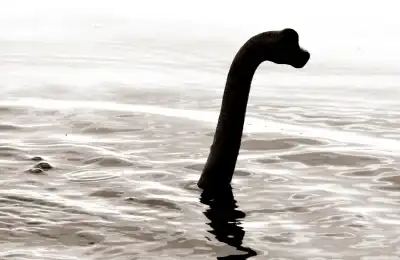
Over time, descriptions of the Loch Ness Monster have varied widely. Some say Nessie resembles a plesiosaur, a prehistoric marine reptile with a long neck and flippers. Others describe it as more serpent-like or whale-shaped.
The Loch Ness Monster’s name “Nessie” comes from an affectionate Scottish tradition. Most people refer to the creature as she, largely because of the name Nessie, though no evidence proves her gender. The truth is, we still don’t know what Nessie is, or even if she exists at all.
The Myth and Legend of Loch Ness
Like many enduring legends, the myth of the Loch Ness Monster blends folklore with possible truth. Ancient Scottish tales speak of “loch monsters” or water spirits known as kelpies, shape-shifting beings said to live in deep waters and lure travellers to their doom. These older myths could easily have evolved into modern sightings of Nessie.
The Loch Ness Monster legend also appeals to something deeper in human nature: the desire to believe that the world still holds secrets waiting to be uncovered.
Early Sightings and Famous Photos
Nessie’s first sighting depends on what you consider a true sighting. The first modern account came in 1933, but the most famous piece of supposed Loch Ness Monster evidence appeared in 1934 with the Surgeon’s Photograph.
This image, allegedly taken by a London doctor, shows a long neck rising from the water. For decades, it was accepted as proof of Nessie’s existence. However, in 1994, the photo was revealed to be a hoax, created using a toy submarine and a model head. Despite this revelation, it remains one of the most iconic Loch Ness Monster photographs and still features prominently at the Loch Ness Exhibition Centre.
Over the years, many other Loch Ness Monster pictures and videos have emerged, each claiming to be the “real photo” of Nessie. Yet none have provided definitive Loch Ness Monster proof.
Searching for Nessie: Hunts, Sonar, and Technology
The search for Nessie has taken on scientific proportions. In the 1960s and 1970s, several organised hunts took place, including the famous “Operation Deepscan” in 1987, which used an early form of sonar to sweep the entire loch. Multiple unidentified sonar contacts were detected, suggesting large moving objects beneath the water, though no physical evidence was ever recovered.
Modern technology has continued the Loch Ness Monster search. Today, Loch Ness live cameras stream 24/7, allowing enthusiasts from around the world to join the Nessie hunt from home. The Loch Ness Monster hunter community remains active, with occasional reports of strange shapes and ripples captured on film.
In recent years, drone footage, underwater imaging, and DNA sampling have been used to explore the loch. While these tools have found plenty of fish and eels, none have confirmed the existence of a hidden creature. Still, the lack of proof hasn’t stopped the Loch Ness search, as for many, the mystery is what makes it exciting.
Loch Ness: The Perfect Hiding Place
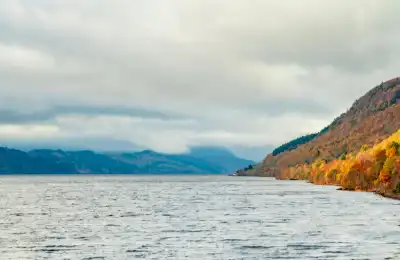
Part of Nessie’s appeal lies in the loch itself. Loch Ness is a vast, dark, and incredibly deep body of freshwater, stretching about 23 miles long and nearly 230 metres deep, making it the deepest loch in the UK. Its dark, peat-stained waters reduce visibility, making it easy to imagine something large could hide below.
Beneath the surface lies an intricate underwater landscape of trenches and silt, often described as “Nessie’s lair.” Because of these conditions, scientists have admitted that the loch’s size and depth make it challenging to search thoroughly, even with modern sonar.
Scientific Studies and Theories
Over the years, researchers have proposed numerous theories behind the Loch Ness Monster. Some believe Nessie could be a giant eel or a sturgeon, misidentified due to the murky water. Others think sightings could be caused by floating logs and optical illusions.
In 2009, a Loch Ness sonar scan picked up a large unexplained object near the bottom of the loch, sparking new headlines and renewed curiosity about what was found. However, follow-up investigations couldn’t determine what it was, leaving the mystery unsolved.
More recently, environmental DNA tests, where scientists analyse traces of genetic material in the water, revealed no evidence of a prehistoric reptile but did show a surprising abundance of eel DNA. This finding led to the “giant eel theory,” which some now consider the most plausible explanation.
Tragedies and Tall Tales
While most of Nessie’s story is harmless fun, there have been a few sombre notes in the history of the Loch Ness Monster. Some divers and explorers have died while conducting searches, leading to what some refer to as the Loch Ness tragedy. These accidents usually involve the challenging conditions and cold temperatures of the loch rather than Nessie herself. There’s no evidence that Nessie has ever hurt anyone.
Pop Culture and Public Fascination
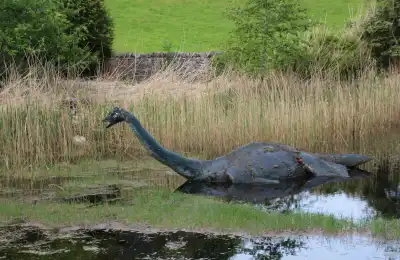
From children’s books to Hollywood films, Nessie has become a cultural icon. Movies like The Water Horse, often mistaken by some for a true story, have introduced new generations to the Loch Ness Monster legend. Television documentaries and tourist attractions such as the Loch Ness Exhibition Centre continue to draw visitors hoping to learn more, or perhaps glimpse the creature for themselves.
Over 1,000 reported sightings have been documented to date, though few stand up to scientific scrutiny.
Theories of Belief and Scepticism
So, is the Loch Ness Monster real? Despite decades of study and Loch Ness Monster evidence hunts, there’s still no scientific confirmation of Nessie’s existence. This makes the Loch Ness Monster a cryptid – a creature whose existence is unproven by science.
However, the absence of proof isn’t proof of absence, and for many believers, that’s enough to keep the legend alive. Sceptics point to logical explanations, while believers see the loch’s unexplored depths as fertile ground for mystery.
The Enduring Mystery
Even as science advances, the Loch Ness Monster hunt continues. New expeditions, modern sonar, and underwater drones still explore the depths, each hoping to uncover Nessie’s secret. While no one has found conclusive Loch Ness Monster proof, the fascination with Nessie the Loch Ness Monster remains stronger than ever.
Recommended for you!
Best Sellers



Study Cryptozoology for £29
If stories like this spark your imagination and you love mysteries that blend science and the unexplained, you’ll enjoy learning more through our Cryptozoology Diploma Course. This online course explores famous creatures, from Bigfoot to the Loch Ness Monster, and right now, you can get the course for a discounted price of £29!