The Japanese concept of ikigai offers a gentle, grounded way to understand what brings satisfaction and value to life. This guide explores the meaning of ikigai and provides practical steps for identifying your own sense of purpose.
Jump to:
What Is Ikigai?
Ikigai, pronounced ee-kee-guy, is often described as a “reason for being”. In Japanese, it relates to the things that make life feel worthwhile: the personal combination of activities, relationships, experiences, and values that bring contentment. Ikigai may be linked to work for some, but for others, it may relate to creativity, family, community, learning, or nurturing a quiet passion.
Recommended for you!
Best Sellers





Understanding the Ikigai Concept
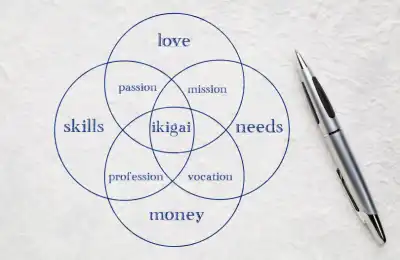
When people talk about the ikigai concept, they often refer to a well-known Western interpretation: the four-circle ikigai diagram. The diagram encourages you to consider four overlapping areas of life:
- What you love
- What you’re good at
- What the world needs
- What you can be paid for
Where all four areas meet is often presented as your “ikigai”. However, it’s important to remember that traditional ikigai does not require all these areas to overlap; you do not need to earn money from your passion to consider it your ikigai. The essence of the ikigai concept lies in noticing what brings life its sense of richness and allowing those feelings to guide personal decisions and long-term direction.
How to Find Your Ikigai in 6 Steps

The following six-step approach offers a simple way to begin finding your ikigai and applying the ideas in daily life.
1. Explore What You Love
A meaningful starting point involves paying attention to activities that bring genuine enjoyment. These might be small, everyday pleasures or larger passions that energise you. Enjoyable moments hold clues to your ikigai because they highlight what naturally lifts your spirits, engages your attention, and supports your sense of wellbeing.
Exploring what you love may involve revisiting past hobbies or acknowledging interests you have always wanted to try.
2. Notice What You’re Naturally Good At
Ikigai often grows from strengths that feel instinctive or effortless. Some strengths are obvious, such as artistic skills or problem-solving abilities. Others are more subtle, like being a thoughtful listener or having a talent for organisation. These natural abilities provide direction because they reflect traits you can use over a lifetime.
Paying attention to compliments or tasks you perform with ease helps you understand the second area of the ikigai chart. This part of the process is all about recognising qualities that come naturally to you.
3. Reflect on What Feels Meaningful
By reflecting on feelings of purpose, you begin to understand what matters most. These moments may arise through helping others, expressing creativity, pursuing knowledge, nurturing relationships, or supporting a cause.
Clarify how your interests and strengths connect to the world around you. Ask yourself:
- Which tasks make me feel “in flow”?
- What do I naturally care about improving?
- Who benefits from the things I do well?
4. Try Small Experiments to Discover Your Interests
Ikigai becomes clearer through exploration, especially when interests are uncertain. Small experiments, such as taking a short online course, volunteering for a local project, joining a community group, or sampling a new hobby, allow you to test different experiences without pressure or commitment.
This approach provides real-life feedback and often reveals unexpected passions or strengths, giving you a better understanding of what you enjoy, value, and wish to pursue further.
5. Journal Your Discoveries
Journaling serves as a space to process what you enjoy and what feels meaningful to you. This reflective habit encourages deeper awareness, so you can capture emotions and observations that might otherwise be forgotten.
6. Allow Your Sense of Purpose to Shift
As life evolves, so do passions, strengths, and interests. Allowing your sense of purpose to shift ensures that your ikigai grows with you instead of remaining tied to one stage of life. Your ikigai might centre around a career in one chapter, creativity in another, and community contribution in another. The ability to adapt ensures your life remains aligned with what you value most.
Frequently Asked Questions
How long does it take to find an ikigai?
Some people gain clarity within a few weeks of consistent reflection, while others discover their purpose gradually over months or even years. The process depends on personal circumstances, openness to exploring new experiences, and the amount of time devoted to self-reflection.
Can I have more than one ikigai?
A person might draw meaning from several different areas, including family, creativity, learning, wellbeing, and helping others. These varied sources can coexist comfortably, creating a rich sense of fulfilment.
Is ikigai linked to happiness?
Ikigai and happiness are connected but not identical concepts. Happiness is often a temporary emotional state, while ikigai relates to a deeper, more stable sense of meaning. Ikigai can involve effort, challenge, and growth, which may not always feel easy but can still contribute to long-term life satisfaction.
Does ikigai require discipline or routine?
Ikigai does not require strict discipline, but a gentle routine can help strengthen your awareness of it. Activities such as journalling, taking time for enjoyable tasks, and reflecting on personal values help maintain a connection to your sense of purpose.
Recommended for you!
Best SellersStudy Our Ikigai Diploma for £29
If you want to deepen your understanding, the Ikigai Diploma Course provides a comprehensive and supportive way to explore purpose, meaning, and personal alignment. You can enrol today at the discounted price of £29!