You may have come across strange black-and-white pictures that look like splashes of ink and wondered what they are meant to show. These simple-looking patterns are part of something called the Rorschach Inkblot Test, a unique psychological tool that’s used to understand the inner world of thoughts and emotions.
What’s in This Guide?
This guide explains what the Rorschach Inkblot Test is and how it works. It explores the historical background of the test and introduces its creator, Hermann Rorschach. The guide also examines key research findings, as well as the strengths and limitations of the test in modern psychology.
Jump to:
What is the Rorschach Inkblot Test?
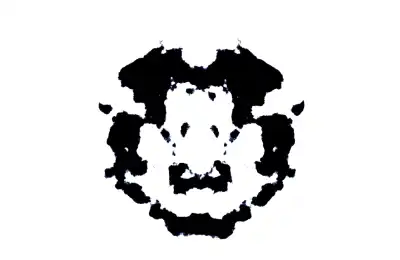
The Rorschach Inkblot Test is a psychological technique that presents you with a series of ten images composed of ink blots, usually symmetrical and sometimes containing colour. The idea is that when you describe what you see in these ambiguous shapes, your responses can reveal patterns in how you perceive, process and respond to the world.
These responses are then analysed by trained professionals who look for themes, emotional content, and thought patterns in your answers. Unlike questionnaires that ask direct questions about your behaviour or attitudes, the Rorschach approach taps into how your mind organises and interprets ambiguous information.
A Brief History: Who Was Hermann Rorschach?
Hermann Rorschach was a Swiss psychiatrist and psychoanalyst who developed what became known as the Rorschach Inkblot Test. Born in Zurich in 1884, he was interested in both art and psychology from a young age. As a child, he enjoyed a game called Klecksography, which involved making inkblots and interpreting them, a pastime that later influenced his professional work.
In 1921, shortly before his death, Rorschach published his work Psychodiagnostik, introducing the ten inkblot cards we still use today. His original aim was to better understand thought disorders such as schizophrenia, but his method soon evolved into a broader tool for assessing patterns in personality and emotional functioning.
For a time, the test was one of the most widely used tools in clinical psychology, though its adoption has since become less universal as other, more evidence-based measures gained favour.
How Does the Inkblot Test Work?
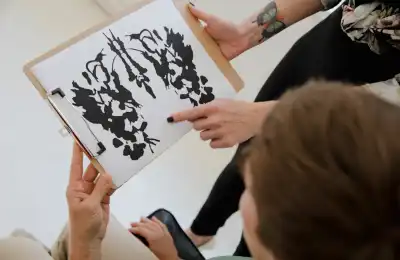
During a typical Rorschach session, the examiner sits close to the person being tested. Each card is shown one by one, and the person is invited to describe what they see in each ink blot without pressure. There are no correct answers, and the idea of the test is not to measure intelligence or factual knowledge but to observe how someone organises perception and thought.
Responses are recorded and analysed using structured systems such as the Exner Comprehensive System or the more recent R-PAS (Rorschach Performance Assessment System). These scoring systems can look at factors including:
- Which part of the blot was used in the interpretation.
- What aspects of the image influenced the interpretation (such as colour, shape, shading).
- The emotional content or narrative conveyed by the response.
Patterns in responses may help trained examiners understand emotional functioning, coping strategies, interpersonal perceptions, and the ways in which someone processes complex visual information.
What Does a Rorschach Test Tell You?
The Rorschach Inkblot Test helps clinicians explore how someone perceives ambiguous stimuli and uses cognitive and emotional resources to interpret them. When analysed as part of a broader assessment, responses may offer perspectives on:
- Emotional regulation and affective style.
- Patterns of thinking, such as whether responses are concrete or imaginative.
- Social perception and interpersonal sensitivity.
- Potential areas of stress or psychological conflict.
Research shows that under certain circumstances, parts of the Rorschach approach can have moderate validity in identifying specific psychological features, especially when used with robust scoring systems and combined with other measures. Some studies have found connections between Rorschach variables and clinical constructs such as thought disorders, psychosis, and personality characteristics.
However, responses must always be interpreted with context and clinical judgement, since many factors, including cultural background, mood at the moment, and the examiner’s own perspective, can influence results.
Interpreting the Most Well-Known Rorschach Inkblot
One of the most recognisable images in the Rorschach Inkblot Test is the first card, which features a symmetrical black-and-white ink blot. This image is often described as a butterfly, a bat, or a pair of wings. Because it’s the first inkblot shown, psychologists sometimes view it as an early indicator of how a person approaches ambiguous or unfamiliar material.
While no single response is meaningful on its own, traditional interpretations suggest the following general patterns.
- Seeing a Butterfly: This response is often linked to perceiving the image as balanced and familiar. It may suggest that the person is comfortable with symmetry and tends to organise visual information into a complete and harmonious whole. Psychologists may view this as an indication of an orderly perceptual style and an ability to integrate different elements of an image smoothly.
- Seeing a Bat: Describing the inkblot as a bat is one of the most common responses and is considered entirely typical. This interpretation may reflect a practical and straightforward approach to perception, where the person identifies a recognisable shape quickly. It can suggest a tendency to rely on concrete visual cues rather than spending time exploring abstract possibilities.
- Seeing a Pair of Wings: When the image is described as wings, the interpretation often focuses on sensitivity to symmetry and movement. This response may suggest that the person is attentive to how different parts of an image relate to one another and is aware of form and structure within visual information.
These interpretations are not indicators of personality traits or psychological conditions on their own. Psychologists consider the full set of responses across all ten inkblots, along with how each response is explained, before drawing any broader conclusions.
Common Myths About Rorschach Tests
Despite its long history and frequent appearance in culture, many misunderstandings surround the Rorschach Inkblot Test. Below are some of the most common myths and what research and expert opinion actually indicate.
Rorschach Tests Reveal Your Deepest Secrets
There is a belief that the test reveals unconscious truths. While it can highlight patterns in perception and thought, it does not function as a magical key to hidden secrets or fixed personality traits. Interpretation depends on professional skill and overlapping evidence from other assessments.
The Rorschach Test Diagnoses Mental Illness Definitively
Although the test was originally developed to explore thought disorders, researchers have found that its ability to reliably diagnose specific mental illnesses is limited. Its predictive accuracy varies depending on the condition being considered and is stronger for some (such as psychosis) than others.
The Test Is Completely Unscientific
While critics have questioned the Rorschach Inkblot Test's validity, especially in the mid-20th century, meta-analyses and modern scoring systems have shown that certain variables can indeed be reliable when carefully applied. Some researchers have worked to improve standardised scoring to strengthen its empirical foundations.
Everyone Sees the Same Things
Although many people may notice common shapes like animals or faces, the diversity of interpretations reflects individual differences in thought and perception. There’s no universal set of “right” answers.
The Test Is Just for Psychoanalysis
Though rooted in early psychoanalytic tradition, modern psychology may use it alongside other tools. It’s not limited to any single therapeutic orientation and remains a talk-based stimulus rather than a strict psychoanalytic device.
Recommended for you!
Best Sellers






Frequently Asked Questions
Is the Rorschach test an IQ test?
The Rorschach Inkblot Test does not measure intelligence, problem-solving ability, or reasoning skills in the way an IQ test does. Instead, it focuses on how a person perceives and organises visual information, as well as how they explain and interpret what they see.
Does the test help with conditions like ADHD?
The inkblot approach may highlight certain patterns related to attention, impulse control, or thought organisation, but it’s not designed to diagnose conditions such as ADHD on its own.
Are online inkblot tests the same?
Online inkblot tests and public quizzes are usually created for interest or entertainment instead of professional assessment. These versions often lack standardised scoring, clinical context, and trained interpretation, which means they don’t carry the same meaning or reliability as a professionally administered Rorschach test.
Why do psychologists still use it?
Some psychologists continue to use the Rorschach Inkblot Test because it can encourage rich discussion about perception, emotional responses, and ways of thinking. When used carefully and in combination with other evidence-based assessments, it can add depth to a psychological evaluation by highlighting aspects of experience that may not emerge through direct questioning alone.
How long does a Rorschach test take?
In clinical settings, the full administration of the test typically takes between 45 and 60 minutes. This includes presenting the inkblot cards, recording responses, and asking follow-up questions to clarify interpretations. Additional time is often required afterwards for detailed analysis and interpretation of the responses.
Study Our Psychology Diploma for £29
If learning about perception, interpretation, and psychological response has sparked your interest, you may enjoy developing your understanding further. You can enrol in our Psychology Diploma Course for a discounted price of £29.
If you would also like to join our learning community, unlock exclusive discounts, and receive expert tips, you can sign up for our mailing list.