The Tiwaz rune represents justice, honour, and sacrifice within the Elder Futhark, closely tied to the god Tyr. If you've come across this rune, whether through study, a reading, or a tattoo design, this guide covers what it represents, and it also addresses its history honestly, since Tiwaz is one of the runes with a genuinely documented and ongoing connection to extremist movements.
What's in this Guide?
This guide explains what the Tiwaz rune means, its origins and symbolism, and how to interpret it upright and reversed. Given the questions people understandably have about this rune, we've also included clear, factual guidance on its use by Nazi Germany and continued use by some extremist groups today.
Jump to:
What Does the Tiwaz Rune Mean?
Tiwaz represents justice, honour, and sacrifice, named directly after Tyr, the Norse god associated with law, fairness, and courageous self-sacrifice for the greater good. It's one of the more morally weighted runes in the Elder Futhark, tied less to material outcomes and more to doing the right thing, even when it costs something personally.
When Tiwaz appears, it generally signals that fairness, honesty, or a matter of principle is relevant to the situation at hand. It's considered a rune of integrity, often drawn upon for questions involving justice, leadership, or standing by a difficult but honourable decision.
Tiwaz Rune Origin and Symbolism
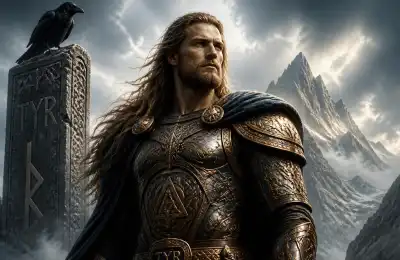
The name Tiwaz derives directly from Tyr, referencing the Norse god most associated with justice and law. Its shape, a simple upward-pointing line with a diagonal stroke forming an arrow-like point, is often interpreted as representing a spear, tying into Tyr's role as a warrior god as well as a lawgiver.
Within the structure of the Elder Futhark, Tiwaz belongs to Tyr's Aett, the third and final group of eight runes, named after the same god and associated with justice, humanity, and spiritual completion. As the opening rune of this final group, Tiwaz sets a tone of principled action and fairness for the runes that follow.
Is Tiwaz a Powerful Rune?
Tiwaz is considered a significant rune, particularly for matters involving fairness, leadership, and standing firm on a matter of principle. Its strength lies less in raw force and more in moral clarity, representing the courage to do what's right even when it's difficult.
Because of this, Tiwaz is frequently drawn upon for questions relating to justice, legal matters, competition, or any situation calling for honourable, principled action.
Tiwaz Reversed (Merkstave) Meaning
When Tiwaz appears reversed, sometimes called its merkstave position, the rune's usual sense of justice and fairness can become disrupted. It may suggest injustice, dishonesty, or a loss of confidence and conviction in doing the right thing.
Rather than predicting outright defeat, the reversed Tiwaz is often read as a prompt to examine whether you're compromising your values, or whether a situation involving unfairness needs to be addressed directly rather than avoided.
Tiwaz in Readings
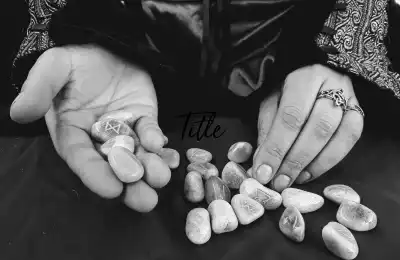
When used in a broader reading alongside other runes, Tiwaz tends to bring themes of fairness and principled action to whatever it's paired with. In a love reading, it can suggest a relationship built on mutual respect and honesty. In a career reading, it often points to success achieved through integrity, or a situation requiring you to stand firm on a matter of principle.
As a daily draw, Tiwaz is frequently interpreted as encouragement to act with honesty and fairness, even when an easier or less scrupulous option might be available.
How to Use the Tiwaz Rune

Tiwaz is a popular choice for bind runes and rituals focused on justice, courage, and honourable success, given its close connection to Tyr's values. It's often combined with other runes to reinforce a specific area of principled achievement.
Sowilo is commonly paired with Tiwaz in bind runes focused on victory achieved fairly and honourably, rather than success gained through underhanded means. Some practitioners also use Tiwaz within a galdr, a traditional chanting practice used to invoke a rune's energy aloud, particularly before a situation requiring courage or a stand on principle.
Is the Tiwaz Rune a Hate Symbol?
Unlike some runes where the extremist connection is minor or historically distant, Tiwaz has a well-documented and ongoing association with Nazi and neo-Nazi movements that's worth understanding clearly.
During the Nazi era, a modified version of the Tyr rune was used as an official insignia by at least one Waffen-SS division, and it was also worn as a badge by graduates of Nazi leadership training schools associated with the SA. This wasn't an isolated or minor use. In the decades since, the symbol has continued to appear in neo-Nazi and white supremacist contexts, including as the emblem of the Nordic Resistance Movement, a banned neo-Nazi organisation, and it's tracked as a hate symbol by organisations such as the Anti-Defamation League.
At the same time, it's important to be accurate about the full picture. Tiwaz is also one of the most commonly used runes among genuine modern heathens, Norse pagans, and historians with no connection whatsoever to extremism, and its original meaning, tied to Tyr's justice and self-sacrifice, is fundamentally at odds with the ideology that later co-opted it. Context matters enormously here: the same symbol can appear on a university lecturer's presentation about Norse mythology and on a banned political party's flag, with entirely different intent behind each use.
Given this specific and ongoing history, Tiwaz is one of the runes where it's genuinely worth pausing before choosing it for a visible tattoo or public symbol, being prepared for the possibility that some people may read it through this more troubling lens, particularly in European contexts where its use by extremist groups is more widely recognised.
Recommended for you!
Best Sellers


Frequently Asked Questions
What Deity Is Tiwaz Associated With?
Tiwaz is directly named after and associated with Tyr, the Norse god of justice, law, and courageous self-sacrifice.
Is Tiwaz the Rune of Tyr?
Yes, Tiwaz is the rune most directly and explicitly tied to a specific god within the entire Elder Futhark, taking its name straight from Tyr himself.
What Does a Double Tiwaz Rune Mean?
A doubled Tiwaz symbol has specifically been used as a Nazi-era insignia and continues to appear in some neo-Nazi contexts today, making it a design worth avoiding, distinct from a single Tiwaz rune used in its genuine historical and spiritual context.
How Do You Pronounce Tiwaz?
Tiwaz is generally pronounced "TEE-wahz," sometimes also spelled Teiwaz, both derived from the same Proto-Germanic root as Tyr's name.
Can I Wear the Tiwaz Rune?
A single Tiwaz rune, used in its genuine historical and spiritual context, is worn by many people with a sincere interest in Norse mythology and heathenry. Given its documented use by extremist groups, it's worth being informed about this history and prepared for the possibility that context and location may affect how it's perceived.
What's the Difference Between Tiwaz and Algiz Protection?
Tiwaz represents protection through justice and principled action, while Algiz represents more general, direct protection from harm. The two are sometimes paired when the goal is protection specifically rooted in fairness or a legal matter.
Is Tiwaz Good for Legal Matters or Competitions?
Yes, Tiwaz is frequently associated with legal fairness, exams, and competitive success achieved honestly, making it a popular choice for situations where principled effort is being tested.
Study Norse Mythology for £29
If Tiwaz has sparked a deeper interest in the runes and the mythology behind them, our Norse Mythology Diploma Course is the perfect next step. You'll explore the gods, myths, and symbolism of the Norse world in far more depth, and for a limited time, you can enrol for just £29.