If you’ve ever noticed your cat acting strangely around their food bowl, such as pawing at it, eating only from the edges, or even walking away from their meal altogether, they might not be being picky with their food. They could be experiencing something known as whisker fatigue.
While it might sound like a minor problem, whisker fatigue (also called whisker stress) can cause real discomfort for cats. Understanding what it is and how to prevent it can make a big difference to your feline friend’s wellbeing and behaviour. Let’s take a closer look at what whisker fatigue means and what signs to look for.
Jump to:
- Understanding Whiskers and Their Purpose
- What Is Whisker Fatigue?
- The Science Behind Whisker Sensitivity
- How Do You Know If Your Cat Has Whisker Fatigue?
- What Kind of Bowls Cause Whisker Fatigue?
- Choosing the Right Cat Bowl for Whisker Fatigue
- Can Whisker Fatigue Be Fixed?
- How to Avoid Whisker Fatigue in Cats
- Why Whisker Fatigue Matters
- When to See a Vet
- Study Feline Anatomy and Physiology for £29
Understanding Whiskers and Their Purpose
A cat’s whiskers, also known as vibrissae, are highly sensitive touch receptors. Each whisker is deeply rooted in the skin and connected to a rich network of nerves, and these send signals to the brain that help your cat navigate their world.
Whiskers help cats measure spaces, detect movement, and sense changes in air currents. This sensitivity is what allows them to squeeze hunt in low light and judge distances accurately when jumping and squeezing through tight gaps. In short, whiskers act as an extension of a cat’s senses, almost like radar antennas.
What Is Whisker Fatigue?
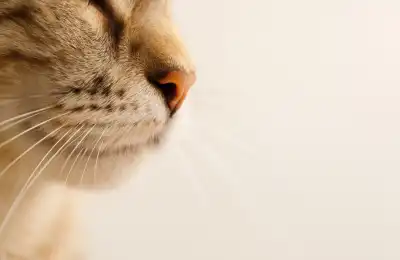
Whisker fatigue happens when a cat’s whiskers are overstimulated due to constant or repeated contact with objects, usually the sides of food or water bowls. Because whiskers are so sensitive, even light, repeated pressure can cause sensory overload.
Think of it like someone constantly brushing against your eyelashes or tapping your fingertips – eventually, it would feel irritating and uncomfortable. For cats, this sensory strain can lead to changes in behaviour and eating habits. It’s not a disease, but rather a sensory issue that can have noticeable effects on how a cat behaves around food and water.
The Science Behind Whisker Sensitivity
Whiskers are connected to a part of the cat’s brain called the somatosensory cortex, which processes touch and spatial information. Each whisker acts as a sensory antenna, detecting even the smallest changes in air movement and surface texture.
This system is so sensitive that cats can detect obstacles in complete darkness – a survival mechanism inherited from their wild ancestors. However, that same sensitivity means whiskers can easily become overstimulated in domestic settings, especially during daily feeding routines.
How Do You Know If Your Cat Has Whisker Fatigue?
Cats can’t tell you when something’s bothering them, so you’ll need to watch for subtle changes in their behaviour. Some of the most common whisker fatigue symptoms include:
- Reluctance to eat or drink from their usual bowls
- Pawing at food or knocking it onto the floor before eating
- Eating only from the centre or edges of the bowl
- Leaving food behind despite being hungry
- Acting anxious or pacing around the feeding area
- Seeming irritable or stressed at mealtimes
If your cat is otherwise healthy and these behaviours seem linked to feeding or drinking, whisker fatigue could be the cause. However, it’s important to note that these symptoms can overlap with other health issues, so if you’re unsure, it’s best to check with your vet to rule out medical concerns.
What Kind of Bowls Cause Whisker Fatigue?

The design of your cat’s feeding bowl can play a huge role in whether they experience whisker stress. Traditional deep or narrow bowls are often the main culprits.
When a cat eats or drinks from a deep bowl, their whiskers press against the sides repeatedly. Over time, this constant stimulation can lead to discomfort. Cats with particularly long or sensitive whiskers are more prone to the problem.
Avoid bowls that:
- Are deep and narrow.
- Have steep sides.
- Are made of rough or noisy materials (which can add to sensory irritation).
Choosing the Right Cat Bowl for Whisker Fatigue
If you suspect your cat is experiencing whisker fatigue, the good news is that it’s easily managed by making small changes, starting with their bowl. Look for a bowl that’s wide, flat, and has gently sloping sides. Stainless steel or ceramic bowls are ideal, as they’re easy to clean and don’t hold odours.
Avoid plastic bowls, which can develop tiny scratches that trap bacteria and cause chin acne. Cats with whisker stress tend to prefer a clean, smooth surface that doesn’t cause additional irritation.
You’ll also find whisker fatigue bowls specifically designed to keep whiskers free from contact. These bowls are usually wider and shallower, giving cats more space to comfortably reach their food.
Can Whisker Fatigue Be Fixed?
Whisker fatigue can be fixed with a few simple adjustments to your cat’s environment. Start by switching to a whisker-friendly bowl, or if your cat eats wet food, try spreading it out on a flat plate rather than piling it into a bowl. For dry food, use a wide, shallow dish that allows easy access.
In addition to bowl choice, it’s helpful to keep feeding areas quiet and calm, make sure the bowls are clean and placed away from busy areas or loud appliances, and provide multiple water sources if possible. Most cats show improvement within days of making these changes.
How to Avoid Whisker Fatigue in Cats
Prevention is simple once you know what to look out for. To avoid whisker fatigue in cats:
- Choose the right bowls – Use wide, shallow bowls that keep whiskers from touching the sides.
- Avoid overfilling – Piling food high in the centre can cause whiskers to press against the edges.
- Keep feeding stations tidy – Clean bowls and feeding mats daily to reduce other sources of irritation.
- Offer variety – Some cats prefer raised dishes or separate plates for food and water.
- Observe behaviour – If your cat starts acting reluctant at mealtimes again, recheck their feeding setup.
Why Whisker Fatigue Matters
It’s easy to overlook whisker fatigue because it’s not a medical emergency, but it does affect a cat’s quality of life. Constant whisker stimulation can make eating stressful and unpleasant, which in turn can impact appetite and mood.
Cats rely on routine and comfort. If mealtimes become uncomfortable, they may start to avoid eating altogether, leading to changes in weight and nutritional deficiencies over time.
By recognising the signs early and making small, thoughtful adjustments, you’re helping to create a more relaxed, stress-free environment for your cat.
When to See a Vet
While whisker fatigue is a common cause of fussiness at mealtimes, it’s always wise to rule out other possible issues. Loss of appetite, anxiety, and unusual eating behaviours can also signal health problems or stress.
If changing your cat’s bowl and feeding setup doesn’t help, or if symptoms persist, it’s best to visit your vet. They can check for underlying health concerns and ensure your cat receives the right care.
Recommended for you!
Best Sellers






Study Feline Anatomy and Physiology for £29
If you want to learn more about how cats’ bodies work, our Feline Anatomy and Physiology Diploma Course is the perfect next step. This online course explores the inner workings of feline biology and behaviour in detail, helping you better understand and care for your cat. You can access this course today for a discounted price of £29!