A Muslim wedding is not simply a social gathering. It’s a sacred agreement, a public declaration of commitment, and a joyful celebration that often brings together generations of relatives and friends. Elegant clothing and meaningful rituals all add to the atmosphere of the occasion. Understanding the traditions behind the celebration can help you appreciate its meaning and beauty even more deeply.
What’s in This Guide?
The guide explores the structure of a Muslim marriage ceremony and introduces seven key Muslim wedding traditions and rituals. It also provides practical information about Muslim wedding rules, appropriate attire, and general etiquette, which is especially helpful if you’re attending a wedding ceremony for the first time.
Jump to:
- Muslim Marriage Culture
- 7 Muslim Wedding Customs and Cultural Traditions
- The Nikah (Marriage Contract Ceremony)
- The Mahr (Dowry Gift)
- The Signing of the Marriage Contract
- The Walima (Wedding Feast)
- Henna Night (Mehndi)
- Modesty and Wedding Attire
- Simplicity and Spiritual Purpose
- Frequently Asked Questions
- Study Our Wedding Planner Business Diploma for £29
Muslim Marriage Culture
Marriage in Islam is regarded as a serious and honoured commitment; it’s both a legal contract and a spiritual bond. Unlike some religious ceremonies that centre around symbolic acts alone, the Muslim marriage ceremony is grounded in a contract that outlines rights and responsibilities.
Muslim wedding traditions emphasise mutual respect, financial security for the bride, and public recognition of the union. From elaborate multi-day events in South Asia to elegant banquet receptions in the UK, Muslim weddings reflect a rich diversity. Despite these variations, the core of an Islamic ceremony remains consistent: consent, witnesses, prayer, and celebration.
7 Muslim Wedding Customs and Cultural Traditions
While every wedding celebration is unique, several traditions commonly appear in different forms around the world. Some are rooted directly in Islamic teachings, while others reflect regional culture and family heritage. Together, they show how Muslim wedding traditions combine faith, community, and celebration in vibrant and meaningful ways.
1. The Nikah (Marriage Contract Ceremony)
The Nikah is the centrepiece of all Islamic wedding ceremonies. It’s the formal and religious act that makes the couple husband and wife in the eyes of Islam. During this gathering, the bride and groom agree to the marriage contract in the presence of witnesses, confirming their consent clearly and openly.
The ceremony usually begins with a short sermon delivered by an Imam or knowledgeable community member. This may include verses from the Qur’an that speak about love, mercy, partnership, and mutual responsibility within marriage. These recitations remind everyone present that marriage in Islam is both a spiritual and moral commitment.
The key moment of the Nikah is the exchange of consent. The groom is asked if he accepts the bride in marriage, along with the agreed Mahr. The bride’s consent is equally essential and must be genuine and freely given. The Nikah can take place in a mosque, at home, or in a hired venue, and in the UK, it’s often followed by a separate civil registration to ensure the marriage is legally recognised under British law.
2. The Mahr (Dowry Gift)
The Mahr is one of the most distinctive and meaningful elements of Muslim marriage traditions. It’s a mandatory gift from the groom to the bride, agreed upon before the Nikah takes place.
The Mahr symbolises respect, responsibility, and commitment. It demonstrates that the groom is prepared to take on the financial duties associated with marriage. It also provides the bride with a level of security. In the event of divorce, if part of the Mahr was deferred rather than given upfront, she remains entitled to receive it.
The form and value of the Mahr can vary greatly depending on personal preference, cultural background, and financial circumstances. It might be a specific sum of money, a piece of gold jewellery, property, or something symbolic yet meaningful. In some cases, the Mahr can even include something non-material, such as the groom committing to teach the bride a particular skill or supporting her in completing a course of study.
What matters most is that the Mahr is clearly agreed upon and freely accepted by the bride. It’s written into the marriage contract and becomes her personal property; she’s not required to share it with her husband or his family. This reflects an important principle within Islamic marriage customs: the bride retains her own financial identity and rights.
3. The Signing of the Marriage Contract

One of the most important yet sometimes overlooked parts of a Muslim marriage ceremony is the signing of the marriage contract. While the exchange of consent during the Nikah is central, the written contract formalises the agreement and gives it structure.
In Islamic marriage customs, marriage is not viewed as a vague promise; it’s a clear and binding contract between two people. The contract outlines the agreed Mahr and may also include specific conditions discussed beforehand. For example, a bride may request the right to continue her education, pursue a career, or live in a particular location. These conditions, if mutually agreed upon, can be written into the contract.
This contractual element highlights the seriousness of Muslim marriage traditions. It shows that marriage in Islam is built on transparency and mutual understanding. Both parties enter the union knowing their rights and responsibilities.
4. The Walima (Wedding Feast)
The Walima is the celebratory reception that traditionally follows the Nikah and is usually hosted by the groom and his family. While the Nikah marks the religious and contractual beginning of the marriage, the Walima is the public celebration of that union. It announces to the wider community that the couple are now married and invites others to share in their happiness.
In some families, the Walima may be a simple meal shared with close relatives and friends. In others, particularly in larger Muslim weddings, it can become an elaborate banquet held in a decorated hall with hundreds of guests. Long dining tables, carefully arranged seating plans, and beautifully presented dishes are common features. Food often reflects cultural heritage, whether that means rich biryanis and curries, Middle Eastern mezze platters, North African tagines, or contemporary fusion menus.
Beyond the food, the Walima carries social and spiritual meaning; it’s a moment of openness and generosity. Guests gather to offer prayers and warm wishes for the couple’s future, and laughter, conversation, and shared meals strengthen family ties and friendships. In many Islamic wedding ceremonies, the Walima is where extended family members meet for the first time, symbolising the joining of two families as well as two people.
5. Henna Night (Mehndi)
In many South Asian, Middle Eastern, and North African communities, the henna night, often called Mehndi, is one of the most visually striking and emotionally uplifting parts of the wedding celebrations. Held a day or two before the Nikah, this gathering centres on the bride as her hands, and sometimes her feet, are decorated with intricate henna designs.
The detailed patterns, which can include floral motifs, vines, paisleys, and symbolic shapes, are traditionally associated with joy, positivity, protection, and new beginnings. Although the henna ceremony is not required in Islamic wedding customs, it has become a cherished cultural tradition in many Muslim weddings.
It provides a space for female relatives and friends to gather around the bride, offer advice, share stories, and celebrate her transition into married life. In this way, it often feels intimate and supportive, balancing the formality of the wedding ceremony that follows.
6. Modesty and Wedding Attire
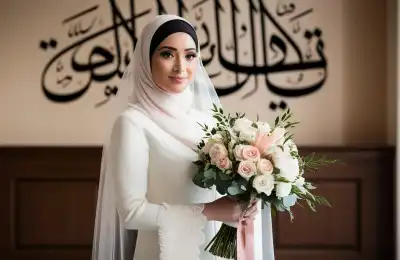
For brides, attire can range from a classic white gown to richly embroidered traditional dress in colours such as red, gold, green, or deep blue. In South Asian communities, heavily embellished lehengas or shararas are common. In Arab cultures, elegant gowns with intricate detailing are often chosen. Despite these differences, bridal outfits typically offer full coverage while maintaining a sense of refinement.
Grooms may wear tailored suits, traditional thobes, sherwanis, or other formal attire linked to their cultural background. The choice often reflects a blend of faith and family tradition.
Guests are also encouraged to dress modestly; outfits that cover shoulders and knees are generally appropriate. Bright colours and celebratory styles are often welcomed at receptions, as long as they remain respectful, and in mosque settings, women may choose to wear a headscarf out of respect.
7. Simplicity and Spiritual Purpose
Although many Muslim weddings are visually impressive and culturally elaborate, Islamic teachings encourage simplicity in marriage. The Prophet Muhammad is reported to have spoken positively about keeping weddings modest and avoiding unnecessary extravagance.
The Muslim marriage ceremony is straightforward. It requires consent, witnesses, the Mahr, and a public announcement. Everything beyond this is cultural expression rather than religious obligation.
This emphasis on simplicity reminds couples that the true purpose of marriage is not performance or display, but partnership and faith. The Nikah can be conducted in a small room with only a few people present, and it remains equally valid and meaningful. Celebrations are welcomed, joy is encouraged, and hospitality is valued, but the spiritual intention behind the marriage remains the priority.
Recommended for you!
Best Sellers







Frequently Asked Questions
Do Muslims exchange wedding rings?
Wedding rings are not a religious requirement in Islam, but many couples choose to exchange them as part of cultural or personal preference. Some exchange rings during the Nikah, while others do so at the reception. There’s no fixed rule about which hand the ring should be worn on, as this varies by culture and family tradition.
Do Muslims have bridesmaids and groomsmen?
Bridesmaids and groomsmen are not part of the religious requirements of an Islamic marriage ceremony. However, many Muslim weddings, especially in the UK, include bridal parties. Coordinated outfits, group photographs, and formal entrances have become common in modern celebrations while still respecting modesty and cultural values.
Can the bride keep her own surname?
In Islamic tradition, a woman retains her own family name after marriage. Changing a surname is not a religious requirement. This reflects the emphasis on maintaining personal identity within Islamic marriage customs.
Are Muslim weddings always arranged?
Arranged introductions are common in some cultures, but they’re not a requirement of Islam. Even when families help introduce potential partners, the final decision must be made freely by the bride and groom. Consent remains essential for a valid marriage.
Are Muslim weddings alcohol-free?
Many Muslim weddings don’t serve alcohol, as drinking is prohibited in Islam. Instead, celebrations often focus on food, sweets, tea, and non-alcoholic drinks. The atmosphere remains lively and joyful without alcohol.
Study Our Wedding Planner Business Diploma for £29
If you’re inspired by the structure, symbolism, and beauty of Islamic weddings, you may enjoy developing professional skills in this field. You can enrol in the Wedding Planner Business Diploma Course for just £29.
If you would also like to join our learning community, unlock exclusive discounts, and receive expert tips, you can sign up for our mailing list.