Whether you're a lifelong fan of Doctor Who or inspired by the imaginative landscapes of Dune, writing science fiction allows you to explore big ideas through storytelling. If you're curious about how to write a sci-fi novel, this blog post is here to help you shape your ideas into a structured, engaging story. We’ll walk you through the key components of crafting your own science fiction story, from generating ideas to building a believable world and creating memorable characters.
Jump to:
Recommended for you!
Best Sellers







What Is a Science Fiction Story?
A science fiction story is a type of narrative that explores speculative concepts often grounded in science, technology, or futuristic possibilities. The definition of science fiction literature varies, but it’s centred around the question of “what if?” What if we could live on Mars? What if robots developed emotions? What if time travel were possible?
The meaning of science fiction is about exploring human responses to change, advancement, and the unknown. These stories often serve as mirrors to our society, offering social commentary in imaginative settings.
11 Steps to Writing a Bestselling Sci-Fi Novel
Step 1: Choose a Big ‘What If?’ Idea
Most science fiction stories begin with a single compelling question: What if? That question might relate to technology, the environment, space, artificial intelligence, or something entirely speculative. Interesting science fiction ideas might include:
- What if humans could upload their consciousness into machines?
- What if time travel was used to rewrite history? Who would control it?
- What if Earth was ruled by an alien species, but they were peaceful?
Step 2: Focus on a Specific Conflict or Theme
Once you’ve chosen a core idea, consider how it plays out in your story. Focus on the characters and conflicts that arise within this imagined world. For instance, a story about cloning might centre on identity and ethics, while a tale about a post-apocalyptic Earth could explore survival and human resilience.
Try to define a clear goal or dilemma for your protagonist. Are they rebelling against an unjust system? Racing to stop a technological disaster? Wrestling with the implications of a scientific discovery? A well-chosen conflict adds depth and gives readers something to care about.
Science fiction is a versatile genre. Some stories are intimate and character-driven, while others tackle large-scale social or political change. Both approaches are valid—what matters is that the emotional stakes are clear.
Step 3: Establish the Rules of Your World
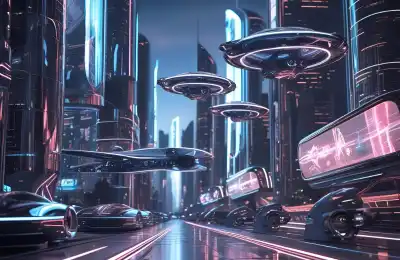
Your story may take place in the future, on another planet, or in a slightly altered version of Earth. But no matter the setting, readers need to understand how your world works. Think through:
- What kind of technology exists?
- What has changed socially or politically?
- Are there new laws, species, or scientific rules?
Your science fiction setting doesn’t need to be explained all at once. Instead, reveal details naturally through dialogue, observation, or action. The more consistent your world is, the more believable your science fiction becomes.
Step 4: Create Characters That Belong in This World
Characters in science fiction should feel grounded in the world you’ve created. Their beliefs, fears, and goals should reflect the culture, technology, and history of their environment.
Think about how your protagonist’s experiences have shaped them. Someone raised in a surveillance-heavy society might be secretive or suspicious, while a character living on a space station might struggle with isolation or yearn for freedom.
Diverse character types work well in science fiction: engineers, rebels, scientists, leaders, explorers, and more. Even non-human characters, such as aliens or sentient machines, can work as long as they serve the story and feel believable. The key is to ensure your characters’ actions make sense given the society and science around them.
Step 5: Develop a Clear and Strong Plot
A good plot drives your story forward. It should centre around a conflict or challenge that your characters must overcome. Structure your plot around these basic stages:
- Beginning: Introduce the setting, main character, and core problem.
- Middle: Raise the stakes and introduce complications.
- Climax: Your character faces their greatest test.
- Ending: Resolve the conflict in a satisfying way.
Ask yourself: How do events challenge the character? What changes by the end of the story?
Step 6: Focus on One Core Scientific Element
Science fiction doesn’t need to explain every scientific breakthrough. Instead, choose one core scientific idea and build your story around it. This could be a piece of futuristic tech, a change in society, or a scientific discovery.
You don’t have to be an expert, just consistent. If you’re exploring time travel, establish how it works and what rules govern it. If your story involves genetic engineering, consider who controls it and why.
This technique grounds your science fiction writing and keeps the reader engaged without overwhelming them with complex theory.
Step 7: Start Your Story with Intrigue or Action
Begin your story in a way that immediately pulls the reader in. Here are three strong ways to start:
- With action: An experiment explodes, a spacecraft crashes, or AI shuts down a city.
- With mystery: A character wakes up with no memory in a high-tech facility.
- With conflict: Two characters argue over the ethics of a dangerous mission.
Avoid front-loading with too much information. Introduce your science fiction setting gradually, through your character’s experiences and decisions.
Step 8: Decide on Your Tone and Style
Science fiction ranges from thoughtful and philosophical to wild and fast-paced. Your tone should match your themes and plot. Here are some common subtypes:
- Hard sci-fi: Heavily grounded in real science (e.g. The Martian)
- Soft sci-fi: More character-focused, looser with science (e.g. Brave New World)
- Speculative fiction: Often overlaps with sci-fi but includes alternate histories or future predictions (e.g. The Handmaid’s Tale)
Choose a tone that suits your concept and target audience.
Step 9: Edit and Strengthen Your Story

Once your first draft is complete, take time to revise. Look for plot holes, inconsistencies in world-building, and character development issues. Ensure that any subplots align with the overall story, and that your science fiction elements are clearly explained and nicely integrated.
Pay attention to the flow of your chapters and pacing. If you're writing a full novel, chapter lengths typically fall between 1,500 and 5,000 words, but there’s flexibility based on the story’s rhythm.
If you're unsure how long your story should be, science fiction novels usually run between 70,000 and 100,000 words, enough to develop the world and explore complex ideas, while keeping the reader engaged.
Step 10: Read and Learn From the Masters
Understanding what makes a good sci-fi novel often comes from reading great ones. Notable titles include:
- Dune by Frank Herbert
- 1984 by George Orwell
- The Left Hand of Darkness by Ursula K. Le Guin
- Foundation by Isaac Asimov
The “big three” sci-fi writers—Asimov, Heinlein, and Clarke—helped define the genre. H.G. Wells is often called the father of science fiction, while Jules Verne pioneered early science fiction storytelling. Stephen King has written science fiction too, including The Institute and 11/22/63.
Step 11: Keep Practising and Exploring
Every writer starts somewhere. Your first science fiction story might not be perfect, but with each attempt, you’ll develop your voice, improve your technique, and discover new ideas. Many well-known authors began by writing short stories or self-publishing before gaining recognition.
Keep writing, keep experimenting, and trust your ideas. The best science fiction challenges both the writer and the reader to think differently, and that’s exactly what makes it so powerful.
Recommended for you!
Best SellersFrequently Asked Questions
What qualifies a book as science fiction?
A science fiction book typically explores imaginative concepts based on science, technology, or the future. While the plot might include time travel, AI, or space exploration, what really qualifies it as sci-fi is how it uses those ideas to examine change, often through a social, ethical, or emotional lens.
Is science fiction difficult to write?
Writing science fiction can be a challenge, as you’re creating a speculative world that makes sense. However, the more you write and read within the genre, the easier it becomes. Focusing on one clear concept and building logically from it is a good way to start.
What is considered the hardest type of sci-fi to write?
Hard science fiction is generally seen as the most difficult to write because it relies on accurate, realistic science. Writers often need to research existing theories and technologies to ensure plausibility. It's rewarding but can be demanding in terms of precision.
How do you tell if a book is science fiction rather than fantasy?
Science fiction is usually based on scientific principles, even if they’re speculative. Fantasy, on the other hand, relies on magic, mythology, or supernatural forces. If a story’s foundation is rooted in possible science or imagined technological developments, it’s likely sci-fi.
Why do authors write science fiction?
Writers are often drawn to science fiction because it allows them to explore questions about the future, society, identity, and ethics. It’s a space for creativity, experimentation, and commentary on real-world issues, often through the lens of a fictional world.
Is Star Wars considered hard or soft sci-fi?
Star Wars is typically classified as soft science fiction, or even science fantasy. The focus is on mythic storytelling, characters, and epic battles rather than scientific accuracy or realism, which are the hallmarks of hard sci-fi.
What is the oldest known science fiction story?
Frankenstein by Mary Shelley, published in 1818, is widely considered the first true science fiction novel. It combines speculative science with deep ethical questions, setting the tone for what the genre would become.
How much money do science fiction authors typically earn?
Some sci-fi authors make a part-time income through self-publishing or short stories, while others land traditional publishing deals that bring in more. Earnings can also grow through series, film rights, or adaptations, but most writers begin by building a dedicated audience over time.
Study Our Novel Writing Diploma for £29
If you’re ready to take your storytelling further, the Novel Writing Diploma Course at Centre of Excellence is the perfect next step. The course is designed for writers of all levels and covers every stage of writing a novel, from initial idea to final polish. For a limited time, you can enrol for a discounted price of £29!