Have you ever noticed your cat meowing or yowling after finishing their food? Many cat owners have, and they find this behaviour puzzling; after all, you’d think that after a satisfying meal, your cat would settle down for a nap rather than start talking! Understanding why your cat meows after eating can tell you a lot about their emotions, health, and habits. Some cats are simply vocal, while others may be trying to communicate something more specific.
This article helps you explore the common reasons behind this behaviour, from attention-seeking to possible health concerns, and guides you on how to respond.
Jump to:
- 1. They’re Expressing Contentment
- 2. They Want Your Attention
- 3. They’re Asking for More Food
- 4. They’re Reinforcing Their Routine
- 5. They’re Experiencing Discomfort or Pain
- 6. They’re Marking Territory Through Sound
- 7. Anxiety or Stress
- 8. They’re Just Being Talkative!
- How to Respond When Your Cat Meows After Eating
- When to See a Vet
- Study Feline Behaviour and Psychology for £29
1. They’re Expressing Contentment
Just as some people hum after a good meal, cats might meow simply because they’re happy and relaxed. Eating satisfies both hunger and instinct, so that post-dinner meow could be a way of saying, “That was delicious!”
Some cats are naturally more vocal than others. If your cat meows softly and seems calm, it’s probably nothing to worry about. You might even notice other signs of contentment, like purring, rubbing against furniture, wanting a fuss, or stretching out nearby.
2. They Want Your Attention
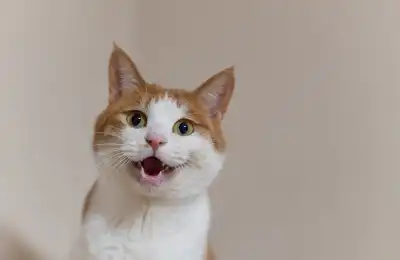
Cats are clever creatures. If they’ve noticed that meowing after a meal gets you to stroke them or give them treats, they’ll likely do it again.
This behaviour can become part of their routine, especially if you usually interact with them right after feeding time. In these cases, your cat isn’t unhappy; they’ve simply learned that this is a good time to connect with you.
If your cat is an affectionate type, they might just be seeking a bit of post-meal companionship. Try spending a few minutes with them after feeding. Gentle strokes or playtime can satisfy their need for attention and reduce the meowing.
3. They’re Asking for More Food
Sometimes, a cat cries after eating because they’re still hungry or unsatisfied. Cats who eat too quickly may not immediately feel full, leading them to ask for more.
If your cat finishes their food quickly and then starts meowing at you or near their bowl, consider whether they’re getting enough to eat or if the food meets their nutritional needs. Try:
- Splitting their meals into smaller, more frequent portions.
- Feeding them a balanced diet that matches their age, weight, and activity level.
- Using puzzle feeders to slow them down and make mealtime more stimulating.
4. They’re Reinforcing Their Routine
Cats are creatures of habit. They like predictability, and many have strong feeding routines. If your cat meows after eating, it might simply be part of their ritual – a sort of “announcement” that the meal is over.
For some cats, this routine can even mimic natural behaviour. In the wild, cats often vocalise after eating as part of communicating with their group. Your cat might be displaying a similar instinct, signalling to you, their human “family member,” that they’ve finished eating and are ready for what comes next, whether that’s playtime, a nap, or cuddles.
5. They’re Experiencing Discomfort or Pain
If your cat’s meowing seems distressed or unusual, especially if it’s loud, prolonged, or accompanied by other behavioural changes, it could indicate that they’re uncomfortable. Sometimes, cats yowl after eating because of pain in their mouth or digestive system.
Common issues include:
- Dental pain or gum disease – makes chewing uncomfortable.
- Gastrointestinal issues – such as acid reflux, constipation, and food sensitivities.
- Nausea – which can cause yowling or pacing after meals.
If your cat’s vocalisations are new or paired with symptoms like drooling, loss of appetite, vomiting, and weight loss, it’s important to contact your vet. Cats are experts at hiding pain, and meowing might be one of the few signs that something’s wrong.
6. They’re Marking Territory Through Sound
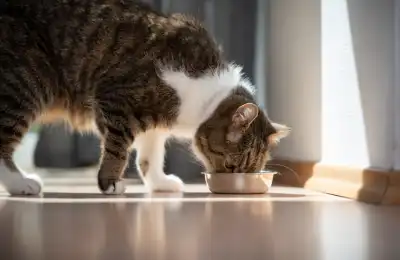
Another interesting reason your cat meows after eating could be related to territory. Cats use scent and sound to mark what they perceive as theirs. After eating, they might vocalise to claim the area, particularly if you have more than one cat in the household.
This behaviour is more common in confident or dominant cats, and it’s their way of saying, “This is my spot.” As long as the tone of their meow isn’t aggressive or anxious, it’s usually harmless.
7. Anxiety or Stress
Sometimes, cats yowl after eating because they’re feeling anxious or unsettled. Stress can be caused by:
- Changes in routine.
- A new pet or person in the home.
- Feeding area disturbances (e.g. loud noises, busy spots).
- Competition over food in multi-cat homes.
If the behaviour coincides with a recent change, try creating a calm and consistent environment. Feed your cat in a quiet, safe spot where they feel secure. You can also try calming pheromone diffusers or slow, reassuring interaction after mealtimes.
8. They’re Just Being Talkative!
Some cats are simply chatty by nature. Breeds like Siamese, Burmese, and Oriental Shorthairs are known for their talkative personalities. These cats use meows to express themselves in many situations, including before, during, and after eating.
If your cat’s post-meal meowing fits their usual behaviour and they seem healthy and happy otherwise, it’s likely nothing to worry about. It’s just part of their personality shining through.
How to Respond When Your Cat Meows After Eating
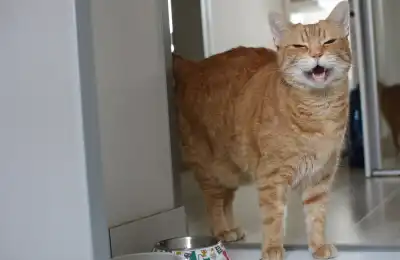
If your cat meows after eating, take a moment to observe their body language and routine. Understanding the context will help you decide whether it’s harmless or something that needs attention. Here are some tips:
- Don’t ignore sudden changes. If the behaviour is new or accompanied by distress, seek veterinary advice.
- Avoid reinforcing attention-seeking meows unless you’re sure that’s what they want. Otherwise, your cat may learn that loud meowing gets results every time.
- Create a calm feeding space. Cats prefer peaceful mealtimes. Avoid feeding them near noisy appliances or in busy rooms.
- Keep to a routine. Cats feel secure when feeding times are predictable.
- Enrich their environment. Playtime and interactive toys can reduce boredom-related vocalisation.
When to See a Vet
It’s always best to be cautious when it comes to your cat’s health. You should contact your vet if the meowing after eating is loud, distressed, or noticeably different from your cat’s usual behaviour. It’s also important to seek advice if your cat shows any signs of pain, drooling, vomiting, or loss of appetite, or if there are visible changes in their weight or behaviour.
For older cats, frequent or confused yowling after meals can sometimes indicate an underlying health issue. Your vet may recommend a physical examination to identify the cause and ensure your cat gets the right care.
Recommended for you!
Best Sellers





Study Feline Behaviour and Psychology for £29
If you’d like to understand your cat’s emotions and behaviour on a deeper level, our Feline Behaviour and Psychology Diploma Course is the perfect next step. You’ll learn how cats communicate and interact with their environment, and how to support their emotional wellbeing. Right now, you can access the course for a discounted price of just £29!