If you’ve ever caught your cat nibbling on a plastic bag or chewing a bit of packaging, you might be wondering about the reason behind it.
Whether your cat licks, chews, or even swallows plastic, understanding why this happens can help you keep them safe and happy. In this article, we’ll explore the reasons behind cats eating plastic, as well as the potential dangers and what you can do to stop it.
Jump to:
- Why Do Cats Like to Eat Plastic?
- What Does It Mean When My Cat Eats Plastic?
- Why Does My Cat Lick Plastic Bags?
- Is It Bad if My Cat Licks Plastic?
- Can Cats’ Stomachs Digest Plastic?
- Is It Okay to Let My Cat Chew on Plastic?
- How Do I Stop My Cat from Eating Plastic?
- Frequently Asked Questions
- Study Feline Behaviour and Psychology for £29
Why Do Cats Like to Eat Plastic?
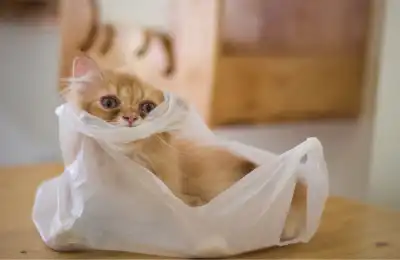
Before you panic, know that this behaviour is surprisingly common. There are several possible reasons behind this strange attraction.
The texture and sound appeal to cats
Many cats are drawn to the crinkly texture and noise of plastic bags. To them, it might sound like rustling prey or feel fun to bite and chew. The sensation of their teeth sinking into plastic can be oddly satisfying, similar to how some cats enjoy chewing on cardboard or wool.
Plastic smells interesting
Plastic bags often carry lingering scents from food or even the manufacturing process itself. A cat’s sense of smell is far more sensitive than ours, so they might detect something appealing that we can’t. Even an empty shopping bag could smell faintly of meat, fish, or dairy, prompting your cat to lick and chew it.
Stress, boredom, or attention-seeking
A cat chewing plastic may be anxious, bored, or simply trying to get your attention. If your cat chews on plastic bags when you’re around, they may have learned that it’s a reliable way to get a reaction from you. Similarly, a bored cat might chew plastic out of frustration or as a way to entertain themselves.
A condition called pica
If your cat regularly eats or chews on non-food items, such as plastic, fabric, paper, and soil, they may have a condition known as pica. This can be linked to nutritional deficiencies or underlying health issues such as anaemia or thyroid problems. If your cat frequently eats plastic, it’s worth discussing this behaviour with your vet to rule out medical causes.
What Does It Mean When My Cat Eats Plastic?
In most cases, a cat eating or licking plastic isn’t a sign of something serious, but it does indicate that something about the material appeals to them. However, it’s important to pay attention to patterns.
If your cat only occasionally licks or chews plastic, it may be a harmless habit. But if your cat swallows plastic or seems obsessed with finding and chewing it, that’s more concerning. Regularly eating or chewing plastic can be dangerous, especially if pieces are ingested.
Why Does My Cat Lick Plastic Bags?
Licking plastic bags might seem odd, but there are a few possible explanations:
- Scent transfer – Some plastic bags are made from materials containing animal fats or other compounds that smell appealing to cats.
- Cool texture – Plastic feels smooth and cool, which might be pleasant for cats to lick.
- Exploration – Cats often use their tongues to explore new textures and tastes.
Is It Bad if My Cat Licks Plastic?
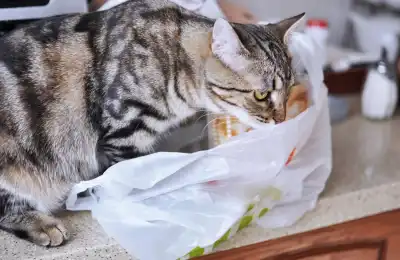
Licking plastic isn’t necessarily harmful by itself, but it depends on the type of plastic and how often it happens. Some plastics are coated with chemicals or dyes that could irritate your cat’s mouth or stomach. There’s also a risk of bacteria if the plastic comes from rubbish or food packaging.
If your cat licks plastic occasionally, try to monitor the behaviour and keep harmful plastics out of reach. If it becomes frequent, it might be worth finding safer ways to satisfy their curiosity.
Can Cats’ Stomachs Digest Plastic?
Cats’ stomachs cannot digest plastic. If your cat has swallowed plastic, it can pass through the digestive system undigested, but sometimes it gets stuck. This can cause a blockage, which is a serious medical emergency. Signs of a blockage include:
- Vomiting or retching
- Loss of appetite
- Constipation or difficulty passing stools
- Lethargy
- Hiding or showing signs of pain
If you suspect your cat has ingested plastic and is showing any of these symptoms, contact your vet immediately. Even a small piece can cause harm if it becomes lodged in the intestines.
Vets often use imaging tests, like X-rays or ultrasounds, to locate the blockage. In severe cases, surgery might be needed to remove it. That’s why it’s so important to stop the behaviour early and prevent access to plastic items.
Is It Okay to Let My Cat Chew on Plastic?
It’s never a good idea to let your cat chew on plastic, even if they seem to enjoy it. While some cats may never swallow it, others might accidentally ingest small bits without you noticing. Even a tiny fragment can cause irritation and internal damage.
How Do I Stop My Cat from Eating Plastic?
If you’re wondering how to stop your cat from eating plastic, here are some practical steps you can take:
1. Remove temptation
Keep plastic bags, wrappers, and packaging materials out of reach. Store shopping bags in cupboards and avoid leaving packaging on the floor.
2. Offer safer alternatives
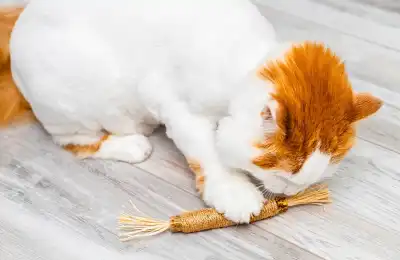
Give your cat chew-safe toys and encourage play that satisfies their hunting instincts. Toys that make noise or mimic prey movement can be great replacements for plastic.
3. Enrich their environment
A bored cat is more likely to seek stimulation in unsafe ways. Add climbing posts, puzzle feeders, scratching trees, and new toys to keep your cat mentally and physically active.
4. Check for stress
Cats sometimes eat or chew plastic as a way to self-soothe. Try to identify sources of anxiety, like changes in routine, new pets, moving house, or lack of attention, and address them gently.
5. Talk to your vet
If your cat’s habit persists or they’ve already eaten plastic, consult your vet. They can check for medical issues and advise on behavioural strategies or dietary supplements.
Frequently Asked Questions
Do Cats Eat Plastic When Bored?
Boredom can definitely be a factor. Cats need mental and physical stimulation, and if they don’t get enough, they may develop strange habits like chewing plastic, fussy eating, scratching furniture, and overgrooming.
What Is It Called When Cats Eat Plastic?
The behaviour of eating or chewing on non-food items, including plastic, is known as pica. This isn’t unique to cats; dogs and even people can have pica too. In cats, it can stem from stress, dietary deficiencies, medical conditions, or simply learned behaviour.
Why Do Cats Like Bags?
Cats’ fascination with bags of all kinds comes down to their natural instincts and curiosity. Bags are crinkly and sometimes smell of food. They provide dark enclosed spaces that cats find comforting and fun to explore.
Should I Be Worried If My Cat Licks Plastic?
If your cat occasionally sniffs or licks plastic, it’s not necessarily a cause for panic, but it’s worth keeping an eye on. However, if your cat eats, chews, or swallows plastic regularly, or shows signs of distress, it’s time to take action.
Recommended for you!
Best Sellers






Study Feline Behaviour and Psychology for £29
If you’re fascinated by why cats act the way they do, from strange habits like chewing plastic to complex emotional cues, you’ll love learning more about feline psychology. Our Feline Behaviour and Psychology Diploma Course offers in-depth insight into the minds of cats, helping you understand their instincts and needs. Enrol today for just £29!