The difference between astrology and astronomy trips up a lot of people, and it's easy to see why; the words look almost identical and both involve studying the sky. But these two fields are fundamentally different in their methods, purpose, and standing in the scientific world. This guide breaks down exactly what separates them, where they overlap historically, and how to tell them apart for good.
What's in this Guide?
This post covers the key differences between astrology and astronomy, their shared history, whether astrology counts as a science, and what it takes to work in either field. We'll also look at common points of confusion, like the Ophiuchus debate and what NASA has actually said about the zodiac.
Jump to:
- What is the Main Difference Between Astrology and Astronomy?
- What Do Astronomers and Astrologers Actually Study?
- Which Came First, Astrology or Astronomy?
- Is Astrology a Science?
- Can You Be Both an Astronomer and an Astrologer?
- Astrology vs Astronomy as a Career
- Did NASA Really Change the Zodiac?
- Frequently Asked Questions About Astrology vs Astronomy
- Study Astrology or Astronomy for £29
What is the Main Difference Between Astrology and Astronomy?
Astronomy uses observation, mathematics, and the scientific method to understand stars, planets, galaxies, and the physical laws that govern the universe. Astrology uses the same celestial positions, but interprets them symbolically, believing that where the sun, moon, and planets were positioned at a particular moment, such as your birth, shapes your character and life events.
Astronomy asks, "What is out there and how does it work?", while astrology asks, "What does it mean for me?" One is empirical and testable; the other is symbolic and interpretive. Understanding this distinction clears up most of the confusion people have when these two words get used interchangeably.
What Do Astronomers and Astrologers Actually Study?
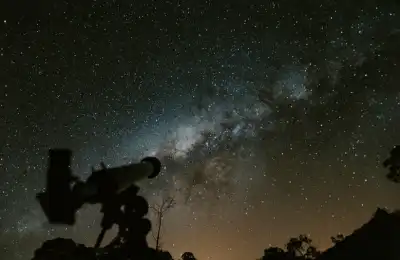
Astronomers study the physical universe using telescopes, spacecraft, mathematical models, and physics. Their work includes:
- Observing and measuring constellations, planets, moons, comets, and galaxies
- Studying the formation and evolution of the universe
- Researching phenomena like black holes, supernovae, and gravitational waves
- Developing and testing theories about the physical laws of the cosmos
- Searching for exoplanets and signs of life beyond Earth
Astrologers, by contrast, study the symbolic relationships between celestial positions and human life. Their work typically includes:
- Calculating birth charts based on the exact time, date, and location of a person's birth
- Interpreting the meaning of planetary placements, signs, and houses
- Tracking planetary movements (transits) and what they might mean for current events or personal experiences
- Offering guidance on relationships, career, and personal growth based on astrological interpretation
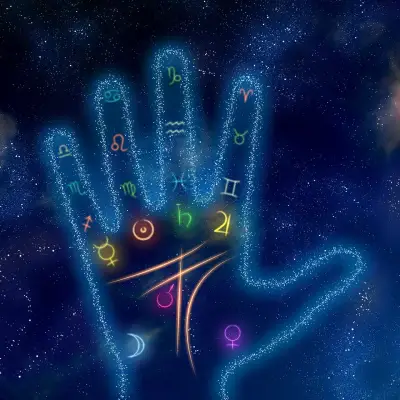
- Studying the history and symbolism of the zodiac and planetary archetypes, often using the symbols and glyphs that act as shorthand for charts and readings
Both fields require genuine study and skill, but the underlying methodology and the kind of "knowledge" each produces are entirely different.
Which Came First, Astrology or Astronomy?
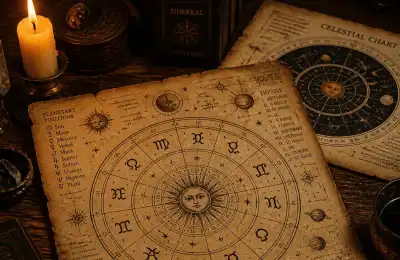
Historically, astrology and astronomy were not separate disciplines at all; they emerged together as one practice for thousands of years. Ancient civilisations, including the Babylonians, Egyptians, and Greeks, tracked the movements of celestial bodies for both practical purposes (calendars, navigation, agriculture) and symbolic ones (omens, divination, and personal destiny).
The Babylonians are often credited with developing the earliest systematic zodiac around the 2nd millennium BCE, using their detailed astronomical observations to also inform astrological predictions. For most of human history, the astronomer and the astrologer were the same person; figures like Ptolemy, Kepler, and Galileo all engaged seriously with astrology alongside their astronomical work, since the two weren't considered separate disciplines in their time.
The split between astrology and astronomy began in earnest during the Scientific Revolution of the 16th and 17th centuries. As the scientific method developed and astronomy became increasingly based on observation, mathematics, and testable predictions, astrology was gradually separated out as a non-scientific, symbolic practice. By the 18th and 19th centuries, the two had firmly diverged into the distinct fields we recognise today.
Is Astrology a Science?
This is one of the most searched questions in this space, and the scientific consensus is clear: astrology is not considered a science. The reasons astrology isn't classified as science include:
- No mechanism: there's no established physical mechanism by which the position of distant planets could influence human personality or events.
- Lack of predictive accuracy: scientific studies testing astrological predictions, including birth chart matching and personality assessments, have consistently failed to find statistically significant support.
- Unfalsifiability: astrological claims are often broad and flexible enough that they can't be definitively proven false, which goes against a core requirement of scientific theories.
- No peer-reviewed evidence base: astrology lacks the rigorous, repeatable, peer-reviewed research that underpins recognised scientific fields.
That said, it's worth noting that many people find genuine personal value in astrology, whether as a framework for self-reflection, a shared language for discussing personality, or simply an enjoyable cultural tradition. Its value as a tool for introspection doesn't require it to meet the criteria of a science, and many enthusiasts approach it more as a symbolic or spiritual practice than an empirical one.
Can You Be Both an Astronomer and an Astrologer?
Technically, yes; nothing prevents a person from studying both fields, and historically many notable figures did exactly that. However, in the modern professional world, the two are treated as entirely separate pursuits with very different training, qualifications, and professional communities.
A professional astronomer typically holds a university degree in physics or astrophysics, often up to PhD level, and works within the scientific research community, governed by peer review and the scientific method. A professional astrologer typically trains through dedicated astrology courses or apprenticeships, focused on chart interpretation, the meaning of each astrological planet, and the history of the practice.
Most working astronomers today don't practise or endorse astrology professionally, given the lack of scientific basis. However, there's no rule against someone pursuing astronomy as a career while maintaining a personal interest in astrology, or vice versa; they simply operate as separate areas of knowledge and practice.
Astrology vs Astronomy as a Career
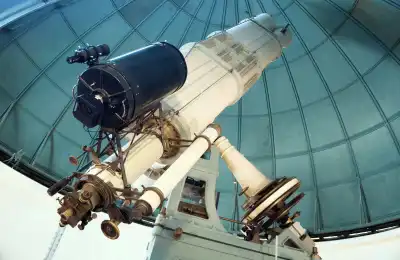
If you're trying to decide between astrology and astronomy as a path to pursue, it helps to understand how different the career routes actually are.
- Becoming an astronomer typically requires a university degree in physics, astrophysics, or a related field, often followed by a PhD for research positions. Astronomy careers are usually found within universities, research institutions, government space agencies, or observatories. Astronomer salaries in established research or academic roles tend to be competitive, though entry-level and early-career positions, like many scientific research roles, can be modest relative to the years of training required.
- Becoming an astrologer typically involves studying astrology through dedicated courses, certifications, or diplomas rather than a university physics degree. Many professional astrologers build private practices, offering chart readings, consultations, and written interpretations. An astrologer's income varies widely depending on reputation, client base, and whether it's pursued full-time or alongside other work; there's no standardised salary structure as there is for academic astronomy roles.
Neither path is inherently "better" as a career, but they require very different educational routes and operate within very different professional ecosystems.
Did NASA Really Change the Zodiac?
NASA did not change the zodiac or add a 13th sign. What actually happened is that NASA published an educational blog post explaining that the sun's apparent path actually moves through 13 constellations, not 12, including Ophiuchus, the "serpent bearer." This isn't new information; astronomers have known this for a very long time, since the boundaries of constellations don't align neatly with the 12 equal segments used in Western astrology.
The confusion arises because Western astrology uses a tropical zodiac, based on fixed 30-degree segments of the sky relative to the seasons, rather than the actual, irregularly-sized constellations themselves. This is the same system that underpins concepts like cardinal, fixed, and mutable signs, which divide the zodiac year into its recognisable astrological seasons.
NASA's post was explaining basic astronomical fact about constellations, not making a statement about astrology, which operates on entirely different principles. Western astrologers have not adopted Ophiuchus as an official 13th sign, and the traditional 12-sign zodiac remains the standard in mainstream astrology.
If you're curious about the actual constellations behind the zodiac signs, our guide to the 12 zodiac constellations explores their astronomical origins in more detail.
Recommended for you!
Best Sellers





Frequently Asked Questions About Astrology vs Astronomy
Is there any science behind astrology?
There is genuine astronomical science behind the calculation of planetary positions used in astrology; the maths involved in plotting a birth chart is accurate and based on real celestial mechanics. However, the interpretive leap from "the sun was in this position" to "this means you are a confident, outgoing person" has no established scientific mechanism or evidence base.
What do scientists think about astrology?
The overwhelming scientific consensus is that astrology has no demonstrated predictive validity and does not meet the criteria of a science. Numerous studies, including large-scale ones, have failed to find a statistically significant link between astrological predictions and real-world outcomes or personality traits.
How is astrology different from astronomy in terms of tools used?
Astronomers use telescopes, spectrometers, satellites, and complex mathematical and computational models to observe and measure the universe. Astrologers typically use birth charts, ephemeris tables (records of planetary positions), and astrological software to calculate placements across the astrological houses, as well as the sun, moon, and rising signs that make up a person's full chart.
Did astronomy come from astrology?
It's more accurate to say that astrology and astronomy emerged together from the same ancient practice of sky observation, rather than one coming directly from the other. Ancient astronomers tracked the sky for both practical and symbolic purposes; the two only became distinct disciplines much later, during the Scientific Revolution.
Are astrology and astronomy against religion?
This varies considerably by faith tradition and individual belief. Astronomy is broadly compatible with most religious frameworks, as it concerns the physical study of the universe. Astrology's relationship with religion is more complex; some traditions, including certain interpretations within Christianity, Judaism, and Islam, have historically viewed astrology with caution or outright prohibition, often on the grounds that it implies the future is fixed by celestial forces rather than divine will or free choice. Other spiritual traditions integrate astrology comfortably alongside religious practice.
Can you believe in astrology and still trust science?
Many people hold both perspectives simultaneously, using astrology as a personal or reflective tool while fully accepting the scientific consensus that it isn't empirically validated. This isn't necessarily contradictory; plenty of cultural practices, traditions, and belief systems exist that people value for personal or symbolic reasons without claiming scientific status for them.
Study Astrology or Astronomy for £29
Whether you're drawn to the symbolic, personal side of the sky or the science and mechanics behind it, Centre of Excellence has a course for you. The Astrology Diploma Course covers zodiac signs, birth charts, and planetary meanings, while the Astronomy Diploma Course explores the universe through a scientific lens, from stars and planets to the latest discoveries in space. Both are available today for just £29.