The meaning of the Eye of Horus tattoo is rooted in one of the most enduring symbols from Ancient Egypt, representing protection, healing, and royal power. If you're considering an Eye of Horus tattoo, or you've seen one and wondered about the story behind it, this guide covers its symbolism, mythology, and design choices.
What's in this Guide?
This guide explains what an Eye of Horus tattoo represents, the myth behind the symbol, and how details like direction and design combinations can shape its meaning. You'll also find honest guidance on how it differs from the evil eye and the question of cultural appropriation.
Jump to:
- What Does an Eye of Horus Tattoo Symbolise?
- The Myth Behind the Eye of Horus
- Eye of Horus vs Evil Eye Tattoo: What's the Difference?
- Eye of Horus vs Eye of Ra: What's the Difference?
- Which Direction Should an Eye of Horus Tattoo Face?
- The Six Parts of the Eye of Horus
- Is an Eye of Horus Tattoo Cultural Appropriation?
- Eye of Horus Tattoo Meaning by Placement
- Frequently Asked Questions
- Study Symbology for £29
What Does an Eye of Horus Tattoo Symbolise?
An Eye of Horus tattoo represents protection, health, and royal power, drawing on one of Ancient Egypt's most significant deities. Also known as Wadjet or Udjat, the symbol was used throughout Egyptian history as a powerful protective amulet, believed to ward off harm and promote wellbeing for the person wearing it.
Beyond protection, people choose Eye of Horus tattoos for a range of reasons, including:
- Healing and restoration after a difficult period
- Wisdom and insight, since the eye represents perception and awareness
- A connection to Ancient Egyptian history and mythology
- Good fortune, given the symbol's long association with royal power
- Safe travel, historically used as a protective charm for journeys
So if you're wondering what an Eye of Horus tattoo represents, the answer usually comes down to a mix of protection and restored strength.
The Myth Behind the Eye of Horus
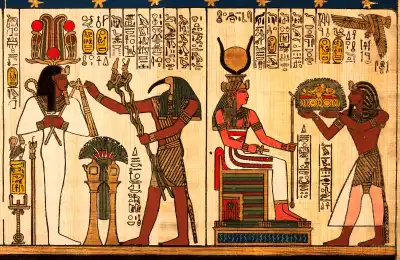
The symbol's meaning is rooted directly in Egyptian mythology. According to the story, Horus, the falcon-headed god, lost his eye during a battle with Set, the god associated with chaos and disorder, who had murdered Horus's father, Osiris. The eye was later healed and restored, either by the god Thoth or through Horus's own recovery, becoming a powerful symbol of healing, restoration, and triumph over hardship.
This myth is central to why the Eye of Horus became such an enduring symbol of protection and wellbeing throughout Ancient Egyptian culture, representing the idea that even after significant harm, healing and restoration are possible.
Eye of Horus vs Evil Eye Tattoo: What's the Difference?
These two symbols are sometimes confused, but they come from entirely different traditions. The Eye of Horus is specifically Ancient Egyptian, tied to the myth of Horus and representing protection through healing and restoration. The evil eye, by contrast, is a separate protective symbol found across Mediterranean, Middle Eastern, and South Asian cultures, typically represented as a blue and white eye-shaped charm believed to ward off envious or ill-intentioned glances specifically.
While both symbols share a general theme of protection through an eye motif, they carry distinct visual designs and come from unrelated cultural and mythological traditions, so it's worth being clear on which one you're actually drawn to before choosing a design.
Eye of Horus vs Eye of Ra: What's the Difference?
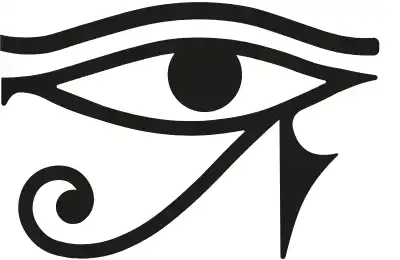
The Eye of Horus and the Eye of Ra are closely related but represent different deities and slightly different symbolism. The Eye of Horus, associated with the moon, represents healing, protection, and restoration following hardship. The Eye of Ra, associated with the sun, represents the destructive, protective power of the sun god Ra, often depicted as a more fierce, defensive force rather than one tied to healing specifically.
Visually, the two symbols can look very similar, and in some contexts, particularly in later Egyptian history, the two eyes became somewhat interchangeable in artwork. If the distinction matters to you, it's worth researching the specific design carefully with your tattoo artist to make sure you're getting the version you intend.
Which Direction Should an Eye of Horus Tattoo Face?
This is a genuinely debated detail, and there isn't one single, universally agreed answer. Some traditions associate the left eye specifically with Horus and the moon, while the right eye is more closely tied to Ra and the sun. Because of this, some people choose the left-facing version specifically to align with Horus and his connection to healing and restoration.
That said, historical Egyptian artwork isn't entirely consistent on this point, and many depictions of the Eye of Horus appear in both orientations throughout ancient sources. If the direction feels important to you, discussing it with a tattoo artist familiar with Egyptian symbolism is worth doing before your appointment.
The Six Parts of the Eye of Horus
One of the more fascinating aspects of the Eye of Horus is that each section of its design was historically associated with a specific fraction, together forming a system used in Ancient Egyptian measurement. Each part was also linked to one of the senses:
- The pupil – associated with sight
- The eyebrow – associated with thought
- The curved tail – associated with hearing
- The spiral beneath the eye – associated with smell
- The straight line – associated with taste
- The teardrop mark – associated with touch
Together, these six parts were believed to represent the full restoration of Horus's senses after his eye was healed, reinforcing the symbol's connection to wholeness and complete recovery.
Is an Eye of Horus Tattoo Cultural Appropriation?
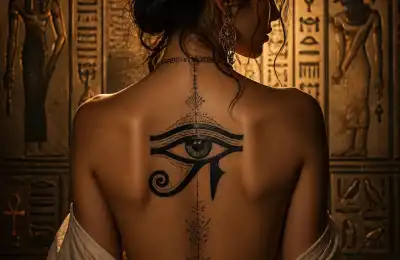
Because the Eye of Horus comes from Ancient Egyptian religion and mythology rather than a living, closed cultural practice today, it's generally viewed as a shared piece of ancient history rather than a symbol requiring the same level of caution as some other culturally specific tattoos. Ancient Egyptian symbolism has been widely studied, referenced, and adopted internationally for centuries.
That said, taking the time to understand the genuine meaning and mythology behind the symbol, rather than treating it as purely decorative, is a reasonable way to approach any historically significant design respectfully.
Eye of Horus Tattoo Meaning by Placement
Where you place an Eye of Horus tattoo can add another layer to its meaning. A forearm or wrist placement is visible and personal, often chosen to keep the symbol's protective meaning close to mind. A chest placement sits near the heart, frequently chosen for a design tied to healing or personal restoration.
A hand placement is bold and highly visible, while a smaller design near the eye itself is sometimes chosen, though it's worth being aware this placement can occasionally be mistaken for an unrelated symbol, such as a teardrop tattoo, so it's worth considering how the design will read at a glance.
Recommended for you!
Best Sellers





Frequently Asked Questions
Is an Eye of Horus Tattoo Good or Bad Luck?
The Eye of Horus is almost universally considered a positive, protective symbol in Egyptian tradition, associated with healing and warding off harm rather than bad luck.
What Does an Eye of Horus Tattoo Mean on a Woman?
Eye of Horus symbolism isn't gendered, so it carries the same meaning of protection and healing regardless of who wears it.
What Does an Eye of Horus and Ankh Tattoo Mean?
Combining the Eye of Horus with an ankh brings together protection with life and vitality, since the ankh represents life itself in Egyptian symbolism, making this pairing a popular choice for a design focused on protected, restored vitality.
What Does an Eye of Horus With a Pyramid Tattoo Mean?
Pairing the Eye of Horus with a pyramid emphasises its connection to Ancient Egyptian heritage more broadly, often chosen simply to strengthen the design's overall historical and cultural theme.
What Does an Eye of Horus and Scarab Tattoo Mean?
A scarab beetle paired with the Eye of Horus combines protection with rebirth and transformation, since the scarab was itself a significant symbol of renewal in Ancient Egyptian belief.
Can Christians Get an Eye of Horus Tattoo?
This is a personal decision, and views vary. Since the symbol comes from Ancient Egyptian polytheistic religion rather than any modern faith tradition, some Christians see no conflict in choosing it purely for its historical or protective symbolism, while others may prefer to avoid religious imagery from any tradition outside their own.
Is the Eye of Horus Tattoo Evil?
No, the Eye of Horus carries no association with evil or malevolence. It's rooted firmly in themes of protection, healing, and restoration within Ancient Egyptian mythology.
Study Symbology for £29
If Eye of Horus symbolism has struck a chord with you, our Symbology Diploma Course explores the meaning behind powerful symbols like this one in far more depth. For a limited time, you can enrol for just £29.