What is a soul in spirituality? It's a question that sits at the intersection of philosophy, religion, and lived human experience, and one that people have been wrestling with for thousands of years.
This guide explores the soul's meaning from multiple perspectives, from ancient philosophy to modern spiritual practice, and offers some ideas for how you might connect more deeply with your own.
What's in this Guide?
From the definition of the soul to the types recognised across traditions, and from where it's located to what happens after death, it's all covered below.
Jump to:
- What is the Definition of the Soul?
- Soul vs Spirit: What's the Difference?
- The Soul in Different World Religions
- What are the Types of Souls?
- Where is the Soul Located in the Body?
- Signs of a Tired or Wounded Soul
- How to Connect With Your Soul
- What Happens to the Soul After Death?
- Study Soul Plan Reading for £29
What is the Definition of the Soul?
The soul, in its broadest spiritual sense, is the non-physical essence of a person. It's the part of you that feels, loves, grows, and endures beyond the physical body. The definition of the soul varies depending on the tradition or framework you're working within, but most describe it as the animating, conscious element that makes you distinctly you.
In common usage, "soul" carries a sense of depth and authenticity. When someone says a piece of music has soul, or that a person is an old soul, they're pointing to something genuine, felt, and hard to put into words. The word itself has deep roots: from the Old English sāwol, connected to the ancient Greek psyche and Latin anima, all pointing to the idea of breath, life, and inner being.
Spiritually, the soul is often understood as:
- The immortal part of a person that existed before birth and continues after death
- The aspect of self that holds your purpose, lessons, and spiritual growth
- The bridge between your physical human experience and something greater, whether that's the divine, the universe, or your higher self.
Soul vs Spirit: What's the Difference?
This is one of the most common sources of confusion in spiritual conversations, and different traditions draw the line differently. In general:
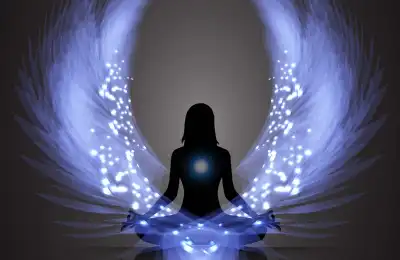
- The soul is often understood as the individual essence. It's the unique, personal part of you that accumulates experience, carries wounds and gifts from previous lives (in traditions that believe in reincarnation), and evolves over time.
- The spirit tends to refer to a more universal, unchanging energy. It's the divine spark or life force that connects all living things.
Some traditions treat soul and spirit as two distinct parts of the self, alongside the mind and body. Others use them interchangeably.
Soul vs Consciousness
The soul vs consciousness question is similarly nuanced: consciousness is generally seen as the awareness you have of your experience, while the soul is more the repository of who you are across time.
Soul vs Ego
The soul and the ego are often presented as working in tension with each other in spiritual practice. The ego is your sense of self as shaped by the external world: your identity, defences, and conditioned responses. The soul is the deeper, truer self beneath all of that. Many spiritual traditions describe growth as the journey of learning to hear the soul's quiet guidance over the ego's louder demands.
The Soul in Different World Religions
One of the most fascinating things about exploring the soul is how consistently the concept appears across very different cultures and belief systems, each with their own distinct understanding.
What Does the Bible Say About the Soul?
In Christian and Jewish traditions, the soul is the immortal part of a person created by God. Catholic teaching on the soul holds that each person possesses an individual soul that will face judgement after death, while the Jewish view of the soul (neshama) is more complex, encompassing multiple levels of spiritual being.
What is the Soul in Islam?
In Islam, the soul (ruh) is blown into the body by God and returns to Him at death. It's considered a divine trust, and the Quran speaks of the soul as a mystery known fully only to God.
What is the Soul (Atman) in Hinduism?
Hinduism teaches that the individual soul (atman) is identical to the universal soul (Brahman). The recognition of this unity is the path to liberation (moksha). The soul is eternal, unchanging, and not subject to birth or death; only the body is.
Does Buddhism Believe in a Soul?
Buddhism takes a notably different stance. The concept of anatta (non-self) holds that what we think of as a fixed, permanent self or soul is actually an illusion. Buddhism emphasises the flux of experience rather than a permanent inner essence, though this doesn't mean there's nothing that continues from life to life in reincarnation traditions. It's simply not conceived as a fixed soul in the way other religions describe it.
What are the Types of Souls?
Various spiritual systems describe different categories or levels of soul. Some of the most widely referenced include:
- Old souls — people who seem wise beyond their years, with a deep sense of calm and perspective often attributed to many previous lifetimes of experience.
- Young souls — those who are newer to human experience, often more focused on material success and outward achievement.
- Infant souls — believed to be in the earliest stages of spiritual development, focused on physical survival.
- Mature souls — those working through complex emotional and relational lessons.
- Transcendent souls — rare individuals said to have reached a level of development that transcends ordinary human learning.
In Kabbalah (Jewish mysticism), the soul is described as having five levels: nefesh, ruach, neshamah, chayah, and yechidah, each representing a deeper layer of spiritual being. Many practitioners exploring soul plan readings work with the idea that each soul carries a unique blueprint of lessons and gifts that can be decoded and understood.
Where is the Soul Located in the Body?
This is a question that has fascinated philosophers, theologians, and scientists alike. The answer very much depends on who you're asking.
Historically, various thinkers have placed the soul in the heart, the liver, the pineal gland (Descartes' famous suggestion), or the breath itself. In many spiritual traditions, the soul isn't located in the body at all. It's more accurate to say the body exists within or alongside the soul.
In energy healing and chakra-based systems, the soul is often understood to be connected to the body through the seven chakras, particularly the crown chakra, which is associated with divine connection and higher consciousness. Many energy healers work with the idea that the soul's influence can be felt and worked with through the body's energy field.
The famous 21 Grams experiment, a 1907 study that attempted to weigh the soul by measuring body weight at the moment of death, has largely been discredited scientifically. But it captures the enduring human desire to find physical evidence for something most of us sense but can't quite prove.
Signs of a Tired or Wounded Soul
Before you can connect with the soul, it helps to recognise when that connection has been lost or strained. Signs that your soul may be in need of attention include:
- A persistent feeling of emptiness, even when life looks good on the surface
- Going through the motions without genuine enthusiasm or meaning
- Feeling disconnected from your values or sense of purpose
- A sense that something important has been lost, even if you can't name it
- Recurring patterns that feel like lessons you keep having to revisit
These experiences are often described as symptoms of soul loss in shamanic traditions: the idea that parts of the soul can become fragmented through trauma, grief, or prolonged stress.
Recommended for you!
Best Sellers
How to Connect With Your Soul
Reconnecting with your soul doesn't require any grand gestures. Some of the most effective approaches are quiet and consistent:
- Meditation. Even a few minutes of stillness each day can help you tune in to the quieter voice beneath the noise of daily life.
- Journalling. Soul journaling prompts, like "What would I do if I weren't afraid?" or "What have I been avoiding that my soul is asking me to face?", can surface surprisingly honest answers.
- Spending time in nature. Many people find that their soul feels most alive in natural environments, away from screens and schedules.
- Following what genuinely lights you up. The soul tends to signal its preferences through joy, energy, and a sense of resonance.
- Shadow work. Engaging with the parts of yourself you'd rather not look at is one of the most powerful ways to deepen soul connection.
What Happens to the Soul After Death?
This is perhaps the question humans have asked more urgently than any other. The answers vary widely:
- Reincarnation, held by Hinduism, Buddhism in various forms, and many New Age traditions, suggests the soul continues through multiple lifetimes, learning and evolving with each.
- Heaven and hell, as understood in Christian and Islamic traditions, point to a final destination determined by how the soul has lived.
- Return to source holds that, in some traditions, the soul ultimately merges back with the universal consciousness or divine from which it came.
- Soul planes are described by many spiritualists and mediums as a series of non-physical realms through which souls pass after death.
What near-death experiences suggest is less clear-cut than any single tradition's teaching, but consistently reported themes, including a sense of peace, a review of one's life, and an awareness of love and connection, resonate with many spiritual accounts of what awaits.
Study Soul Plan Reading for £29
If you'd like to go deeper into understanding the soul, including how to work with soul purpose, soul contracts, and the spiritual blueprint each of us carries, the Centre of Excellence Soul Plan Diploma Course is a wonderful starting point. Explore the meaning and purpose of the soul at your own pace, and enrol today for just £29.