If you've ever watched your cat twitch, chirp, or paddle their paws while fast asleep, you've probably wondered what cats dream about. While we can't ask them directly, science has given us a surprisingly clear picture of what's likely happening behind those closed eyes. This guide explores what we know about feline dreaming, what those twitches actually mean, and whether your cat might be dreaming about you.
What's in this Guide?
This post covers whether cats actually dream, what they're likely dreaming about, what their twitching and movements mean, and how to tell the difference between a dream and something more concerning, like a seizure. We'll also look at whether cats dream about their owners and what kittens dream about compared to adult cats.
Jump to:
Do Cats Dream?
While we can't directly access a cat's subjective experience, scientific research strongly supports the idea that cats dream during certain stages of sleep.
The evidence comes largely from studying REM (rapid eye movement) sleep, the stage during which dreaming occurs in humans. Cats experience REM sleep, complete with the same rapid eye movements, muscle twitching, and brain activity patterns seen in dreaming humans.
The evidence comes largely from studying REM (rapid eye movement) sleep, the stage during which dreaming occurs in humans. Cats experience REM sleep, complete with the same rapid eye movements, muscle twitching, and brain activity patterns seen in dreaming humans.
One particularly compelling piece of evidence comes from the research of French neuroscientist Michel Jouvet, who in 1959 disabled the natural muscle paralysis that normally accompanies REM sleep in cats; the cats began acting out clear behaviours, like stalking, pouncing, and arching their backs defensively, all while still fully asleep. This strongly suggests that cats experience vivid, narrative dream content rather than just random neural noise.
So while we'll never know exactly what a cat's dream "looks like" from the inside, the scientific consensus is that cats do dream, and do so in ways that likely resemble waking experiences and behaviours.
What Do Cats Dream About When They Twitch?
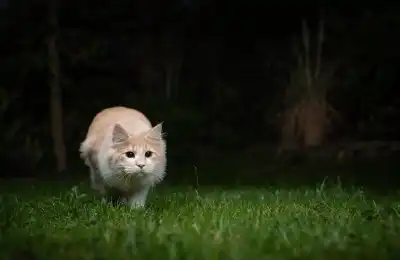
When your cat twitches in their sleep, paws moving, whiskers flickering, tail flicking, it's widely believed they're dreaming about everyday feline experiences and behaviours. Common twitching behaviours and their likely dream content include:
- Paws moving or "running" motions: likely dreaming about chasing, playing, or exploring.
- Whisker twitching: possibly dreaming about sniffing, investigating, or sensing their environment.
- Tail flicking: often associated with dreams involving alertness, focus, or a hunting scenario.
- Chirping or vocalising: likely dreaming about prey, play, or communication with another cat.
- Eyes moving rapidly behind closed lids: a clear sign of REM sleep and active dreaming, often paired with the visual scanning your cat would do if tracking something while awake.
A cat twitching in their sleep is entirely normal and is one of the clearest external signs that they’re in an active dream state. It's generally nothing to worry about, and in fact, it's a reassuring sign that your cat is getting good quality REM sleep.
Do Cats Dream About Their Owners?
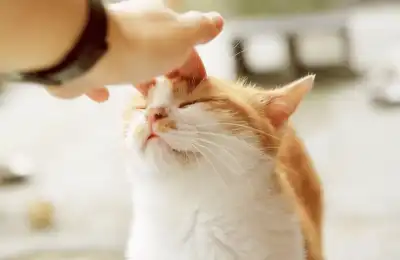
Given that dreaming is widely understood to involve replaying and processing recent experiences, and given how much of a cat's day often revolves around their owner, particularly in feeding, play, and affection, it's reasonable to assume that owners do feature in cat dreams fairly often. Cats form genuine attachments to their owners and regularly process their daily experiences, including their interactions with people, during sleep.
They’re also known to dream about hunting, food, and other pets in the household. If you'd like to understand more about the depth of your cat's emotional world while awake, our guide to reasons why your cat follows you everywhere explores just how attached cats can become to their humans.
Can Cats Have Nightmares?
It's believed that cats can have nightmares, just as they can have pleasant dreams. Signs that a cat might be having a bad dream rather than a good one include:
- Crying out, yowling, or vocalising in distress while asleep
- Sudden, jerky, or frantic movements rather than gentle twitching
- Waking up startled, disoriented, or unusually anxious
- Increased heart rate or rapid breathing during sleep that seems distressed rather than relaxed
Generally, it's best not to wake your cat from a nightmare unless they seem to be in significant distress, as abruptly waking a sleeping cat, particularly mid-REM, can startle and disorient them further. If your cat does seem distressed upon waking, calm, gentle reassurance, such as a soft voice and your presence nearby, can help them settle. Night terrors in cats are relatively rare compared to ordinary unsettled dreams, but if distressing episodes happen frequently, it's worth mentioning to your vet.
How Do You Know if a Cat is Dreaming or Having a Seizure?
This is an important distinction, as the two can look superficially similar but require very different responses. Generally, dreaming twitches are:
- Gentle, rhythmic, and localised (paws, whiskers, tail) rather than full-body
- Easily interrupted; the cat will usually wake normally if disturbed
- Accompanied by normal breathing and a relaxed body posture
- Brief and don't repeat in an identical, jerking pattern
Signs that might indicate a seizure rather than a dream include:
- Full-body, rigid, or violently jerking movements
- Loss of bladder or bowel control during the episode
- The cat appearing unresponsive, disoriented, or distressed for an extended period afterwards
- Drooling, stiffening of the limbs, or a fixed, glassy stare
- The episode happening while the cat is awake, rather than during clear sleep
If you're ever uncertain, or if episodes are frequent, intense, or accompanied by any of the seizure-specific signs above, it's important to consult a vet rather than assuming it's simply dreaming, just to rule out feline REM sleep behaviour disorder or other neurological causes.
Do Cats Dream in Colour?
While we can't know with absolute certainty what a cat's dream visuals look like, we can make an educated guess based on how cats see while awake. Cats have dichromatic vision, meaning they see a more limited colour range than humans, primarily blues and yellows/greens, rather than the full spectrum we perceive.
Since dreams are generally understood to reflect the sensory experiences and perceptual capabilities of the waking brain, it's reasonable to assume that if cats do experience visual dream content, it would be coloured similarly to their waking vision; a more muted, blue-yellow palette rather than the vivid full-colour dreams humans sometimes report. It's also likely that smell and sound, which are hugely important to a cat's waking experience, play just as significant a role in their dreams as visual imagery does.
What Do Kittens Dream About?
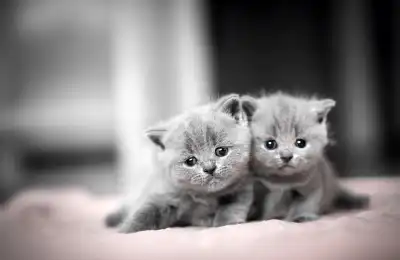
Kittens spend a remarkable amount of their early life asleep, and a significant portion of that sleep is spent in REM, the dreaming stage. In fact, kittens experience proportionally more REM sleep than adult cats, which some researchers believe plays an important role in their neurological development.
It’s extremely common for kittens to twitch in their sleep and is considered entirely normal; their developing nervous systems are highly active during sleep as they process rapid physical and sensory growth. It's likely that kittens dream about basic sensory experiences, play, and the foundational behaviours they're rapidly learning, like stalking, pouncing, and interacting with littermates or their mother.
Squeaking or meowing is also a normal vocalisation in sleep, often associated with active dreaming. As cats age, the proportion of time spent in REM sleep gradually decreases, which is one reason older cats are sometimes thought to dream less frequently or less intensely than kittens.
Recommended for you!
Best Sellers






Frequently Asked Questions About Cat Dreams
Do older cats dream less?
It's believed that the proportion of REM sleep decreases somewhat with age, which may mean older cats dream less frequently or less vividly than kittens and younger adult cats. However, REM sleep and dreaming don't disappear entirely in senior cats; they simply make up a smaller percentage of their overall, and often increased, total sleep time.
How long are cat REM cycles?
Cats experience sleep in cycles, moving between light sleep, deep sleep, and REM sleep throughout their resting periods. Cat REM cycles are generally shorter than human REM cycles, often lasting just a few minutes at a time, but cats experience many more sleep cycles across a 24-hour period given how much they sleep overall, sometimes between 12 and 16 hours a day.
Do cats remember their dreams?
There's no way to directly test this, but given what we understand about feline memory and cognition, it's unlikely that cats consciously "remember" dreams in the reflective way humans do upon waking. However, dreams may still play a functional role in their memory consolidation and emotional processing, even without conscious recall.
Why does my cat cry in her sleep?
Vocalising during sleep, including chirps, meows, or occasional cries, is usually linked to active dreaming and is generally not a cause for concern. If the crying sounds genuinely distressed, is frequent, or is paired with other unusual symptoms, it's worth discussing with your vet to rule out pain or other underlying issues.
Should I worry if my cat is shaking while sleeping?
Mild, rhythmic twitching during sleep is completely normal and linked to dreaming. However, if the shaking is violent, full-body, prolonged, or accompanied by stiffness, drooling, or disorientation upon waking, this could indicate a seizure rather than a dream, and it's best to consult a vet.
Do cats dream during catnaps as well as longer sleep?
Cats can enter REM sleep even during shorter naps, particularly as their naps lengthen throughout the day. Cats often cycle through light sleep and REM relatively quickly compared to humans, meaning even a single nap can include a dreaming phase.
What does it look like when a cat is dreaming?
A dreaming cat typically shows gentle twitching of the paws, whiskers, or tail, occasional soft vocalisations, rapid eye movement visible beneath closed eyelids, and an otherwise relaxed, settled body. These signs together are good indicators that your cat is deep in a dream rather than simply restless.
Study Dream Analysis for £29
If your cat's dreaming habits have sparked a wider curiosity about the meaning and mechanics of dreams, the Dream Analysis & Therapy Diploma Course at Centre of Excellence explores dream interpretation, sleep science, and the psychology behind what happens when we (and our pets) sleep. You can enrol today for just £29.