The flag of Afghanistan is one of the most historically layered national flags in the world, having changed more times than almost any other country's. Whether you've come across it in the news, spotted it during a history lesson, or simply found yourself curious about what its symbols actually mean, this guide covers everything you need to know.
What's in this Guide?
This blog post walks you through the full Afghanistan flag history, the meaning behind its colours and symbols, the significance of its religious imagery, and how the design has evolved across different political eras.
Jump to:
Old Afghanistan Flags: A Visual Journey
Looking at Afghanistan's old flags side by side reveals just how much the country's visual identity has shifted. Each design was a direct product of its political moment, and understanding them in sequence helps tell the broader story of Afghan history.
The Tricolour Era (1929–1978)
The black, red, and green tricolour became the most enduring image of the Afghan national flag. Though the central emblem changed frequently, these three colours were a constant for nearly five decades. This is the design that many people outside Afghanistan most associate with the country.
The Communist Era (1978–1992)
When the People's Democratic Party of Afghanistan came to power, the flag changed dramatically. Early versions were almost entirely red, closely echoing Soviet-style flags. Later versions returned black and green but retained a heavily modified emblem featuring a star, rays, and imagery influenced by socialist iconography. This remains one of the most visually distinct periods in Afghanistan's flag history.
The Mujahideen and Islamic State Period (1992–1996)
After the communist government fell, the flag was redesigned with explicitly Islamic imagery. The emblem incorporated the Shahada and a mosque, marking a shift back towards the Islamic symbolism that had been downplayed during the communist years.
The First Taliban Period (1996–2001)
The Taliban introduced a plain white flag with the Shahada, strikingly minimal compared to previous designs. This approach reflected their ideology: governance through a strict interpretation of Islamic law, with no room for the kind of national heraldry associated with Western-influenced states.
The Post-2001 Republic Flag
Following the fall of the Taliban in 2001, Afghanistan returned to the tricolour, updating the central emblem to include the year of independence and refining the mosque imagery. This flag became strongly associated with the Republic of Afghanistan and remained in use until 2021.
The Current Afghanistan Flag
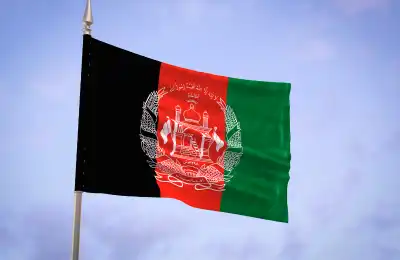
Since the Taliban regained control of Afghanistan in August 2021, the national flag has changed significantly. The new Afghanistan flag, or more accurately, the flag of the Islamic Emirate of Afghanistan, is a plain white background bearing the Shahada in black Arabic script.
The Shahada affirms that there is no god but Allah and that Muhammad is his messenger. It's one of the most fundamental declarations in Islam, and its placement on the flag signals the Taliban's intention to govern Afghanistan as a strict Islamic emirate rather than a conventional nation state.
The Afghanistan flag change in 2021 was stark and deliberate. The removal of the black, red, and green tricolour represented a clear break from the Republic of Afghanistan and everything it stood for. The white colour itself is associated in some Islamic traditions with purity and peace.
As of 2025, this white flag with black Shahada remains the banner flown by the Taliban-led government, though it isn't universally recognised as the legitimate national flag by all Afghans or by the international community. Some Afghans in diaspora and resistance movements continue to use the previous tricolour design.
The Colours and Their Meaning
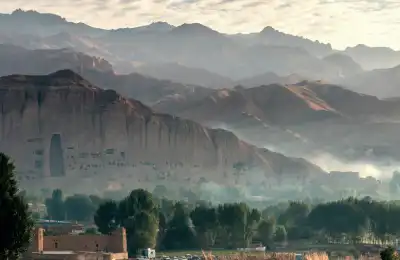
For much of the twentieth century, Afghanistan's flag featured three horizontal stripes: black, red, and green. These colours carry significant meaning in Afghan culture and history, each representing a different dimension of the nation's identity.
- Black: Represents the country's past, specifically the periods of foreign occupation and struggle. It acknowledges history without shying away from its difficulty.
- Red: Symbolises the blood of those who fought and died for the country's freedom. It's a common colour in flags associated with sacrifice and national resistance, and in the Afghan context, it carries particular weight given the country's long history of conflict.
- Green: Associated with Islam and prosperity. In Afghan culture, it also represents hope for the future and the agricultural richness of the land.
Together, these three colours have served as a visual shorthand for Afghanistan's past, present, and aspirations, though the current Afghanistan flag used by the Islamic Emirate since 2021 has moved away from this tricolour entirely.
The Symbols on the Afghanistan Flag
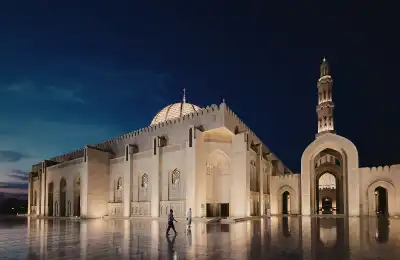
The imagery at the heart of Afghanistan's various flags has always been deeply rooted in Islamic faith and national identity. Two elements recur most consistently: the religious building and the central emblem.
The Religious Building
One of the most distinctive features of the historic Afghan national flag is the image of a mosque at the centre of its emblem. More specifically, it depicts a Mihrab (prayer niche) and Minbar (pulpit), key architectural features found inside a mosque. In many versions, the image also shows the mosque with a rising sun behind it, flanked by sheaves of wheat and surrounded by a decorative border.
The mosque image isn't simply decorative. It signals that Afghanistan's national values are grounded in Islamic faith, a thread that runs through the country's identity across many different political systems.
The Central Emblem
The emblem of Afghanistan has taken many forms over the years, but the core elements that recur most consistently include:
- A mosque or prayer arch, representing the Islamic faith.
- The Shahada or other Quranic text, affirming religious identity.
- Sheaves of wheat, symbolising agricultural heritage and prosperity.
- The rising sun represents enlightenment and a new dawn.
- A wreath or decorative border, often reflecting unity.
Heraldry like this is never random. Every element is chosen to communicate something specific about a nation's values, history, and self-image. The fact that Afghanistan's emblem has changed so many times speaks to just how contested those values have been across different governments and political movements.
Recommended for you!
Best Sellers






Frequently Asked Questions
What is "Afghanistan jhanda"?
"Jhanda" is the word for flag in several South Asian languages, including Dari and Urdu, so "Afghanistan jhanda" simply means the flag of Afghanistan. It's a commonly searched term used by Afghan communities and those from neighbouring regions.
Has the Afghanistan flag always included Islamic text?
The Shahada has appeared on the flag during certain periods, particularly under the Taliban, but it was absent from many earlier designs. The tricolour flags used throughout much of the twentieth century featured emblems with mosque imagery rather than written scripture.
What does "Islamic Emirate of Afghanistan" mean on the flag?
The name reflects the Taliban's official title for the Afghan state since 2021, signalling their intention to govern under Islamic law rather than as a secular or democratic republic. Its presence on the flag is a direct statement of political and religious authority.
Why has the Afghanistan flag changed so many times?
Afghanistan has experienced numerous regime changes throughout its modern history, and each new government has tended to redesign the flag to reflect its own ideology and values. Few countries have seen their national flag shift so dramatically in such a relatively short period of time.
How is the Afghanistan flag different from other Islamic country flags?
While many Islamic nations incorporate green or the crescent and star, Afghanistan's current flag is distinctive in using the Shahada as its sole symbol on a plain white background, with no additional imagery. It's one of the most minimal national flags in the world as a result.
Study Heraldry for £29
If exploring the history and symbolism of flags like Afghanistan's has sparked your curiosity, the Heraldry Diploma Course is the perfect next step. You can get started today for just £29.