The Algerian flag is one of the most visually striking and symbolically rich national flags in the world. Whether you spotted it at a sporting event, noticed it in a news report, or simply want to understand what it represents to the Algerian people, there's a great deal more to this flag than first meets the eye.
Once you understand what each colour and symbol stands for, you'll find it almost impossible to look at it the same way again.
What's in this Guide?
This guide walks you through everything you need to know about the Algerian flag: its history, its colours, its symbols, and the remarkable journey from colonial rule to independence. If you're keen to go further and explore the wider world of flags, symbols, and heraldry, you might also be interested in the Heraldry Diploma Course from Centre of Excellence.
Jump to:
- What Does the Flag of Algeria Look Like?
- The Story Behind the Algerian Flag: A Brief History
- Old Flag of Algeria: The Era of French Algeria
- Who Designed the Algerian Flag?
- What Do the Colours on the Algerian Flag Stand For?
- Algerian Flag Symbolism Explained: The Crescent and Star
- Does the Algerian Flag Have Any Religious Symbolism?
- When Was the Algeria Flag Adopted?
- Similar Flags
- The Difference Between the Algerian and Pakistani Flags
- Study Heraldry for £29
What Does the Flag of Algeria Look Like?
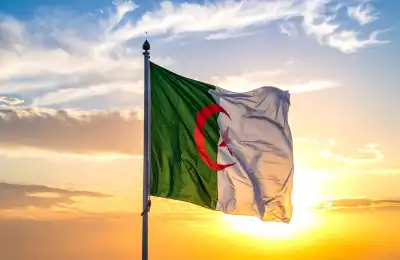
The Algerian flag is immediately recognisable in the flags of the world. It's divided vertically into two equal halves: the left is green, and the right is white. At the centre, where the two halves meet, sits a red crescent moon and a red five-pointed star.
Simple in design, yet deeply layered in meaning, the flag communicates an enormous amount about Algeria's culture, faith, and national identity without a single word.
The Story Behind the Algerian Flag: A Brief History
To understand the Algerian flag's history, you need to understand the country itself. Algeria spent well over a century under French colonial rule, a period that profoundly shaped the nation's relationship with its own identity. During this time, the symbols that would eventually form the national flag weren't displayed openly; they were acts of resistance.
The roots of the modern flag go back to the early twentieth century, tied closely to the movement for Algerian independence. The green, white, red, crescent, and star combination drew on a long tradition of North African and Islamic symbolism that resonated deeply with Algerian people across generations.
Important moments in this history include:
- The rise of Algerian nationalist movements in the early 1900s, which sought to reclaim a distinct cultural identity.
- The formation of the Étoile Nord-Africaine (North African Star) in 1926, one of the first Algerian nationalist organisations to use early forms of this symbolism.
- The founding of the Front de Libération Nationale (FLN) in 1954, which adopted the green, white, and red flag as a rallying symbol during the Algerian War of Independence.
- The war itself (1954–1962), during which the Algerian independence flag 1962 became a symbol of resistance, carried by fighters and civilians alike.
By the time Algeria gained independence on 5 July 1962, the flag had already become inseparable from the national identity. It wasn't designed after independence; it was carried into it.
Old Flag of Algeria: The Era of French Algeria
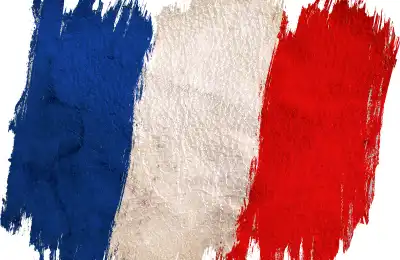
During the period of French colonial rule, there was no officially recognised Algerian national flag. Algeria was considered an integral part of France rather than a separate colony, and so the French tricolour served as the flag of the territory.
The French Algerian flag used various administrative and military banners, often incorporating French heraldic elements. However, none of these carried any particular meaning for the indigenous Algerian population. If anything, they represented the very colonial authority that nationalists were pushing back against.
The old flag of Algeria, in the nationalist sense, existed in a semi-underground state for many years. It was raised defiantly during uprisings and protests, and doing so could carry serious consequences. The flag's transition from a banned symbol to a national one is, in itself, a remarkable story of perseverance.
Who Designed the Algerian Flag?
The design of the Algerian flag is widely attributed to Messali Hadj, a foundational figure in Algerian nationalism, and his movement in the 1920s and 1930s. However, a more specific and widely celebrated account credits Emilie Busquant, a French woman who married Messali Hadj and became deeply committed to the cause of Algerian independence.
According to historical accounts, it was Emilie Busquant who sewed one of the earliest versions of the flag in 1934, giving physical form to the symbolic colours and shapes that had been discussed within nationalist circles. Her contribution is a fascinating and often overlooked chapter in the flag's history, and a reminder that national symbols are frequently the work of many hands.
The design was later formalised and adopted by the FLN, and it became the official national flag upon independence in 1962. So when asking who designed the Algerian flag, the honest answer is that it was shaped by a movement, refined over decades, and brought to life by people whose commitment to Algeria's future was absolute.
What Do the Colours on the Algerian Flag Stand For?

Each colour on the Algerian flag carries a specific meaning, and together they tell a coherent story about the nation's values and aspirations.
Green
Green is one of the most significant colours in Islamic tradition, and its presence on the left half of the Algerian flag is a direct reference to the country's Muslim heritage. It also symbolises nature, fertility, and hope for a prosperous future. In the context of Algeria's landscape, which ranges from the fertile Tell Atlas region to the vast Sahara Desert, green carries an additional resonance, representing life and renewal in a land of contrasts.
White
The white half of the flag represents peace and purity. After a brutal and costly war of independence, peace wasn't an abstract ideal for Algerians; it was a hard-won reality. White also represents clarity and honesty, values that the new Algerian state sought to build its identity upon. It stands as a counterbalance to the green, symbolising the harmony between faith and aspiration.
Red
The red of the crescent and star is the most emotionally charged element of the flag, representing the blood of those who died fighting for Algeria's independence. Given that the war cost hundreds of thousands of lives, this is a direct acknowledgement of sacrifice. The red ensures that the cost of freedom is never forgotten, embedded permanently in the very symbol of the nation.
Algerian Flag Symbolism Explained: The Crescent and Star
The crescent moon and star at the centre of the Algerian flag are arguably its most distinctive features, and their symbolism is rich with history. Both symbols have been associated with Islamic civilisation for centuries, appearing on the flags and emblems of numerous Muslim-majority nations.
On the Algerian flag, the crescent is notably tilted, with its open side facing to the right. The star is a five-pointed shape, positioned within the curve of the crescent. Together, they form one of the most recognisable motifs in vexillology, the study of flags.
So, what do the crescent and star on the Algerian flag mean?
- The crescent moon is a traditional symbol of Islam, representing the faith that's central to Algerian culture and identity.
- The star represents the unity of the five pillars of Islam, the fundamental acts of worship that guide Muslim life.
- Together, they affirm Algeria's identity as a Muslim nation while also nodding to a broader heritage shared with many other countries across the Islamic world.
It's worth noting that the crescent and star predate Islam as symbols and have been used across many cultures throughout history. In the context of the Algerian flag, however, their Islamic interpretation is the most relevant and widely understood.
Does the Algerian Flag Have Any Religious Symbolism?
Yes, and quite openly so. Algeria's constitution declares the country an Islamic republic, and this is reflected in the flag. The green (associated with Islam), the crescent, and the star all carry explicit religious significance. This isn't unusual in the region; many North African and Middle Eastern nations incorporate Islamic symbolism into their flags for the same reason.
However, it's important to note that the flag's religious symbolism doesn't stand alone. It's intertwined with national and political meaning. The red, for instance, has no religious significance; it speaks directly to Algeria's revolutionary history. The flag is therefore both a religious and a national symbol, holding multiple layers of meaning simultaneously.
For Algerians, the flag isn't primarily a religious statement; it's a national one. The Islamic symbols within it reflect the culture and identity of the people, rather than serving as a declaration of theocratic intent. Understanding this distinction is key to understanding the meaning of the Algerian flag in its full context.
When Was the Algerian Flag Adopted?
The Algerian flag was officially adopted on 3 July 1962, just two days before Algeria's formal declaration of independence on 5 July 1962. That date is now celebrated as Algerian Independence Day, one of the most significant national holidays in the country.
The flag that was raised in 1962 wasn't a new creation; it had been carried and flown as a symbol of resistance for decades before independence. The formal adoption in 1962 simply gave legal and constitutional recognition to what the Algerian people had already claimed as their own.
The specifications for the flag, including the exact proportions of the crescent, the size of the star, and the precise positioning of the elements, were formalised in Algeria's constitution. Minor adjustments were made in 1971, but the core design has remained unchanged.
Similar Flags
When looking at the Algerian flag, several comparisons come to mind. The combination of a crescent and star on a green and white background is shared, to varying degrees, by a number of other nations, particularly in the Islamic world. Pakistan, Libya, Mauritania, and Tunisia all feature crescent and star motifs, though with quite different colour schemes and design details.
The flags most commonly compared to Algeria's are those of Pakistan and Saudi Arabia, but each has distinct differences in colour, proportion, and additional elements. The Algerian flag's vertical bicolour (green and white split down the middle) is a particularly distinctive feature that sets it apart from many of its regional counterparts.
The Difference Between the Algeria and Pakistan Flag
The difference between the Algeria and Pakistan flag is a common point of interest, as the two flags share obvious visual similarities. Both feature a green field, a crescent, and a star. However, there are several clear distinctions:
- Colour layout: Algeria's flag is a vertical bicolour of green (left) and white (right), while Pakistan's flag is predominantly green with a vertical white stripe on the left (the hoist side).
- Crescent and star colour: Algeria's crescent and star are red, whereas Pakistan's are white.
- Crescent orientation: The crescent on the Pakistani flag faces slightly differently and is more elongated than Algeria's.
- The white stripe: Pakistan's white stripe represents the country's non-Muslim minorities, a distinct political and cultural statement with no equivalent in the Algerian design.
- Overall proportions: The two flags use different aspect ratios and positioning for their central motifs.
Study Heraldry for £29
If exploring the symbolism and history of flags like Algeria's has sparked a deeper curiosity in you, the Heraldry Diploma Course from Centre of Excellence is the perfect next step. You can enrol today for just £29, a significant saving on the standard price, and gain a clearer understanding of heraldry, flags, coats of arms, and the fascinating visual language of national and family identity.