Viking warrior symbols carry meanings tied to strength, protection, and the fate that awaited warriors in battle, drawn from Norse mythology and the wider Elder Futhark tradition. If you're drawn to these symbols, whether for a tattoo, jewellery, or simple curiosity, this guide covers 8 of the most significant and what each one represents.
What's in this Guide?
This guide explores 8 well-known Viking warrior symbols, their meanings, and the mythology behind them. You'll also find honest guidance on their more recent history and how they're viewed today.
Jump to:
8 Viking Warrior Symbols and Their Meanings
Norse mythology and Viking Age culture produced a rich collection of symbols, many closely tied to warriors, protection, and battle. Here are 8 of the most significant.
Mjolnir
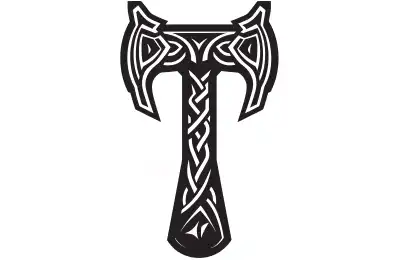
Mjolnir is the hammer of Thor, the god of thunder, and represents strength, protection, and defence against chaos. It's one of the most widely recognised Norse symbols today, frequently worn as a pendant by both practising followers of Norse paganism and those simply drawn to its symbolism of raw, protective power.
According to myth, Mjolnir was forged by the dwarven brothers Sindri and Brokkr as part of a wager with Loki, and Thor used it to protect Asgard from giants and other threats to the Norse gods. Its symbolism centres on strength and protection, specifically the power to restore order from chaos, which is part of why it remains one of the most commonly worn Norse pendants today, alongside appearing frequently in tattoos.
The Valknut
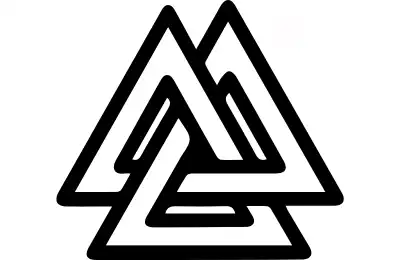
The Valknut, formed from three interlocking triangles, is closely associated with Odin and is most commonly linked to fallen warriors and the afterlife. Its exact meaning is genuinely debated among historians, with some interpreting it as a symbol of the transition between life and death, and others linking it more specifically to those chosen to join Odin in Valhalla.
Its name roughly translates to "knot of the slain," referring to warriors killed in battle, and it's typically drawn as three interlocking triangles, sometimes rendered as a single unbroken line. The symbol appears on Viking Age picture stones and burial artefacts, often alongside imagery of Odin himself, which is part of why scholars connect it so closely to fate and the afterlife. Some suggest it represents the transition between life and death more broadly, while others link it specifically to Odin's power to bind and release warriors from battle.
The Aegishjalmur (Helm of Awe)
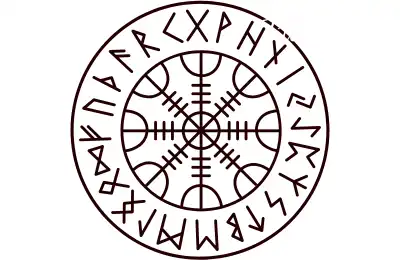
The Aegishjalmur, or Helm of Awe, was historically associated with protection in battle, believed to instil fear in enemies while shielding the wearer from harm. Its eight radiating spiked arms are often read as representing protection extending outward in every direction.
The symbol appears in the Icelandic sagas, most notably the Volsunga Saga, where it's described as being pressed onto the forehead, sometimes using iron, to grant invincibility and psychological dominance over opponents. Its central point with eight spiked or trident-like arms is closely tied to this idea of protection and fearlessness radiating outward, making it a popular choice today for anyone wanting a symbol of strength and defence rather than aggression.
The Vegvisir
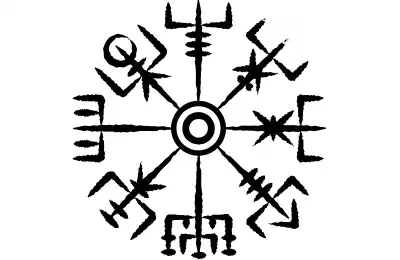
The Vegvisir, sometimes called the Viking compass, is believed to help the bearer find their way and stay safe during difficult journeys. Though its exact historical origins are debated, since the earliest known references appear in later Icelandic manuscripts rather than the Viking Age itself, it remains a popular modern symbol of guidance and protection.
Its name roughly translates to "the way-shower" or "signpost," reflecting the traditional belief that carrying it would prevent the bearer from losing their way, even in unfamiliar terrain or bad weather. Made up of eight rune-like spokes radiating outward from a central point, the symbol was first documented in 19th-century Icelandic manuscripts, which has led some historians to question whether it genuinely dates back to the Viking Age at all, despite its popular association with that period today.
Yggdrasil
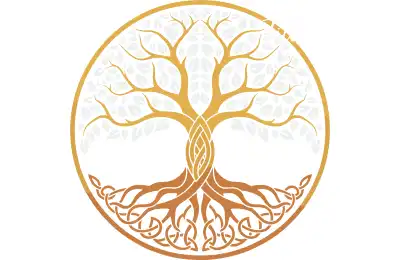
Yggdrasil is the great world tree of Norse mythology, connecting the nine realms and representing the interconnectedness of all life, fate, and the structure of the cosmos itself. For warriors specifically, Yggdrasil often symbolised the broader forces of fate that governed their path in battle and beyond.
Described as an immense ash tree, its branches and roots were said to connect all nine realms of Norse cosmology, with various creatures living among them, including an eagle at its top and the serpent Nidhogg gnawing away at its roots below. This structure made Yggdrasil a symbol of fate and interconnectedness, representing the wider forces of destiny believed to shape a warrior's life and eventual death.
The Raven Banner
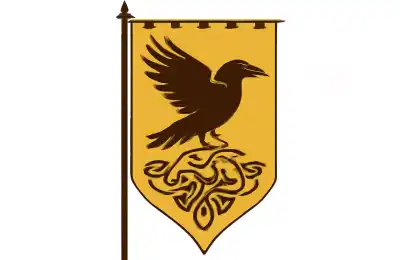
The Raven Banner was a real battle standard used by Viking warriors, believed to carry protective and prophetic power tied to Odin's ravens. According to historical accounts, the banner was said to indicate the outcome of a battle depending on how the raven appeared to move in the wind as it was carried into combat.
The banner is referenced in several historical chronicles, including accounts of Viking raids in England, and typically depicts a black raven, often shown with outstretched wings, against a plain background. A fluttering raven was seen as a good omen heading into battle, while a still or drooping banner was considered a sign of ill fortune. Its connection to Odin runs deep, given the raven's role as his sacred bird throughout Norse mythology.
Huginn and Muninn
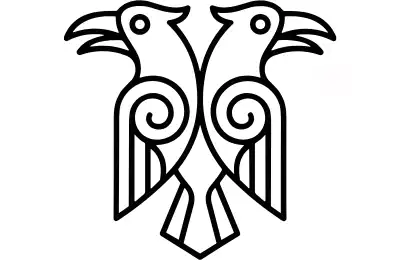
Huginn and Muninn, meaning "thought" and "memory," were Odin's two ravens, said to fly across the world each day and return to report everything they'd seen and heard. For warriors, they represented awareness, wisdom, and Odin's own watchful presence over the battlefield.
According to myth, the pair flew across the nine realms daily, returning each evening to whisper everything they'd witnessed into Odin's ears, making them powerful symbols of awareness, intellect, and the gathering of knowledge. For warriors specifically, they represented Odin's watchful presence and guidance over those fighting in his name, a reminder that nothing on the battlefield went entirely unseen.
Gungnir
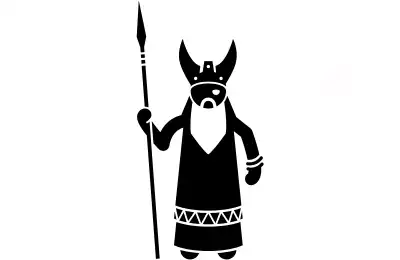
Gungnir was Odin's spear, said to never miss its target once thrown, and represents authority, precision, and unwavering resolve. It was frequently invoked as a symbol of decisive, unstoppable action, fitting for a weapon wielded by the chief of the Norse gods.
The spear was forged by dwarven craftsmen, the sons of Ivaldi, as one of several treasures gifted to the gods, and was said to always strike its intended target regardless of the thrower's own skill. This made it a natural symbol of authority and unshakeable resolve, and its significance extended into real Viking practice too, with warriors historically throwing a spear over an enemy army to dedicate the coming battle to Odin.
Are Viking Symbols Associated with Hate Groups?
The vast majority of Viking and Norse symbols, including Mjolnir, Vegvisir, and Yggdrasil, are mainstream symbols of heritage, mythology, and popular culture, used by millions of people worldwide with a genuine interest in Norse history, entirely separate from any extremist association.
That said, a small number of Norse symbols have occasionally been misappropriated by certain extremist groups seeking to attach themselves to a distorted idea of ancestral heritage. The Valknut, in particular, has seen some use in this context, alongside a small number of other symbols with more documented historical ties to 20th-century extremism. This doesn't mean these symbols are inherently hateful, or that the people using them today hold those views; it simply means it's worth being aware of the context if you're considering wearing or displaying a Norse symbol publicly, particularly one with a more contested recent history.
If you're drawn to Norse symbolism for its genuine historical and mythological meaning, which is true of the overwhelming majority of people interested in this subject, that interest is entirely valid and shouldn't be overshadowed by the actions of a small minority who've misused these symbols.
Recommended for you!
Best Sellers
Frequently Asked Questions
What Is the Viking Symbol for Strength?
Mjolnir, Thor's hammer, is the symbol most closely associated with strength, given its direct connection to the god of thunder and his raw physical power.
What Is the Viking Symbol for Protection?
The Aegishjalmur, or Helm of Awe, is the symbol most specifically tied to protection in battle, alongside Mjolnir, which is also widely worn for general protective purposes.
What Is the Viking Symbol for Family?
There isn't one single, universally agreed symbol for family within Norse tradition, though the Othala rune is closely associated with heritage, home, and inherited legacy, making it the closest match.
Is Wearing Mjolnir Cultural Appropriation?
Generally, no. Mjolnir is a widely shared symbol of Norse heritage and mythology, worn by people around the world with a genuine interest in the culture, rather than being restricted to a single closed cultural or religious group.
Is It Ok to Wear a Valknut?
Most people who wear the Valknut do so with a genuine interest in Norse mythology and its connection to fate and the afterlife. Given its occasional association with certain extremist groups, it's worth being aware of this context, though it doesn't mean everyone wearing it holds those views.
Are Runes and Viking Symbols the Same Thing?
Not quite. Runes, such as those in the Elder Futhark, form a full alphabet with individual letter meanings, while symbols like Mjolnir or the Vegvisir are standalone images rather than alphabet characters, even though the two are frequently combined in art and tattoos.
What Is the Most Powerful Viking Symbol?
Mjolnir is the most widely cited as the most powerful, given its direct connection to Thor and its long-standing association with strength and protection, though this varies depending on which quality you're prioritising.
Study Norse Mythology for £29
If Viking warrior symbols have sparked a deeper interest in Norse mythology, our Norse Mythology Diploma Course is the perfect next step. You'll explore the gods, myths, and symbolism of the Norse world in far more depth, and for a limited time, you can enrol for just £29.