The meaning of a Valknut tattoo is rooted in one of the most mysterious symbols from Norse mythology, closely tied to Odin, fallen warriors, and the afterlife. If you're considering a Valknut tattoo, or you've seen one and wondered about the story behind it, this guide covers its symbolism, history, and how it compares to the similarly popular Vegvisir design.
What's in this Guide?
This guide explains what a Valknut tattoo represents, its connection to Odin and Valhalla, and honest guidance on its more complicated recent history. You'll also find a comparison with the Vegvisir, another popular Norse tattoo design often confused with it.
Jump to:
- What Does a Valknut Tattoo Symbolise?
- What Does a Valknut Tattoo Mean Spiritually?
- Is a Valknut Tattoo Dangerous or Offensive?
- Valknut vs Vegvisir Tattoo: What's the Difference?
- Vegvisir Tattoo Meaning
- Valknut Tattoo Design Combinations
- Valknut Tattoo Meaning by Placement
- Frequently Asked Questions
- Study Symbology for £29
What Does a Valknut Tattoo Symbolise?
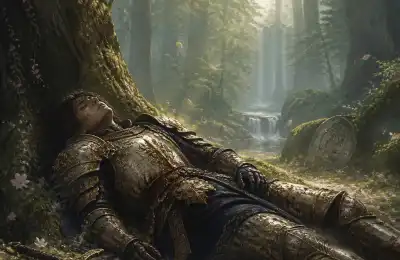
A Valknut tattoo represents fallen warriors, fate, and the transition between life and death, formed from three interlocking triangles. Its name roughly translates to "knot of the slain," directly referencing its association with warriors who died in battle and their journey into the afterlife.
Beyond mortality, people choose Valknut tattoos for a range of reasons, including:
- A connection to Norse heritage and mythology
- Courage and honour, particularly relating to facing death without fear
- A tribute to a warrior, whether historical, military, or personal
- Fate and the interconnected nature of life's journey
- Odin's power over life, death, and the fate of warriors
So if you're wondering what a Valknut tattoo represents, the answer usually comes down to a mix of honour in death and a deep connection to Norse belief around fate.
What Does a Valknut Tattoo Mean Spiritually?
Spiritually, the Valknut is closely tied to Odin, particularly his role in selecting warriors for Valhalla, the great hall where the bravest fallen would continue fighting and feasting until Ragnarok. The symbol's exact meaning is genuinely debated among historians and scholars, with some interpreting it as representing the transition between life and death more broadly, and others linking it specifically to those chosen to join Odin after falling in battle.
This connection to fate and the afterlife makes the Valknut a powerful symbol for anyone drawn to themes of honour, courage, and accepting mortality without fear, values that were held in particularly high regard throughout Norse culture.
Is a Valknut Tattoo Dangerous or Offensive?
Unlike Mjolnir or the Vegvisir, which carry very little extremist association, the Valknut has occasionally been used by a small number of white supremacist and neo-Nazi groups seeking to attach themselves to Norse heritage. It doesn't have anywhere near the same level of documented, institutional use as symbols like Othala or the Sowilo-based Sig runes, which had direct Nazi-era organisational adoption, but its occasional use in these circles is real and worth knowing about.
At the same time, it's important to be accurate about the full picture. The overwhelming majority of people who choose a Valknut tattoo do so with a genuine interest in Norse mythology, warrior culture, and themes of fate and courage, entirely separate from extremism. The symbol appears widely in mainstream contexts, including popular television, video games, and jewellery, without any association with hate groups whatsoever.
Given this mixed picture, it's worth being aware of the context if you're considering a visible Valknut tattoo, while also recognising that the symbol's genuine, ancient meaning is what draws in the vast majority of people who choose it.
Valknut vs Vegvisir Tattoo: What's the Difference?
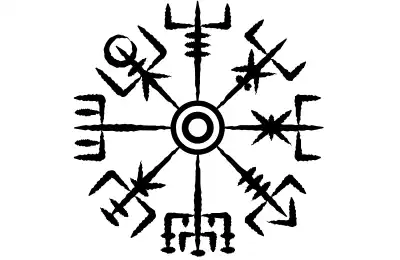
These two Norse symbols are sometimes confused, but they carry quite different meanings and appearances. The Valknut, formed from three interlocking triangles, is associated with fallen warriors, fate, and the afterlife. The Vegvisir, sometimes called the Viking compass, is made up of eight rune-like spokes radiating from a central point and is associated with guidance and safe travel rather than mortality.
Symbolically, the Vegvisir also carries a much lighter, more universally positive reputation, with essentially none of the occasional extremist association that comes up with the Valknut, making it a popular alternative for people drawn to Norse symbolism who want to avoid that added context altogether.
Vegvisir Tattoo Meaning
Since the two symbols are so often searched together, it's worth covering the Vegvisir's meaning directly here too. A Vegvisir tattoo represents guidance, protection, and finding your way through difficult or unfamiliar circumstances. Though its exact historical origins are debated, since the earliest known references appear in later Icelandic manuscripts rather than the Viking Age itself, it remains one of the most popular and straightforward Norse tattoo choices, largely free of the complicated history attached to a small number of other runes and symbols.
Valknut Tattoo Design Combinations
The Valknut is frequently combined with other Norse imagery, each pairing adding its own layer of meaning.
A Valknut paired with Odin's ravens, Huginn and Muninn, reinforces the connection to Odin directly, emphasising wisdom and fate together. A Valknut with wolves often draws on Norse mythology's broader wolf symbolism, adding themes of loyalty and ferocity to the design. Pairing the Valknut with Yggdrasil, the Norse world tree, situates the symbol within the wider structure of fate and the nine realms, while a Valknut enclosed within a circle is sometimes chosen specifically to represent completeness or the eternal cycle of fate.
Valknut Tattoo Meaning by Placement
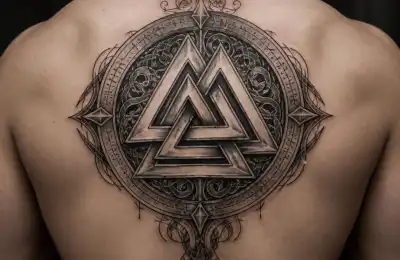
Where you place a Valknut tattoo can shape how it's read. A forearm or chest placement is bold and visible, often chosen to wear the symbolism of courage and fate openly. A back placement offers more space for a detailed design incorporating additional Norse imagery.
A smaller, more discreet placement, such as behind the ear or on the ribs, is sometimes chosen by people who want the symbol's personal meaning without making as public a statement, particularly given the context covered above.
Recommended for you!
Best Sellers
Frequently Asked Questions
Is a Valknut Tattoo Good Luck or Bad Luck?
The Valknut isn't traditionally associated with luck in either direction. It's more accurately understood as a symbol of fate and the afterlife rather than a talisman for fortune.
Is It Disrespectful to Get a Valknut Tattoo If I'm Not Norse or Scandinavian?
Generally, no. Norse mythology and symbolism have been widely studied and adopted internationally, and the Valknut isn't considered a closed cultural symbol restricted to people of Scandinavian heritage specifically.
Will People Think My Valknut Tattoo Is a Nazi Symbol?
This depends heavily on context and location. While the vast majority of people will recognise it as Norse mythology-related, given its occasional use in extremist circles, it's worth being prepared that some people, particularly in parts of Europe where this association is more widely known, may ask about it or make assumptions.
Does the Direction a Valknut Points Change Its Meaning?
There isn't a widely agreed rule about orientation changing the Valknut's meaning, unlike some other Norse symbols where direction carries specific significance.
What Does a Valknut With Runes Tattoo Mean?
Adding runes to a Valknut design allows for further personalisation, with the specific runes chosen adding their own individual meaning alongside the Valknut's core themes of fate and mortality.
Is a Small Valknut Tattoo Less Meaningful Than a Large One?
No, size doesn't change the symbolism itself. A smaller, more discreet Valknut carries the same meaning as a larger, bolder version, simply expressed more subtly.
Study Symbology for £29
If Valknut symbolism has struck a chord with you, our Symbology Diploma Course explores the meaning behind powerful symbols like this one in far more depth. For a limited time, you can enrol for just £29.