Stepping outside your comfort zone is an act of courage that opens the door to greater confidence and self-discovery.
This guide explores how to get out of your comfort zone, providing helpful insight to support you as you move beyond what feels familiar and step into a space of growth and possibility.
Jump to:
What Is a Comfort Zone?

A comfort zone is a psychological space where your habits and behaviours fit into routines that minimise risk and stress. In this zone, life feels calm and predictable. It’s where you can operate without much effort because you already know what to expect.
While being in your comfort zone offers security, it can also become restrictive. When everything feels easy, challenges are often avoided, and personal development slows down. Growth happens when you allow yourself to stretch beyond that zone, facing uncertainty with an open mind and a willingness to learn.
Recommended for you!
Best Sellers







The 7 Different Zones
Understanding the different layers of life can help you recognise where you are and where you want to grow next. These seven stages illustrate the gradual process of leaving comfort behind and moving towards fulfilment and purpose.
- Comfort Zone: The area of familiarity where you feel safe, confident, and in control.
- Fear Zone: The stage where doubt, excuses, and uncertainty surface, often leading to hesitation.
- Learning Zone: The point where you start developing new skills, knowledge, and perspectives.
- Growth Zone: The period of building self-belief and taking meaningful action towards goals.
- Challenge Zone: The stage where you test your resilience and push yourself beyond your limits.
- Transformation Zone: The stage of personal change, where you gain deeper self-awareness and strength.
- Purpose Zone: The ultimate zone, where growth aligns with your values, goals, and sense of meaning.
Signs You’re in Your Comfort Zone
Recognising that you are stuck in your comfort zone is the first step towards change. You may find that your days feel repetitive, that you avoid trying new things, or that you rarely feel nervous or excited about challenges.
You might use phrases like “I could never do that” or convince yourself that now isn’t the right time to try something new. These are signs of complacency and fear disguised as contentment. By identifying these patterns, you create the awareness needed to make small, positive changes.
7 Steps to Get Out of Your Comfort Zone

Learning how to get out of your comfort zone begins with small, deliberate actions that build courage and self-belief over time. Each step below is designed to help you move forward in a way that feels manageable.
1. Start Small
Big changes can feel overwhelming, so begin with something achievable. Introduce gentle challenges into your routine, such as trying a new hobby or striking up a conversation with someone new.
Each small step builds confidence, and over time, you’ll notice that what once felt uncomfortable starts to feel natural.
2. Embrace the Feeling of Discomfort
Discomfort is evidence that you’re growing. When you step outside of your comfort zone, the unfamiliar sensations of nervousness and uncertainty are simply your mind adjusting to change.
Instead of resisting these feelings, acknowledge them with kindness. Take a few deep breaths and remind yourself that discomfort is temporary, but growth is lasting.
3. Reframe Fear as Curiosity
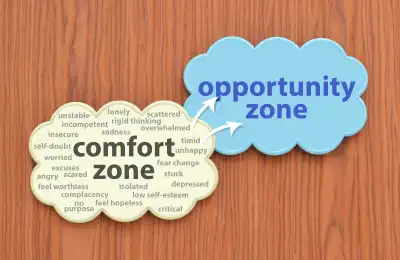
Fear often appears when you enter new territory. Shifting your mindset from “I’m scared” to “I’m curious” can transform the way you experience challenges. Curiosity encourages exploration and helps you focus on what you might learn rather than what could go wrong.
Ask yourself what could be discovered through this experience: a new skill, a deeper understanding of yourself, or a new opportunity. Curiosity keeps your mind open and turns uncertainty into potential.
4. Learn from Mistakes
Mistakes are a natural and essential part of growth. Each time something doesn’t go as planned, it offers valuable information about what to adjust or try differently next time.
Instead of seeing setbacks as failures, view them as feedback. The process of getting out of your comfort zone is about learning, not perfection. Self-compassion allows you to recover faster and continue moving forward.
5. Surround Yourself with Support
Surround yourself with people who celebrate your progress and remind you of your strengths when you doubt yourself. Sharing your experiences makes it easier to stay accountable and motivated.
6. Visualise Success
Visualisation is a powerful tool for confidence. Spend a few moments each day picturing yourself succeeding at the thing that feels challenging. Imagine the details: how it looks, how it feels, and how proud you are once you’ve achieved it.
This mental rehearsal helps your mind associate new experiences with positive outcomes, reducing anxiety and reinforcing belief in your ability to succeed.
7. Reflect on Your Progress
Keep a journal or make notes about the steps you’ve taken and the lessons you’ve learned. Reflection reminds you that progress is not always visible in the moment but becomes clear when you look back. Every experience outside of your comfort zone expands your sense of what’s possible.
Frequently Asked Questions
How long does it take to get out of your comfort zone?
Everyone progresses at their own pace, depending on their mindset and circumstances. Some people see change within weeks, while others take months or longer. The most important thing is consistency; taking small, steady actions over time rather than expecting instant transformation.
Why do some people find it easier to step out of their comfort zone than others?
Some people thrive on new challenges and uncertainty, while others prefer stability and predictability. Personality, past experiences, and environment all play a role. What matters most is developing self-awareness and working with your own temperament to make progress in ways that feel manageable.
How can I stay motivated when progress feels slow?
It’s normal for motivation to fluctuate. When it does, remind yourself of why you started and reflect on how far you’ve come. Celebrate every small victory, no matter how minor it seems. Keeping a record of your progress helps you see proof of your growth, even when it feels invisible in the moment.
How does mindset influence getting out of your comfort zone?
Your mindset shapes your entire experience. A fixed mindset sees challenges as threats, while a growth mindset views them as opportunities to learn. By adopting a growth mindset, you begin to see fear and uncertainty as part of the learning process rather than signs of failure. This shift makes it easier to step outside your comfort zone and keep moving forward.
What are the long-term benefits of leaving your comfort zone?
The long-term benefits include greater resilience and emotional strength. You develop problem-solving skills, a more positive, confident outlook, and the ability to adapt to change. Over time, leaving your comfort zone leads to a deeper sense of fulfilment and purpose because you know you’re living in alignment with your potential rather than your fears.
Recommended for you!
Best SellersStudy Our Self-Confidence Diploma for £29
Building self-confidence is one of the most effective ways to get out of your comfort zone and stay motivated to grow. The Self-Confidence Diploma Course is designed to help you develop belief in yourself and face challenges with calm assurance. For a limited time, you can enrol for just £29.